Interdisciplinary Centre of Marine and Environmental Research (CIIMAR/CIMAR), University of Porto, Terminal de Cruzeiros do Porto de Leixões, Av. General Norton de Matos s/n, 4450-208 Matosinhos, Portugal.
FCUP, Faculty of Sciences, University of Porto, Rua do Campo Alegre, Edifício FC4, 4169-007 Porto, Portugal.
Mar Drugs. 2020 Sep 22;18(9):486. doi: 10.3390/md18090486.
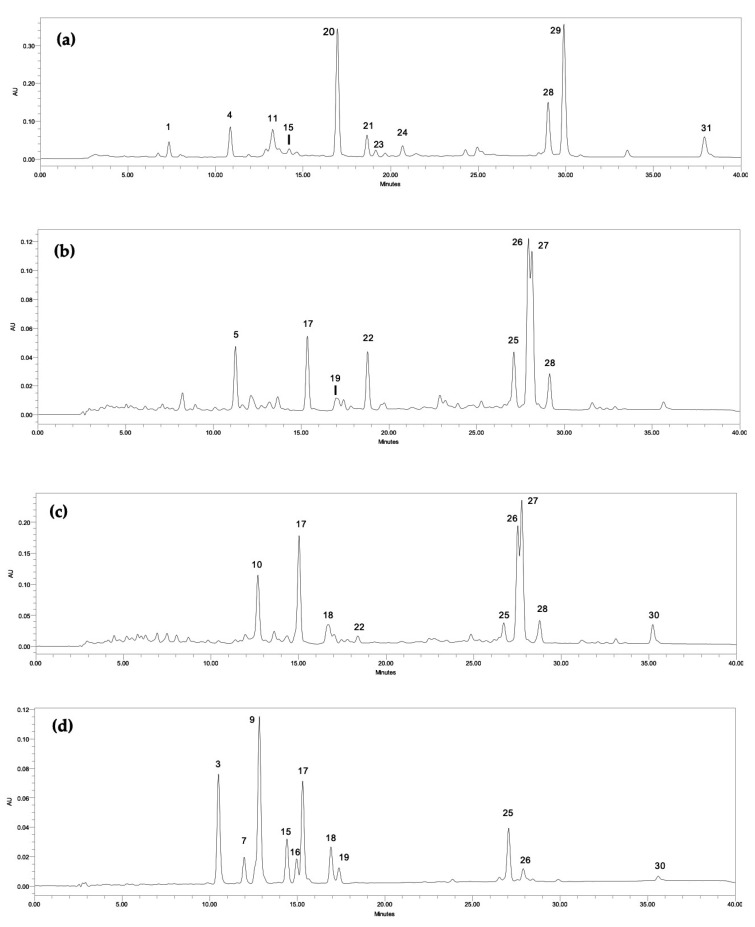
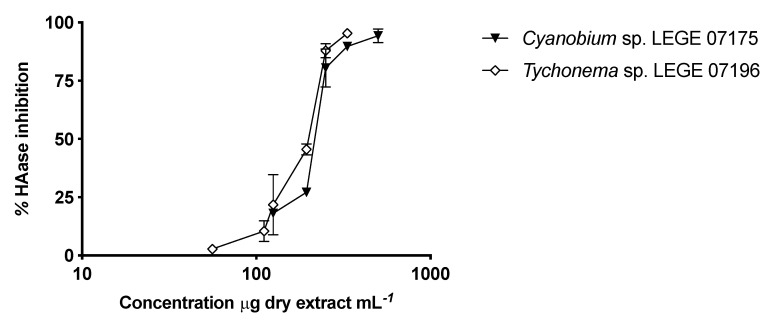
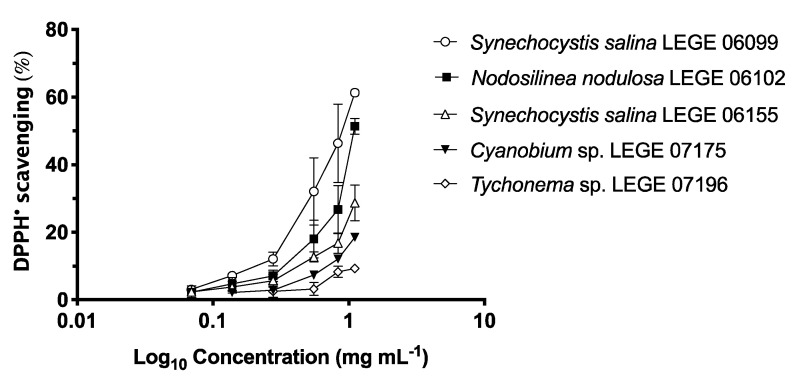
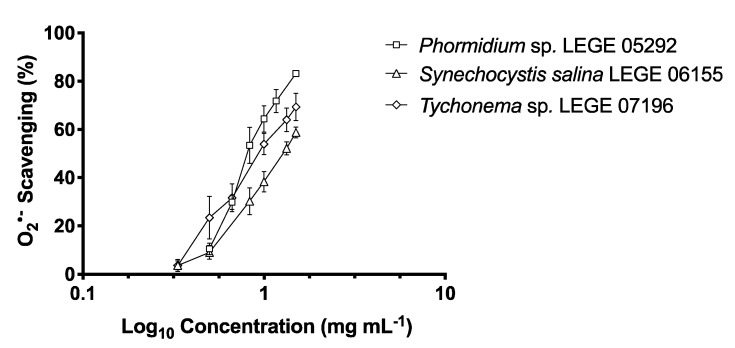
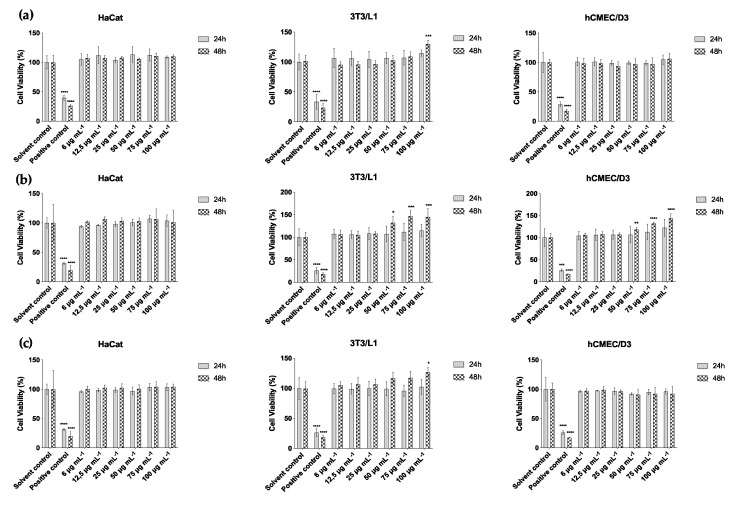
The use of natural products in skin care formulations gained interest as a concern for modern societies. The undesirable side effects of synthetic COMPOUNDS, as well as the associated environmental hazards, have driven investigation on photosynthetic organisms as sustainable sources of effective and environmentally friendly ingredients. The use of natural extracts in cosmetics has been highlighted and, along with plants and algae, cyanobacteria have come into focus. Due to their low culture demands, high grow rates and ability to produce a wide variability of bioactive metabolites, cyanobacteria emerged as an economic and sustainable base for the cosmetic industry. In this study, we evaluated the potential of ethanol extracts of picocyanobacteria strains of the genera and s and filamentous strains of the genera , and for skin applications, with focus in the field of anti-aging. The extracts were analyzed for their pigment profile, phenolic content, antioxidant potential, cytotoxicity against keratinocytes (HaCat), fibroblasts (3T3L1), endothelial cells (hCMEC/D3) and capacity to inhibit hyaluronidase (HAase). The total carotenoid content ranged from 118.69 to 383.89 μg g of dry biomass, and the total phenolic content from 1.07 to 2.45 mg GAE g. Identified carotenoids consisted of zeaxanthin, lutein, canthaxanthin, echinenone and β-carotene, with zeaxanthin and lutein being the most representative (49.82 and 79.08 μg g, respectively). The highest antioxidant potential was found for sp. LEGE 05292 and sp. LEGE 07196 for superoxide anion radical (O) scavenging (IC of 822.70 and 924 μg mL, respectively). Low or no cytotoxicity was registered. Regarding HAase inhibition, sp. LEGE 07196 and sp. LEGE 07175 showed the best IC (182.74 and 208.36 μg mL, respectively). In addition, an increase in fibroblast proliferation was registered with these same strains. From this work, the ethanol extracts of the species sp. and sp. are particularly interesting for their potential application in anti-aging formulations, once they stimulated fibroblast proliferation and inhibit hyaluronic acid digestion.
天然产物在皮肤护理配方中的应用因其对现代社会的关注而受到关注。合成化合物的不良副作用以及与之相关的环境危害,促使人们对光合生物进行研究,以寻找有效且环保的成分的可持续来源。天然提取物在化妆品中的应用得到了强调,与植物和藻类一样,蓝藻也成为了焦点。由于其培养要求低、生长速度快且能够产生广泛的生物活性代谢物,蓝藻成为了化妆品行业经济且可持续的基础。在这项研究中,我们评估了属的微藻菌株和属的丝状菌株以及属的丝状菌株的乙醇提取物在皮肤应用方面的潜力,重点是在抗衰老领域。对提取物的色素谱、酚含量、抗氧化潜力、对角质细胞 (HaCat)、成纤维细胞 (3T3L1) 和内皮细胞 (hCMEC/D3) 的细胞毒性以及抑制透明质酸酶 (HAase) 的能力进行了分析。总类胡萝卜素含量范围为 118.69 至 383.89 μg g 干生物质,总酚含量为 1.07 至 2.45 mg GAE g。鉴定出的类胡萝卜素包括玉米黄质、叶黄素、角黄素、echinenone 和β-胡萝卜素,其中玉米黄质和叶黄素含量最高(分别为 49.82 和 79.08 μg g)。属的 sp.LEGE 05292 和 sp.LEGE 07196 的超氧阴离子自由基 (O) 清除能力最高(IC 分别为 822.70 和 924 μg mL),抗氧化潜力最高。记录到低或无细胞毒性。关于透明质酸酶抑制,属的 sp.LEGE 07196 和 sp.LEGE 07175 的 IC 最好(分别为 182.74 和 208.36 μg mL)。此外,这些相同的菌株还能促进成纤维细胞增殖。从这项工作中,属的 sp.和 sp.的乙醇提取物特别有趣,因为它们具有刺激成纤维细胞增殖和抑制透明质酸消化的潜力,可用于抗衰老配方。