Albinsson David, Boje Astrid, Nilsson Sara, Tiburski Christopher, Hellman Anders, Ström Henrik, Langhammer Christoph
Department of Physics, Chalmers University of Technology, 412 96, Göteborg, Sweden.
Competence Centre for Catalysis, Chalmers University of Technology, 412 96, Göteborg, Sweden.
Nat Commun. 2020 Sep 24;11(1):4832. doi: 10.1038/s41467-020-18623-1.
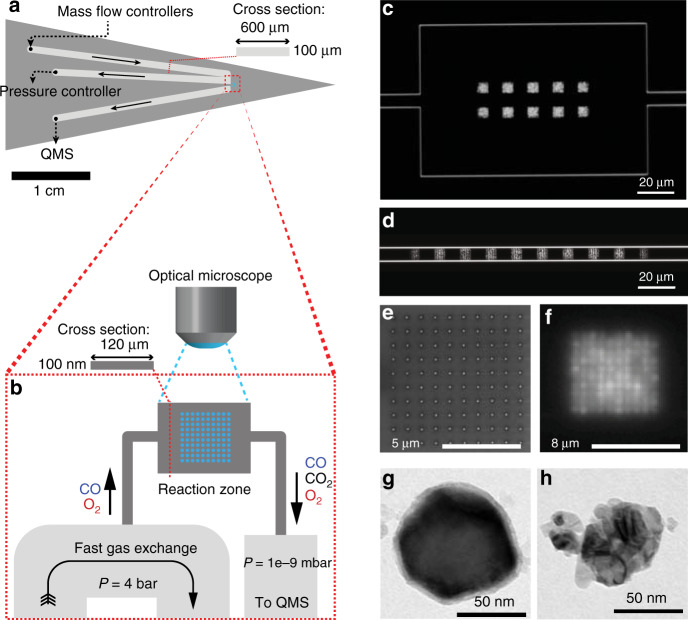
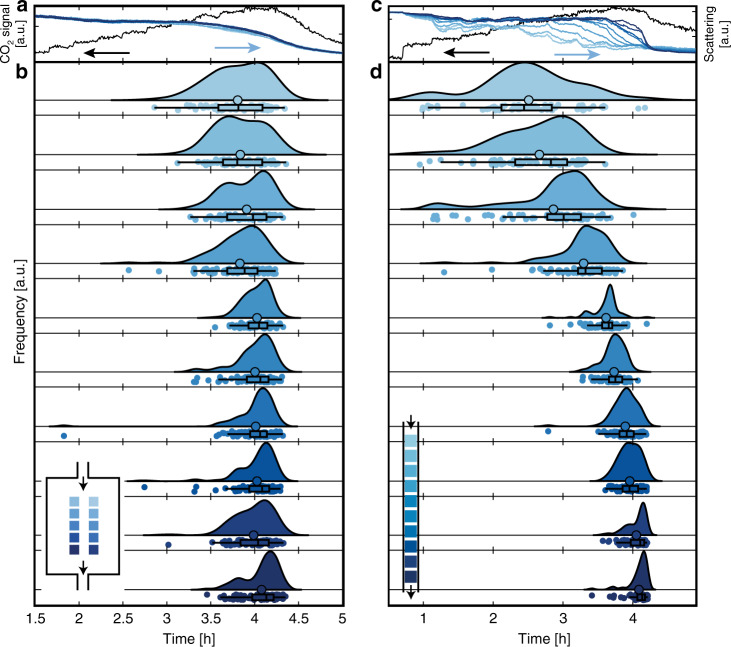
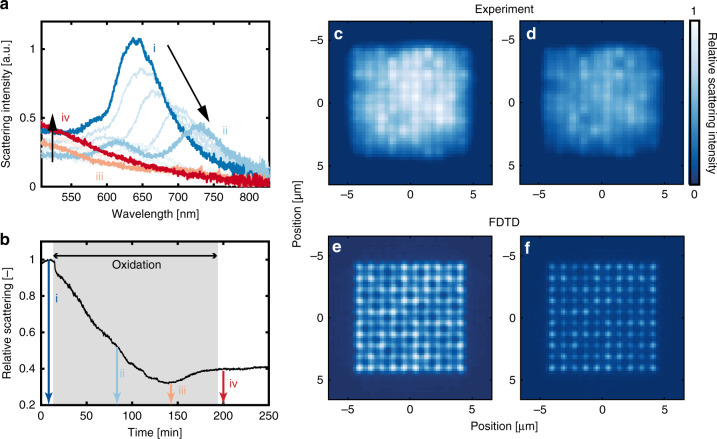
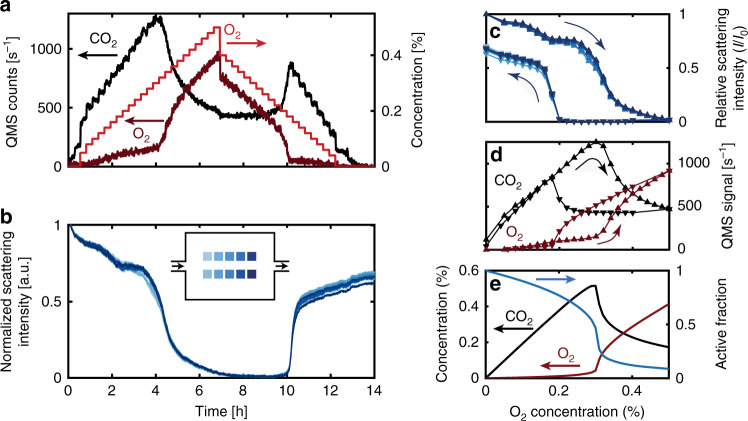
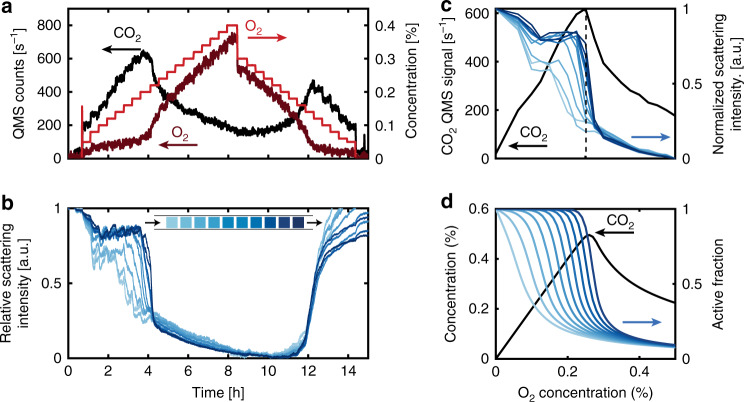
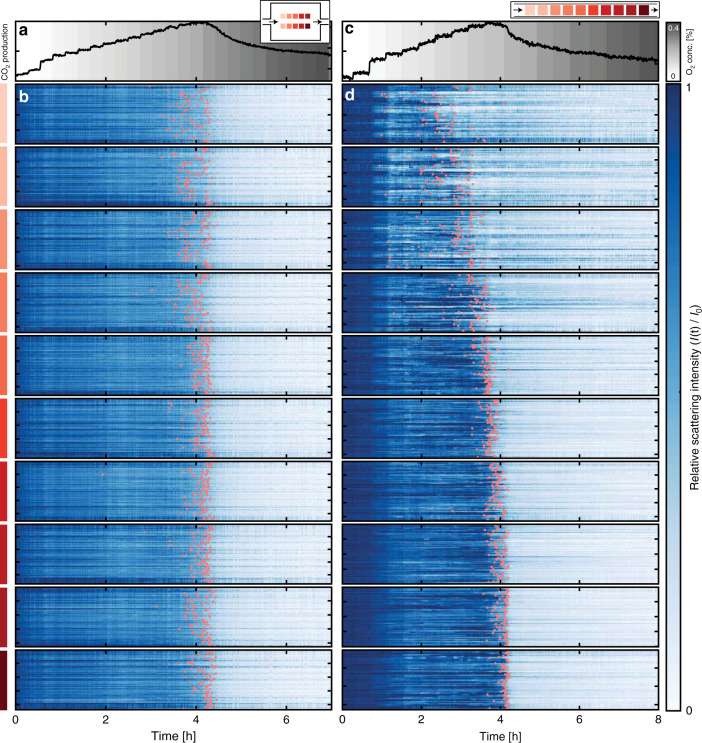
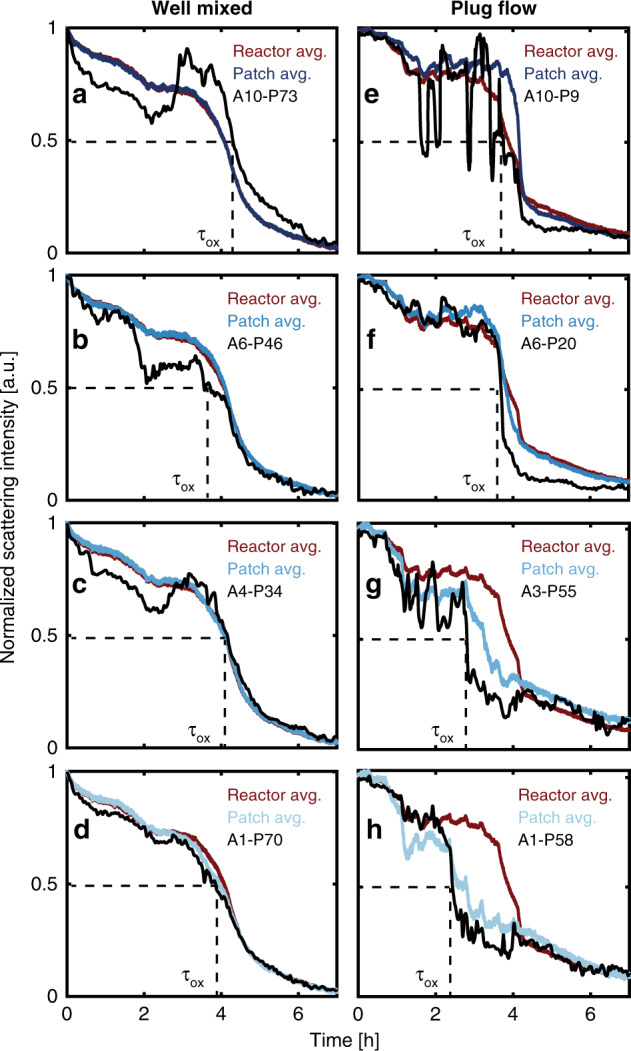
In catalysis, nanoparticles enable chemical transformations and their structural and chemical fingerprints control activity. To develop understanding of such fingerprints, methods studying catalysts at realistic conditions have proven instrumental. Normally, these methods either probe the catalyst bed with low spatial resolution, thereby averaging out single particle characteristics, or probe an extremely small fraction only, thereby effectively ignoring most of the catalyst. Here, we bridge the gap between these two extremes by introducing highly multiplexed single particle plasmonic nanoimaging of model catalyst beds comprising 1000 nanoparticles, which are integrated in a nanoreactor platform that enables online mass spectroscopy activity measurements. Using the example of CO oxidation over Cu, we reveal how highly local spatial variations in catalyst state dynamics are responsible for contradicting information about catalyst active phase found in the literature, and identify that both surface and bulk oxidation state of a Cu nanoparticle catalyst dynamically mediate its activity.
在催化过程中,纳米颗粒能够实现化学转化,其结构和化学特征控制着催化活性。为了深入理解这些特征,在实际条件下研究催化剂的方法已被证明很有帮助。通常,这些方法要么以低空间分辨率探测催化剂床层,从而使单个颗粒的特性平均化,要么只探测极小一部分,从而有效地忽略了大部分催化剂。在这里,我们通过引入对包含1000个纳米颗粒的模型催化剂床层进行高度复用的单颗粒等离子体纳米成像,弥合了这两个极端之间的差距,这些纳米颗粒集成在一个能够进行在线质谱活性测量的纳米反应器平台中。以铜上的一氧化碳氧化为例,我们揭示了催化剂状态动力学中高度局部的空间变化如何导致文献中关于催化剂活性相的信息相互矛盾,并确定铜纳米颗粒催化剂的表面和体相氧化态均动态调节其活性。