Institute of Environmental Assessment and Water Research (IDAEA), Spanish Research Council (CSIC), C/Jordi Girona 18-26, 08034 Barcelona, Spain.
Enteric Virus Laboratory, Dep. Genetics, Microbiology and Statistics, University of Barcelona, Avda. Diagonal 643, 08028 Barcelona, Spain.
Environ Int. 2021 Feb;147:106326. doi: 10.1016/j.envint.2020.106326. Epub 2020 Dec 9.
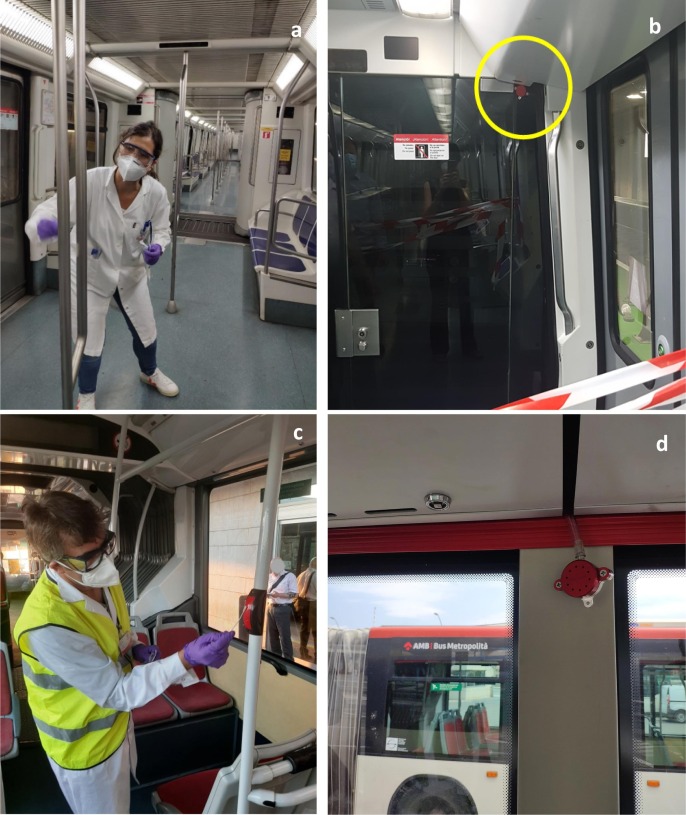
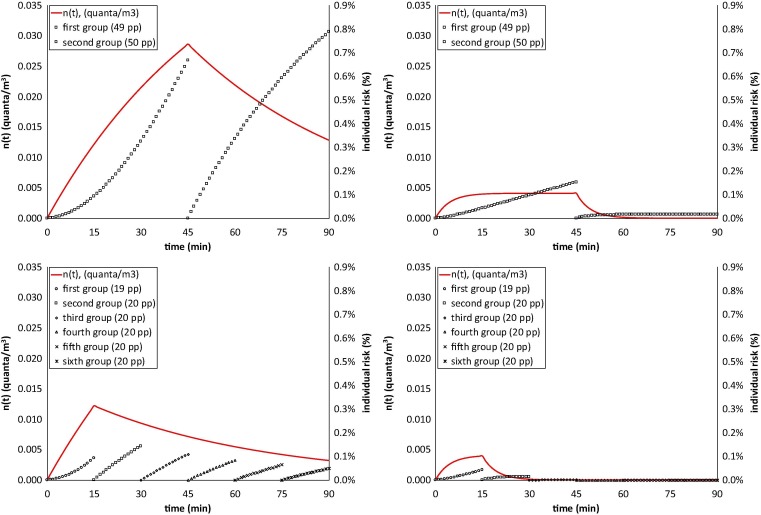
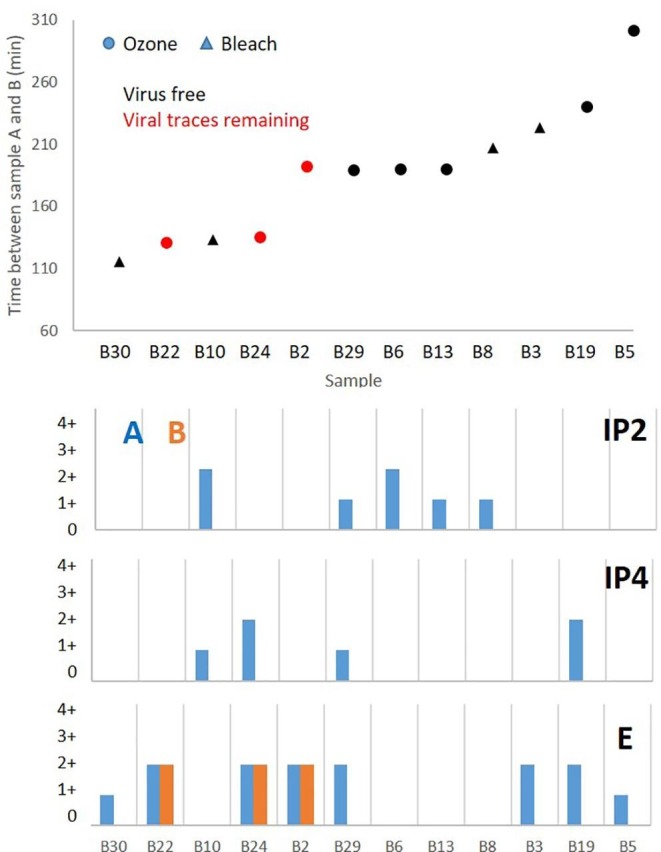
Given the widespread concern but general lack of information over the possibility of SARS-CoV-2 infection in public transport, key issues such as passenger personal hygiene, efficient air circulation systems, and the effective disinfection of frequently touched surfaces need to be evaluated to educate the public and diminish the risk of viral transmission as we learn to live with the ongoing pandemic. In this context we report on a study involving the collection of 99 samples taken from inside Barcelona buses and subway trains in May to July 2020. From this sample group 82 (58 surface swabs, 9 air conditioning (a/c) filters, 3 a/c dust, 12 ambient air) were selected to be analysed by RT-PCR for traces of the SARS-CoV-2 virus. Thirty of these selected samples showed evidence for one or more of 3 target RNA gene regions specific for this virus (IP2, IP4, E). Most (24) of these 30 samples showed positivity for only 1 of the 3 RNA targets, 4 samples yielded 2 targets, and 2 samples provided evidence for all 3 targets. RNA remnants were more common in surface swabs from support bars (23 out of 58) than in ambient air inside the vehicles (3 out of 12), with relatively higher concentrations of viral RNA fragments in buses rather than in trains. Whereas subway train a/c filters examined were all virus-free, 4 of the 9 bus a/c filter/dust samples yielded evidence for viral RNA. After nocturnal maintenance and cleaning most buses initially yielding positive results subsequently showed elimination of the RT-PCR signal, although signs of viral RNA remained in 4 of 13 initially positive samples. The presence of such remnant viral traces however does not demonstrate infectivity, which in the present study is considered unlikely given the fragmentary nature of the gene targets detected. Nevertheless, best practice demands that close attention to ventilation systems and regular vehicle disinfection in public transport worldwide need to be rigorously applied to be effective at eliminating traces of the virus throughout the vehicle, especially at times when COVID-19 cases are peaking. Additionally, infectivity tests should be implemented to evaluate the efficiency of disinfection procedures to complement the information resulting from RT-PCR analysis. Modelling the probability of infection whilst travelling in buses under different scenarios indicates that forced ventilation greatly reduces the risk.
鉴于人们普遍关注但普遍缺乏有关 SARS-CoV-2 感染公共交通工具可能性的信息,需要评估乘客个人卫生、高效的空气流通系统以及经常触摸表面的有效消毒等关键问题,以便在我们学会与持续大流行共存的同时,向公众普及知识并降低病毒传播的风险。在这种情况下,我们报告了一项涉及 2020 年 5 月至 7 月间从巴塞罗那公共汽车和地铁列车内采集 99 个样本的研究。从该样本组中选择了 82 个样本(58 个表面拭子、9 个空调(a/c)过滤器、3 个 a/c 灰尘、12 个环境空气),通过 RT-PCR 分析这些样本是否存在 SARS-CoV-2 病毒的痕迹。在这 30 个选定的样本中,有 30 个样本显示出一种或多种针对该病毒的 3 个特定 RNA 基因区域的证据(IP2、IP4、E)。这些 30 个样本中的大多数(24 个)仅对 3 个 RNA 目标中的 1 个呈阳性,4 个样本产生了 2 个目标,2 个样本提供了所有 3 个目标的证据。与车内环境空气(12 个中的 3 个)相比,扶手处表面拭子上的 RNA 残留物更为常见(58 个中的 23 个),公共汽车中的病毒 RNA 片段浓度相对较高,而地铁列车中的浓度则较低。虽然经过夜间维护和清洁,最初产生阳性结果的大多数公共汽车随后消除了 RT-PCR 信号,但在最初阳性的 13 个样本中,仍有 4 个样本显示出病毒 RNA 的痕迹。然而,这些残余病毒痕迹的存在并不能证明其具有传染性,考虑到所检测到的基因靶标的片段性质,在本研究中,这种可能性被认为不大。尽管如此,在全球范围内,最好的做法是需要密切关注通风系统和公共交通工具的定期车辆消毒,以有效地消除整个车辆中的病毒痕迹,尤其是在 COVID-19 病例高峰期时。此外,应实施感染性测试以评估消毒程序的效率,以补充 RT-PCR 分析的结果。在不同情况下模拟公共汽车旅行中的感染概率表明,强制通风可大大降低风险。