Riva Alessandra, Kolimár Ditta, Spittler Andreas, Wisgrill Lukas, Herbold Craig W, Abrankó László, Berry David
Centre for Microbiology and Environmental Systems Science, Department of Microbiology and Ecosystem Science, Division of Microbial Ecology, University of Vienna, Vienna, Austria.
Faculty of Food Science, Department of Applied Chemistry, Szent István University, Budapest, Hungary.
Front Microbiol. 2020 Dec 21;11:585428. doi: 10.3389/fmicb.2020.585428. eCollection 2020.
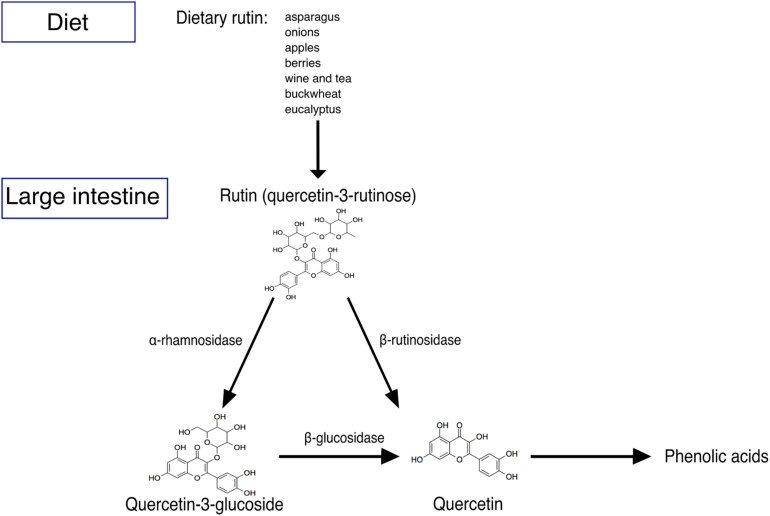
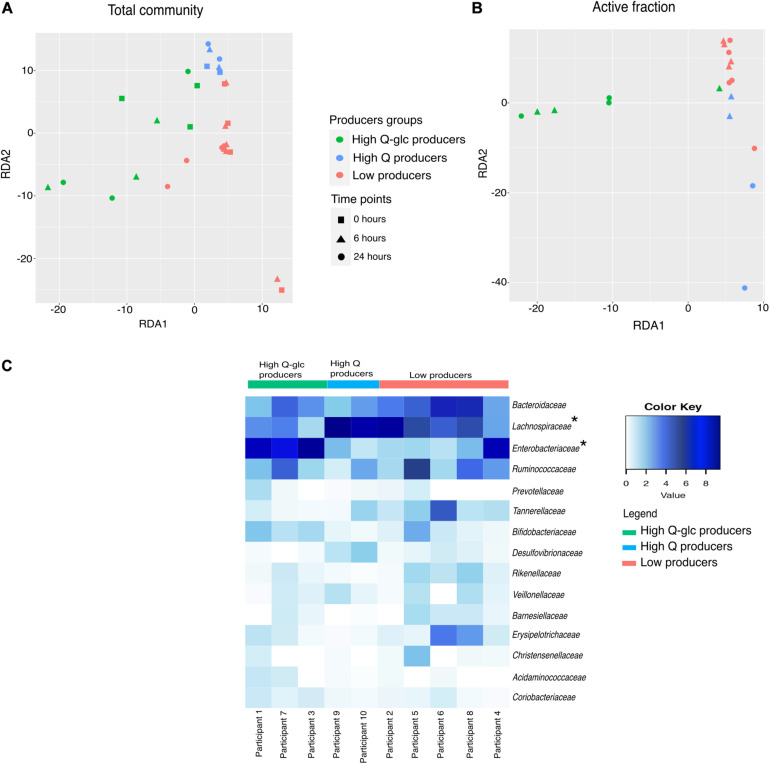
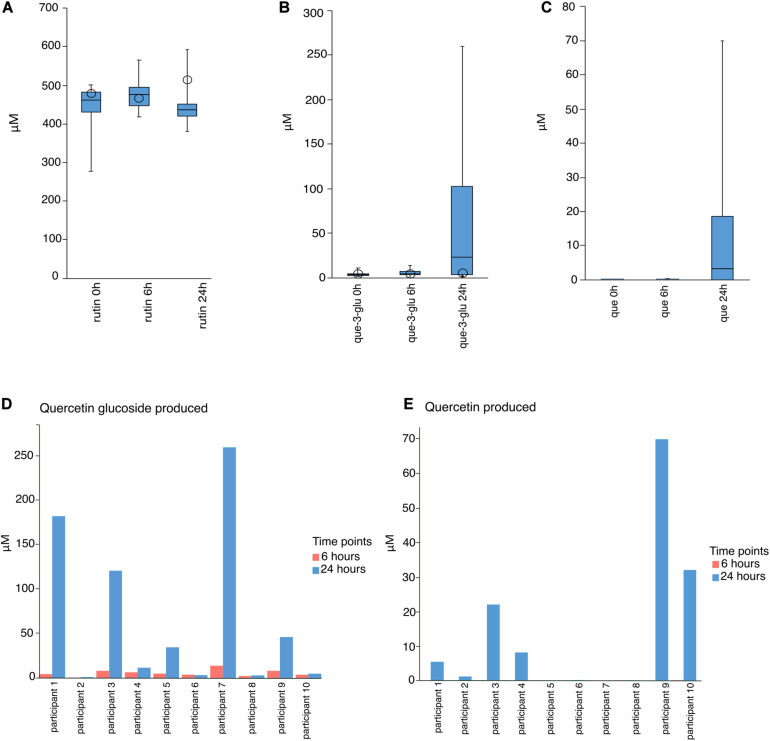
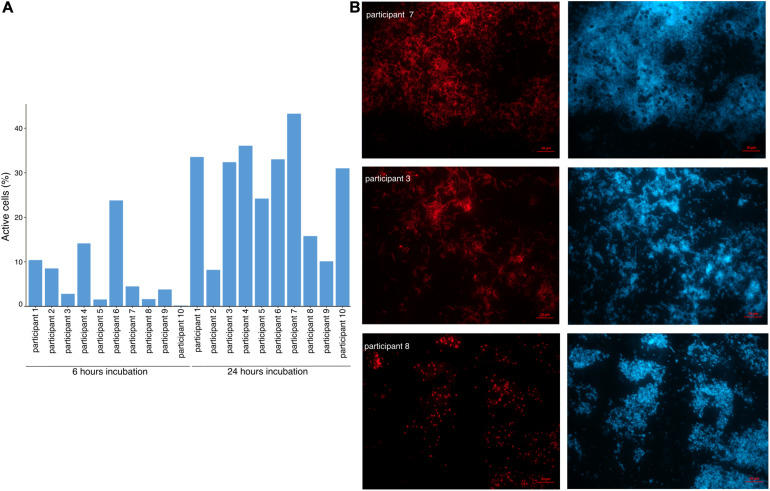
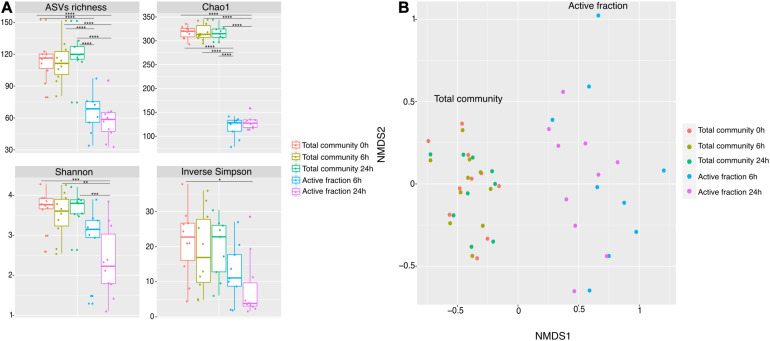
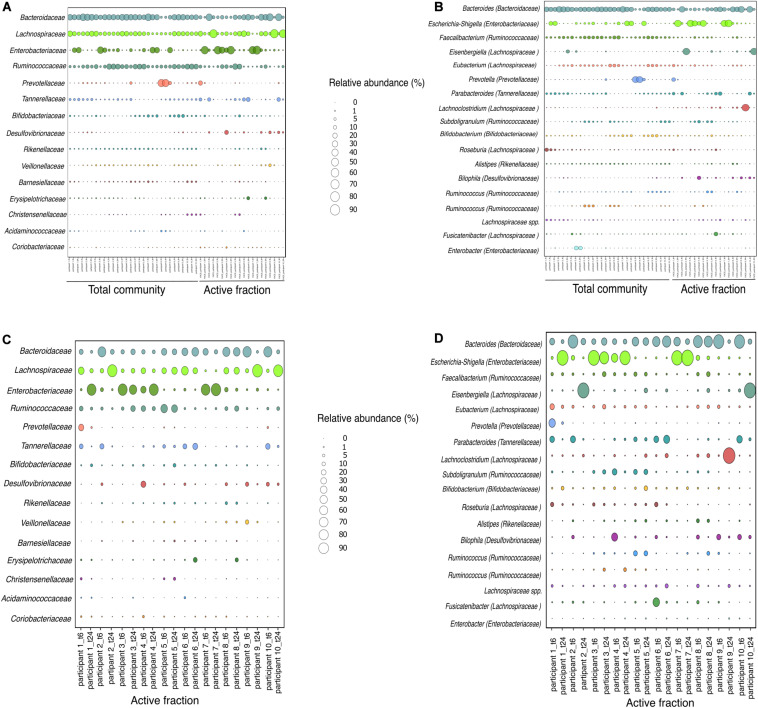
The gut microbiota plays a pivotal role in the conversion of dietary flavonoids, which can affect their bioavailability and bioactivity and thereby their health-promoting properties. The ability of flavonoids to metabolically-activate the microbiota has, however, not been systematically evaluated. In the present study, we used a fluorescence-based single-cell activity measure [biorthogonal non-canonical ammino acid-tagging (BONCAT)] combined with fluorescence activated cell sorting (FACS) to determine which microorganisms are metabolically-active after amendment of the flavonoid rutin. We performed anaerobic incubations of human fecal microbiota amended with rutin and in the presence of the cellular activity marker L-azidohomoalanine (AHA) to detect metabolically-active cells. We found that 7.3% of cells in the gut microbiota were active after a 6 h incubation and 26.9% after 24 h. We then sorted BONCAT-positive cells and observed an enrichment of ( and ), , and species in the rutin-responsive fraction of the microbiota. There was marked inter-individual variability in the appearance of rutin conversion products after incubation with rutin. Consistent with this, there was substantial variability in the abundance of rutin-responsive microbiota among different individuals. Specifically, we observed that were associated with conversion of rutin into quercetin-3-glucoside (Q-glc) and were associated with quercetin (Q) production. This suggests that individual microbiotas differ in their ability to metabolize rutin and utilize different conversion pathways.
肠道微生物群在膳食类黄酮的转化过程中起着关键作用,这会影响类黄酮的生物利用度和生物活性,进而影响其促进健康的特性。然而,类黄酮对微生物群进行代谢激活的能力尚未得到系统评估。在本研究中,我们使用基于荧光的单细胞活性测量方法[生物正交非天然氨基酸标记(BONCAT)]结合荧光激活细胞分选(FACS)来确定在用类黄酮芦丁处理后哪些微生物具有代谢活性。我们对添加了芦丁并存在细胞活性标记物L-叠氮高丙氨酸(AHA)的人类粪便微生物群进行厌氧培养,以检测具有代谢活性的细胞。我们发现,肠道微生物群中7.3%的细胞在培养6小时后具有活性,24小时后这一比例为26.9%。然后我们对BONCAT阳性细胞进行分选,并在微生物群的芦丁反应部分观察到( 和 )、 以及 物种的富集。在用芦丁孵育后,芦丁转化产物的出现存在明显的个体间差异。与此一致的是,不同个体之间芦丁反应性微生物群的丰度也存在很大差异。具体而言,我们观察到 与芦丁转化为槲皮素-3-葡萄糖苷(Q-葡萄糖苷)有关, 与槲皮素(Q)的产生有关。这表明个体微生物群在代谢芦丁和利用不同转化途径的能力方面存在差异。