Department of Animal Breeding, Animal Nutrition and Biochemistry, Faculty of Veterinary Hygiene and Ecology, University of Veterinary and Pharmaceutical Sciences, 61242 Brno, Czech Republic.
Department of Biochemistry, Faculty of Science, Masaryk University, 61137 Brno, Czech Republic.
Toxins (Basel). 2021 Jan 5;13(1):32. doi: 10.3390/toxins13010032.
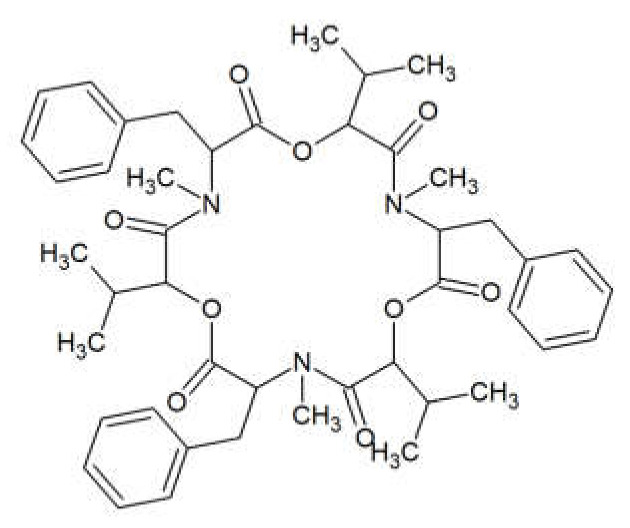
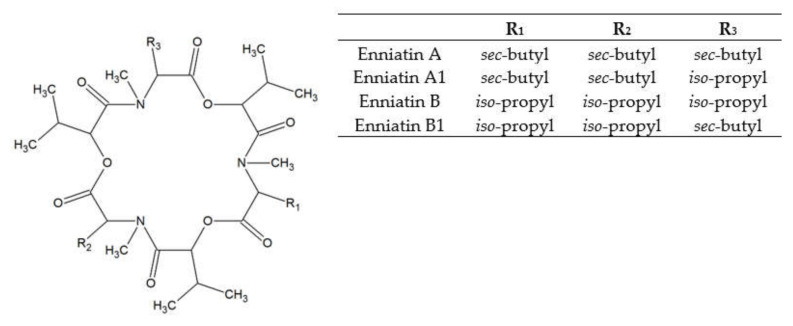
Mycotoxins are secondary metabolites produced by several species of fungi, including the , , and species. Currently, more than 300 structurally diverse mycotoxins are known, including a group called minor mycotoxins, namely enniatins, beauvericin, and fusaproliferin. Beauvericin and enniatins possess a variety of biological activities. Their antimicrobial, antibiotic, or ionoforic activities have been proven and according to various bioassays, they are believed to be toxic. They are mainly found in cereal grains and their products, but they have also been detected in forage feedstuff. Mycotoxins in feedstuffs of livestock animals are of dual concern. First one relates to the safety of animal-derived food. Based on the available data, the carry-over of minor mycotoxins from feed to edible animal tissues is possible. The second concern relates to detrimental effects of mycotoxins on animal health and performance. This review aims to summarize current knowledge on the relation of minor mycotoxins to livestock animals.
真菌产生的次级代谢产物,包括 、 和 等物种。目前已知超过 300 种结构不同的真菌毒素,包括一组称为次要真菌毒素,即恩镰孢菌素、 beauvericin 和 fusaproliferin。Beauvericin 和 enniatins 具有多种生物活性。它们的抗菌、抗生素或离子通道活性已得到证实,根据各种生物测定,它们被认为是有毒的。它们主要存在于谷物及其制品中,但也已在饲料中检测到。饲料中的真菌毒素对牲畜动物具有双重影响。一方面与动物源性食品的安全性有关。根据现有数据,从饲料到食用动物组织中微量真菌毒素的转移是可能的。另一个担忧与真菌毒素对动物健康和性能的不利影响有关。本文综述了目前关于次要真菌毒素与家畜动物关系的知识。