Alkahtani Masfer, Alsofyani Najla, Alfahd Anfal, Almuqhim Anas A, Almughem Fahad A, Alshehri Abdullah A, Qasem Hussam, Hemmer Philip R
King Abdulaziz City for Science and Technology (KACST), Riyadh 11442, Saudi Arabia.
Institute for Quantum Science and Engineering, Texas A&M University, College Station, TX 77843, USA.
Nanomaterials (Basel). 2021 Jan 22;11(2):284. doi: 10.3390/nano11020284.
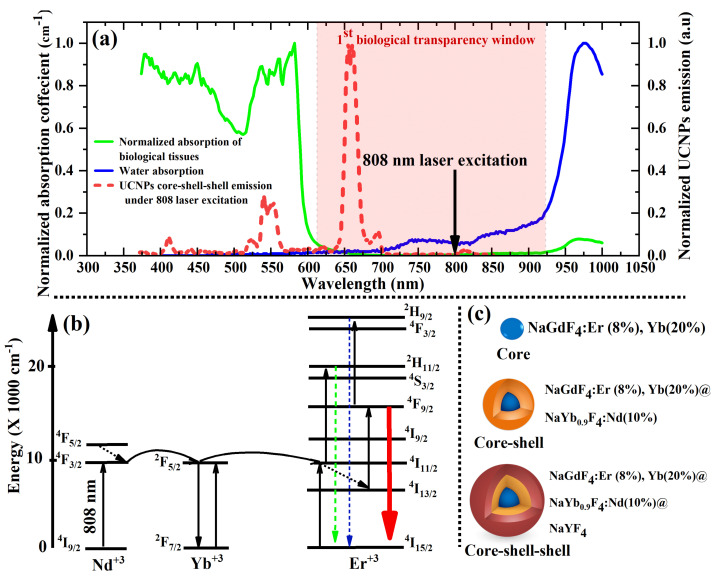
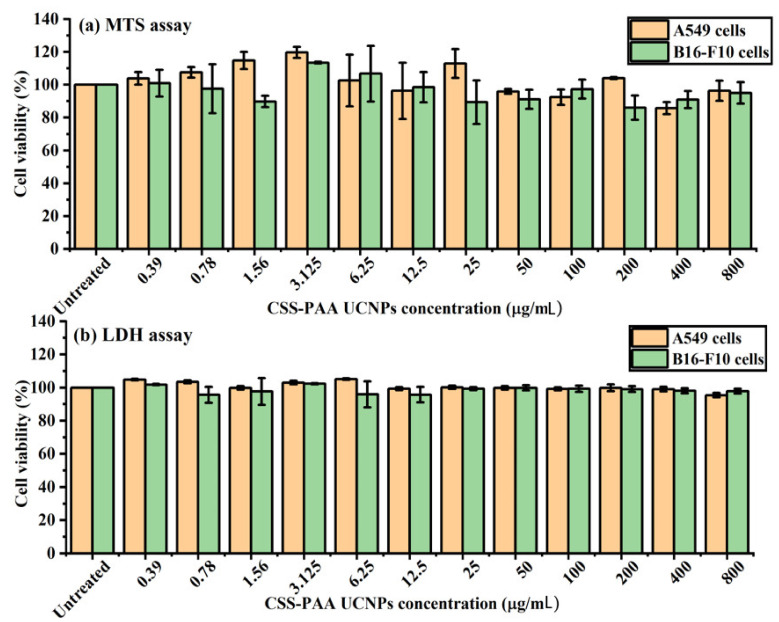
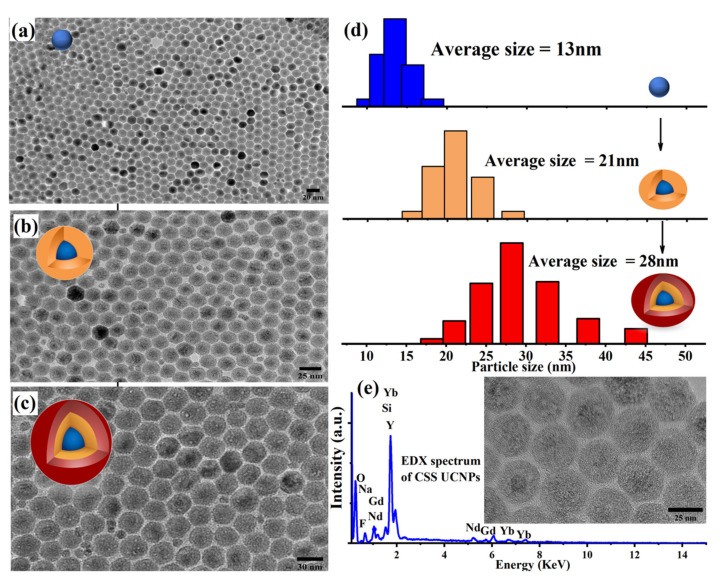
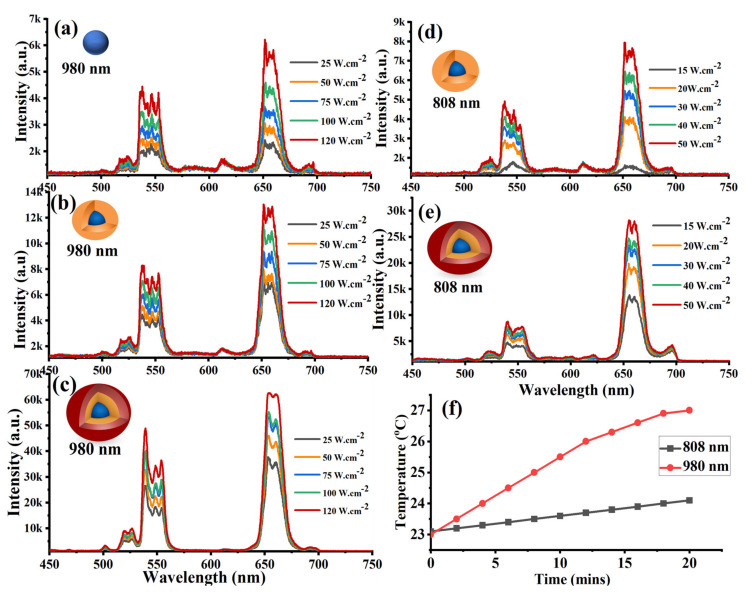
The exceptional optical properties of lanthanide-doped upconversion nanoparticles (UCNPs) make them among the best fluorescent markers for many promising bioapplications. To fully utilize the unique advantages of the UCNPs for bioapplications, recent significant efforts have been put into improving the brightness of small UCNPs crystals by optimizing dopant concentrations and utilizing the addition of inert shells to avoid surface quenching effects. In this work, we engineered bright and small size upconversion nanoparticles in a core-shell-shell (CSS) structure. The emission of the synthesized CSS UCNPs is enhanced in the biological transparency window under biocompatible excitation wavelength by optimizing dopant ion concentrations. We also investigated the biosafety of the synthesized CSS UCNP particles in living cell models to ensure bright and non-toxic fluorescent probes for promising bioapplications.
镧系元素掺杂的上转换纳米颗粒(UCNPs)具有卓越的光学特性,使其成为许多有前景的生物应用中最佳的荧光标记物之一。为了充分利用UCNPs在生物应用中的独特优势,最近人们付出了巨大努力,通过优化掺杂剂浓度和添加惰性壳层以避免表面猝灭效应,来提高小尺寸UCNPs晶体的亮度。在这项工作中,我们设计了一种核壳壳(CSS)结构的明亮且尺寸小的上转换纳米颗粒。通过优化掺杂离子浓度,合成的CSS UCNPs在生物相容性激发波长下的生物透明窗口中发射增强。我们还在活细胞模型中研究了合成的CSS UCNP颗粒的生物安全性,以确保为有前景的生物应用提供明亮且无毒的荧光探针。