Division of Marine Biotechnology, University of Gdańsk, Marszałka J. Piłsudskiego 46, PL-81-378 Gdynia, Poland.
Institute of Oceanology, Polish Academy of Science, Powstańców Warszawy 55, PL-81-712 Sopot, Poland.
Biomolecules. 2021 Mar 22;11(3):474. doi: 10.3390/biom11030474.
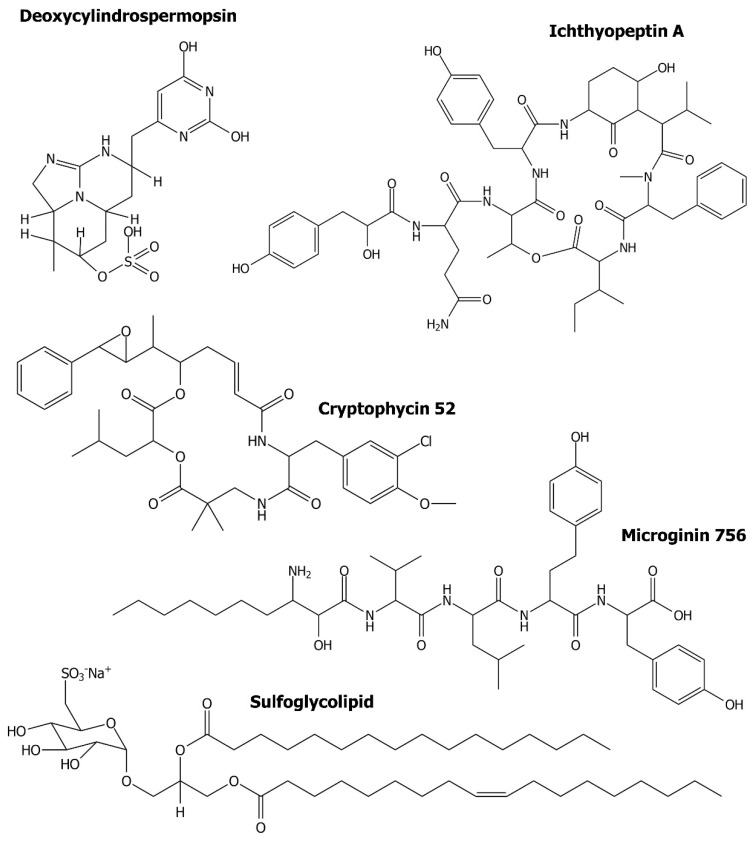
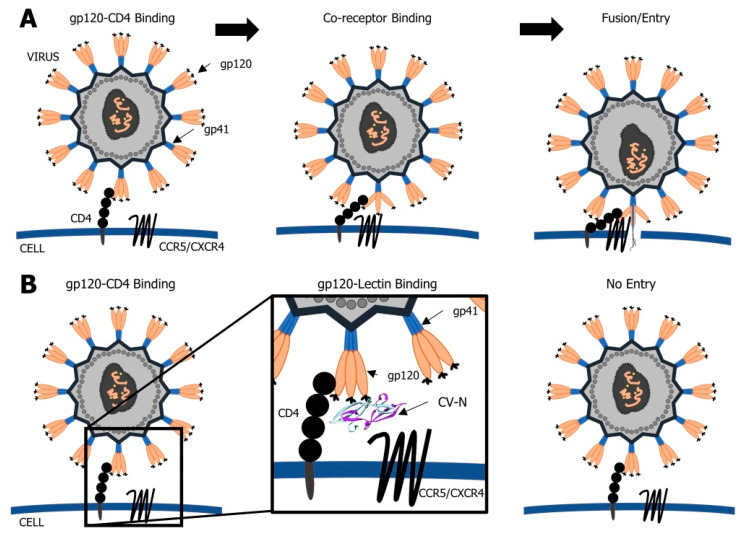
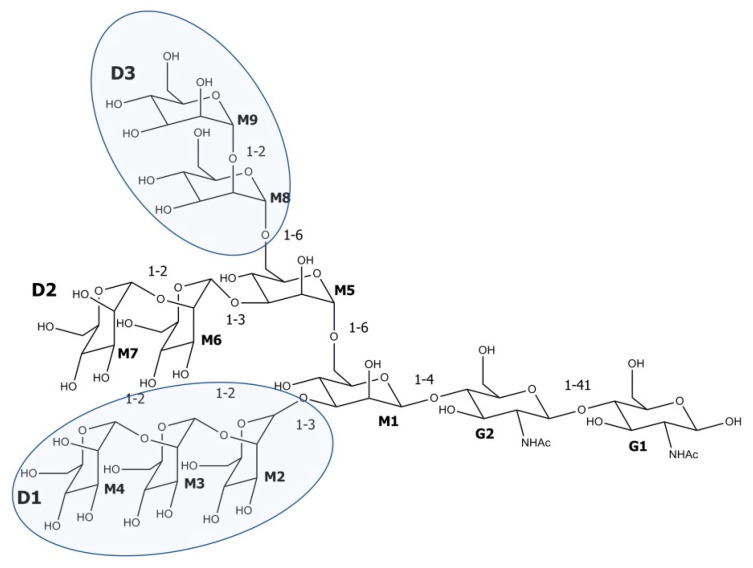
Global processes, such as climate change, frequent and distant travelling and population growth, increase the risk of viral infection spread. Unfortunately, the number of effective and accessible medicines for the prevention and treatment of these infections is limited. Therefore, in recent years, efforts have been intensified to develop new antiviral medicines or vaccines. In this review article, the structure and activity of the most promising antiviral cyanobacterial products are presented. The antiviral cyanometabolites are mainly active against the human immunodeficiency virus (HIV) and other enveloped viruses such as herpes simplex virus (HSV), Ebola or the influenza viruses. The majority of the metabolites are classified as lectins, monomeric or dimeric proteins with unique amino acid sequences. They all show activity at the nanomolar range but differ in carbohydrate specificity and recognize a different epitope on high mannose oligosaccharides. The cyanobacterial lectins include cyanovirin-N (CV-N), scytovirin (SVN), microvirin (MVN), lectin (MVL), and agglutinin (OAA). Cyanobacterial polysaccharides, peptides, and other metabolites also have potential to be used as antiviral drugs. The sulfated polysaccharide, calcium spirulan (CA-SP), inhibited infection by enveloped viruses, stimulated the immune system's response, and showed antitumor activity. Microginins, the linear peptides, inhibit angiotensin-converting enzyme (ACE), therefore, their use in the treatment of COVID-19 patients with injury of the ACE2 expressing organs is considered. In addition, many cyanobacterial extracts were revealed to have antiviral activities, but the active agents have not been identified. This fact provides a good basis for further studies on the therapeutic potential of these microorganisms.
全球进程,如气候变化、频繁和远距离旅行以及人口增长,增加了病毒感染传播的风险。不幸的是,用于预防和治疗这些感染的有效和可获得的药物数量有限。因此,近年来,人们加紧努力开发新的抗病毒药物或疫苗。在这篇综述文章中,介绍了最有前途的抗病毒蓝细菌产品的结构和活性。抗病毒蓝细菌代谢产物主要针对人类免疫缺陷病毒(HIV)和其他包膜病毒,如单纯疱疹病毒(HSV)、埃博拉病毒或流感病毒。大多数代谢产物被归类为凝集素,即具有独特氨基酸序列的单体或二聚体蛋白。它们都在纳摩尔范围内表现出活性,但在碳水化合物特异性上有所不同,并且识别高甘露糖寡糖上不同的表位。蓝细菌凝集素有氰病毒 N(CV-N)、丝氨酸(SVN)、微病毒(MVN)、凝集素(MVL)和凝集素(OAA)。蓝细菌多糖、肽和其他代谢产物也有可能被用作抗病毒药物。硫酸化多糖、钙螺旋藻(CA-SP)抑制包膜病毒感染,刺激免疫系统反应,并具有抗肿瘤活性。线性肽微肌肽抑制血管紧张素转换酶(ACE),因此,考虑将其用于治疗 ACE2 表达器官受损的 COVID-19 患者。此外,许多蓝细菌提取物显示出抗病毒活性,但活性物质尚未确定。这一事实为进一步研究这些微生物的治疗潜力提供了良好的基础。