Martínez-Rodríguez Alejandro, Vicente-Martínez Manuel, Sánchez-Sánchez Javier, Miralles-Amorós Laura, Martínez-Olcina María, Sánchez-Sáez Juan Antonio
Department of Analytical Chemistry, Nutrition and Food Science, Faculty of Sciences, Alicante University, 03690 Alicante, Spain.
Alicante Institute for Health and Biomedical Research (ISABIAL Foundation), 03010 Alicante, Spain.
Children (Basel). 2021 Mar 22;8(3):245. doi: 10.3390/children8030245.
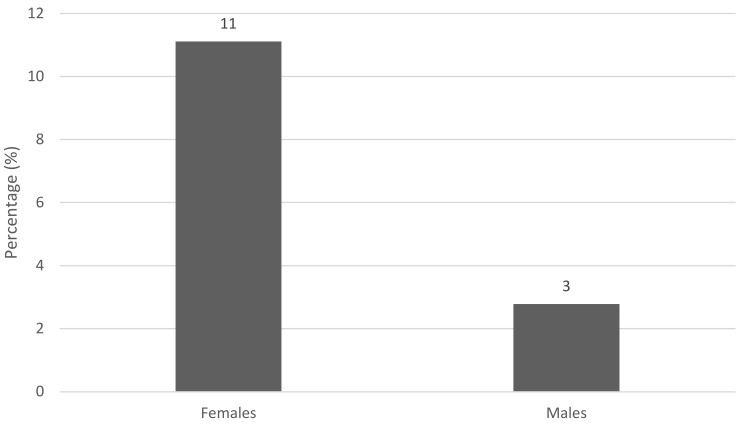
(1) Background: The preoccupation with the increasing appearance of eating disorders (ED) in athletes continues to grow, especially in athletes who practice team sports. ED severely affects the eating habits of the athletes, who tend to use unhealthy approaches to control their body weight. The development of nutritional education and early interventions by training staff is essential, and these factors are widely perceived as beneficial in sports medicine. This study evaluates the frequency at which beach handball (BH) players develop ED, also comparing the differences by sex and age (junior: adolescents vs. senior: young adults). In addition, the relation between body composition variables and ED was studied. (2) Methods: A descriptive and cross-sectional study was carried out in 69 top elite handball players (36 males and 33 females) from the Spanish National BH Team; who were separated by age (junior: adolescents and senior: young adults). The athletes completed the Eating Attitudes Test in its 26 item version (EAT-26). (3) Results: The prevalence of ED indicated that 11% of females had a high possibility of developing an ED, and 3% of males. Regarding the EAT-26 total score and subscales, no significant differences were found between female and male participants, or between the junior and senior categories. The correlations showed an association between body composition, in terms of body mass index, and the EAT-26 total score in both males and females. In the case of males, the correlation was negative. (4) Conclusions: Although there are no significant differences between sex or categories, it has been found that elite athletes are a population that is at high risk of developing ED.
(1)背景:人们对运动员中饮食失调(ED)现象日益增多的关注持续升温,尤其是在从事团队运动的运动员中。饮食失调严重影响运动员的饮食习惯,他们往往采用不健康的方法来控制体重。训练人员开展营养教育和早期干预至关重要,这些因素在运动医学领域被广泛认为是有益的。本研究评估沙滩手球(BH)运动员饮食失调的发生率,并比较性别和年龄(青少年组:青少年与成年组:年轻人)之间的差异。此外,还研究了身体成分变量与饮食失调之间的关系。(2)方法:对来自西班牙国家沙滩手球队的69名顶级精英手球运动员(36名男性和33名女性)进行了描述性横断面研究;按年龄分组(青少年组:青少年和成年组:年轻人)。运动员完成了26项版本的饮食态度测试(EAT - 26)。(3)结果:饮食失调的患病率表明,11%的女性有较高的饮食失调发生可能性,男性为3%。关于EAT - 26总分及各子量表,女性和男性参与者之间,以及青少年组和成年组之间均未发现显著差异。相关性分析表明,就体重指数而言,身体成分与男性和女性的EAT - 26总分之间存在关联。在男性中,这种相关性为负。(4)结论:尽管性别或组别之间没有显著差异,但已发现精英运动员是饮食失调高发风险人群。