Chen Li, Bai Ping, Kong Xiangyi, Huang Shaolong, Wang Zhongzhao, Wang Xiangyu, Fang Yi, Wang Jing
Department of Breast Surgical Oncology, National Cancer Center/National Clinical Research Center for Cancer/Cancer Hospital, Chinese Academy of Medical Sciences and Peking Union Medical College, Beijing, China.
Department of Operation Room, National Cancer Center/National Clinical Research Center for Cancer/Cancer Hospital, Chinese Academy of Medical Sciences and Peking Union Medical College, Beijing, China.
Front Cell Dev Biol. 2021 Mar 30;9:656741. doi: 10.3389/fcell.2021.656741. eCollection 2021.
Prognostic nutritional index (PNI), calculated as serum albumin (ALB) (g/L) + 5 × total lymphocyte count (10/L), is initially used to evaluate nutritional status in patients undergoing surgery and may evaluate the therapeutic effects and predict the survival of various solid tumors. The present study aimed to evaluate the potential prognostic significance of PNI in breast cancer patients receiving neoadjuvant chemotherapy (NACT).
A total of 785 breast cancer patients treated with neoadjuvant chemotherapy were enrolled in this retrospective study. The optimal cutoff value of PNI by receiver operating characteristic curve stratified patients into a low-PNI group (<51) and a high PNI group (≥51). The associations between breast cancer and clinicopathological variables by PNI were determined by chi-square test or Fisher's exact test. Kaplan-Meier plots and log-rank test were used to evaluate the clinical outcomes of disease-free survival (DFS) and overall survival (OS). The prognostic value of PNI was analyzed by univariate and multivariate Cox proportional hazards regression models. The toxicity of NACT was accessed by the National Cancer Institute Common Toxicity Criteria (NCI-CTC).
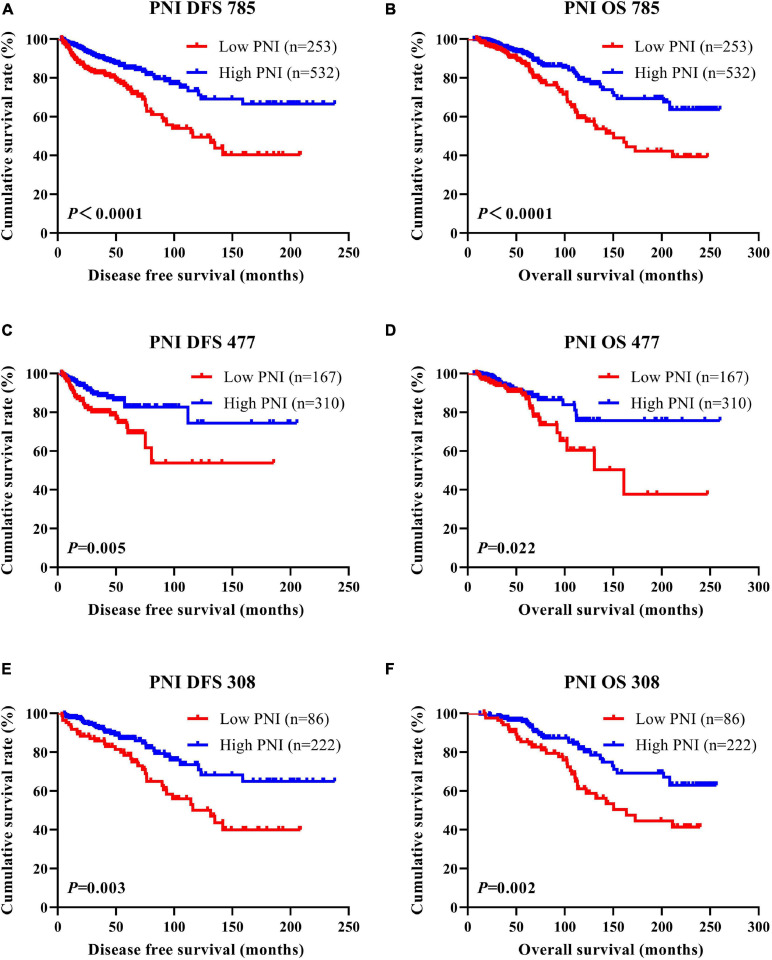
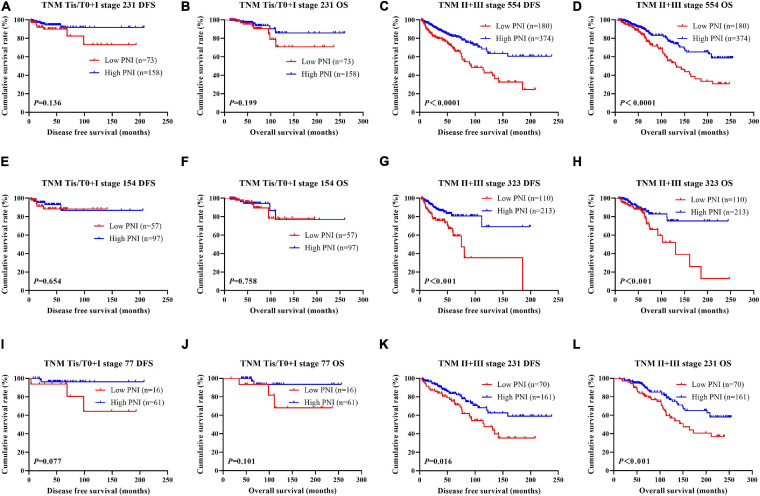
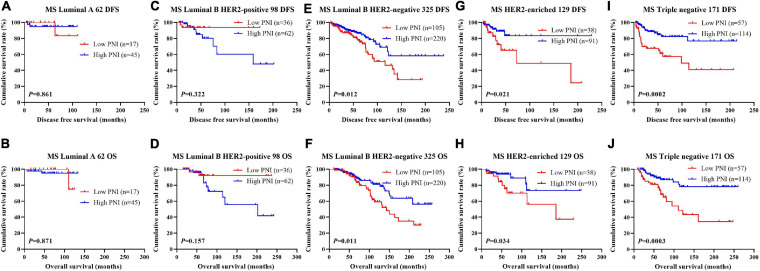
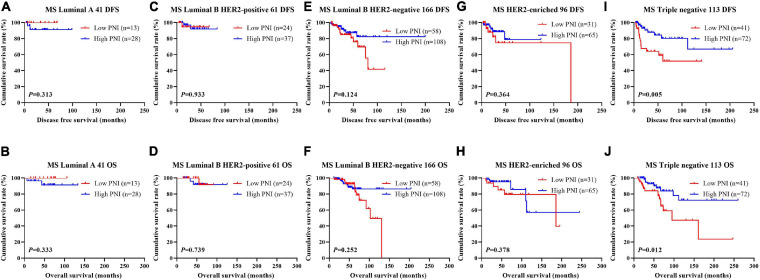
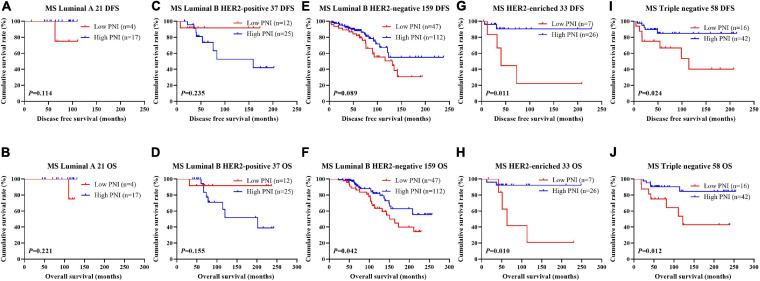
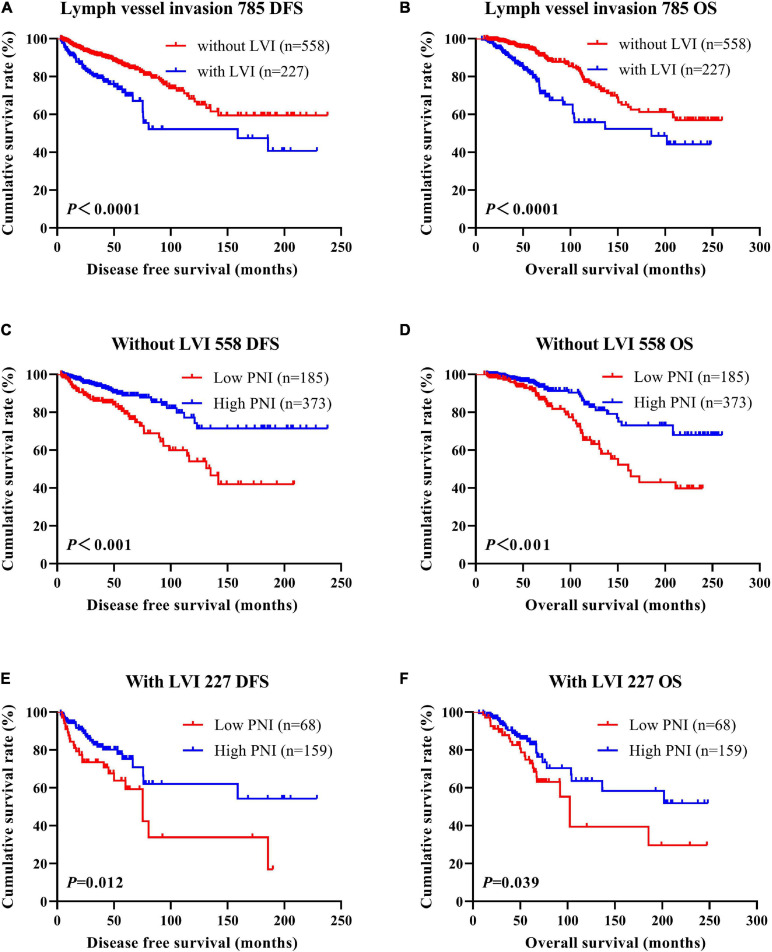
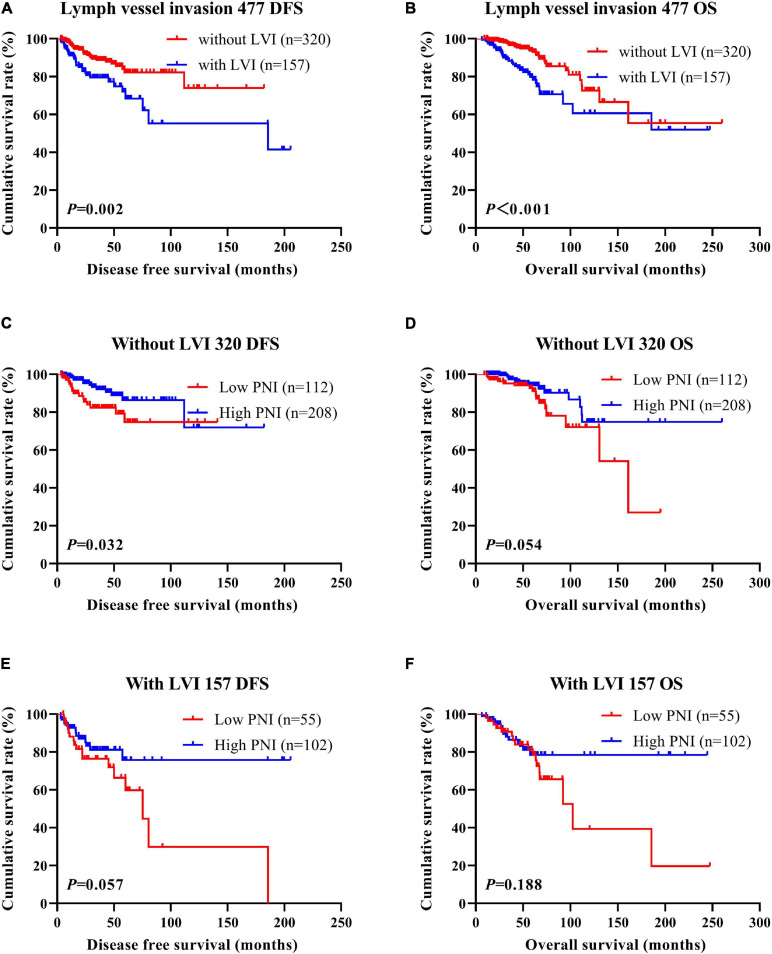
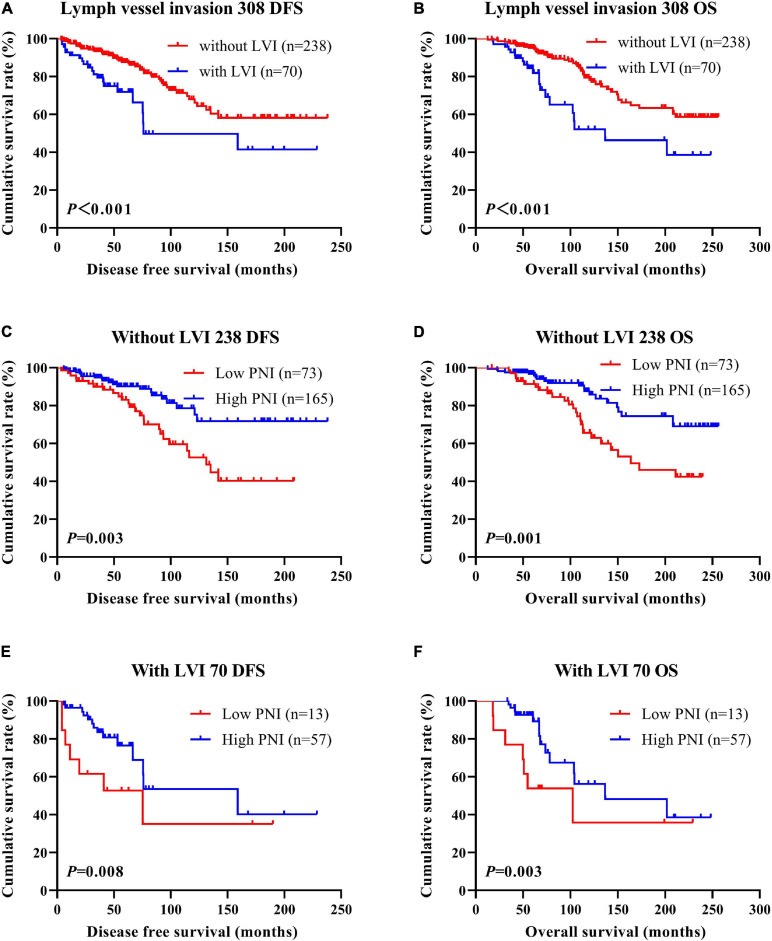
The results indicated that PNI had prognostic significance by an optimal cutoff value of 51 on DFS and OS in univariate and multivariate Cox regression survival analyses. Breast cancer patients with a high PNI value had longer DFS and OS than those with a low PNI value [47.64 . 36.60 months, < 0.0001, hazard ratio (HR) = 0.264, 95%CI = 0.160-0.435; 73.61 . 64.97 months, < 0.0001, HR = 0.319, 95%CI = 0.207-0.491, respectively]. Furthermore, the results indicated that patients with high PNI had longer DFS and OS than those with low PNI in early stage and advanced breast cancer, especially in advanced breast cancer. The mean DFS and OS times for breast cancer patients with high PNI by the log-rank test were longer than in those with low PNI in different molecular subtypes. Moreover, the mean DFS and OS times in patients with high PNI by the log-rank test were longer than in those patients with low PNI without or with lymph vessel invasion. The common toxicities after neoadjuvant chemotherapy were hematologic and gastrointestinal reaction, and the PNI had no significance on the toxicities of all enrolled patients, except in anemia, leukopenia, and myelosuppression.
Pretreatment PNI with the advantages of being convenient, noninvasive, and reproducible was a useful prognostic indicator for breast cancer patients receiving neoadjuvant chemotherapy and is a promising biomarker for breast cancer on treatment strategy decisions.
预后营养指数(PNI)的计算方法为血清白蛋白(ALB)(g/L)+5×总淋巴细胞计数(10⁹/L),最初用于评估手术患者的营养状况,也可评估各种实体瘤的治疗效果并预测其生存期。本研究旨在评估PNI在接受新辅助化疗(NACT)的乳腺癌患者中的潜在预后意义。
本回顾性研究共纳入785例接受新辅助化疗的乳腺癌患者。通过受试者工作特征曲线确定PNI的最佳截断值,将患者分为低PNI组(<51)和高PNI组(≥51)。采用卡方检验或Fisher精确检验确定PNI与乳腺癌及临床病理变量之间的关联。采用Kaplan-Meier曲线和对数秩检验评估无病生存期(DFS)和总生存期(OS)的临床结局。通过单因素和多因素Cox比例风险回归模型分析PNI的预后价值。根据美国国立癌症研究所通用毒性标准(NCI-CTC)评估NACT的毒性。
单因素和多因素Cox回归生存分析结果表明,PNI的最佳截断值为51时,对DFS和OS具有预后意义。PNI值高的乳腺癌患者的DFS和OS长于PNI值低的患者[47.64对36.60个月,P<0.0001,风险比(HR)=0.264,95%置信区间(CI)=0.160-0.435;73.61对64.97个月,P<0.