Spielberger Benedikt D, Goerne Tessa, Geweniger Anne, Henneke Philipp, Elling Roland
Center for Pediatrics and Adolescent Medicine, Medical Center-University of Freiburg, Freiburg, Germany.
Institute for Immunodeficiency, Center for Chronic Immunodeficiency, Medical Center - University of Freiburg, Freiburg, Germany.
Front Pediatr. 2021 Apr 9;9:613292. doi: 10.3389/fped.2021.613292. eCollection 2021.
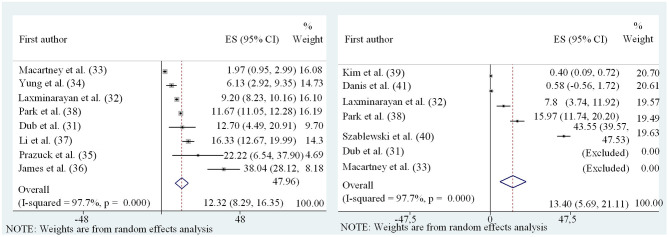
The outbreak of the novel coronavirus disease (COVID-19) caused by the severe acute respiratory syndrome coronavirus 2 (SARS-CoV-2) has led to a range of emergency measures worldwide. Early in the pandemic, children were suspected to act as drivers of the COVID-19 spread in the population, which was based on experiences with influenza virus and other respiratory pathogens. Consequently, closures of schools and kindergartens were implemented in many countries around the world, alongside with other non-pharmaceutical interventions for transmission control. Given the grave and multifaceted consequences of contact restriction measures for children, it is crucial to better understand the effect size of these incisive actions for the COVID-19 pandemic. Therefore, we systematically review the current evidence on transmission of SARS-CoV-2 to and by children. PubMed and preprints uploaded on medRxiv. Original research articles, case reports, brief communications, and commentaries were included into the analysis. Each title or abstract was independently reviewed to identify relevant articles. Studies in other languages than English were not included. Two reviewers independently reviewed the selected studies. Extracted data included citation of each study, type of healthcare setting, location of the study, characteristics of patient population, and reported outcomes. Data on transmission of SARS-CoV-2 on or by children is scarce. Several studies show a lower seropositivity of children compared to adults, suggesting a lower susceptibility of especially younger children. Most insight currently comes from household studies suggesting, that children are predominantly infected by their household contacts. The contagiousness however, seems to be comparable between children and adults, based on our meta-analysis of included studies. Larger and systematic studies are urgently needed to better understand the age dependent patterns of SARS-CoV-2 transmission and thereby design more effective non-pharmaceutical interventions to reduce disease transmission.
由严重急性呼吸综合征冠状病毒2(SARS-CoV-2)引起的新型冠状病毒病(COVID-19)疫情在全球范围内引发了一系列紧急措施。在疫情早期,基于流感病毒和其他呼吸道病原体的经验,人们怀疑儿童是COVID-19在人群中传播的驱动因素。因此,世界上许多国家都实施了学校和幼儿园关闭措施,同时还采取了其他非药物干预措施来控制传播。鉴于接触限制措施对儿童会产生严重且多方面的影响,更好地了解这些果断行动对COVID-19疫情的影响程度至关重要。因此,我们系统地回顾了当前关于SARS-CoV-2在儿童中传播及由儿童传播的证据。检索了PubMed和上传至medRxiv的预印本。分析纳入了原始研究文章、病例报告、简短通讯和评论。对每个标题或摘要进行独立评审以确定相关文章。不包括非英语语言的研究。两名评审员独立评审所选研究。提取的数据包括每项研究的引用、医疗机构类型、研究地点、患者群体特征以及报告的结果。关于SARS-CoV-2在儿童中传播或由儿童传播的数据很少。几项研究表明,与成人相比,儿童的血清阳性率较低,这表明尤其是年幼儿童的易感性较低。目前大多数见解来自家庭研究,表明儿童主要是被家庭接触者感染。然而,根据我们对纳入研究的荟萃分析,儿童和成人之间的传染性似乎相当。迫切需要开展更大规模的系统性研究,以更好地了解SARS-CoV-2传播的年龄依赖性模式,从而设计出更有效的非药物干预措施来减少疾病传播。