Ferreira Magda, Ogren Maria, Dias Joana N R, Silva Marta, Gil Solange, Tavares Luís, Aires-da-Silva Frederico, Gaspar Maria Manuela, Aguiar Sandra Isabel
Centro de Investigação Interdisciplinar em Sanidade Animal, Faculdade de Medicina Veterinária, Universidade de Lisboa, Avenida da Universidade Técnica, 1300-477 Lisbon, Portugal.
Research Institute for Medicines (iMed.ULisboa), Faculty of Pharmacy, Universidade de Lisboa, Av. Prof. Gama Pinto, 1649-003 Lisbon, Portugal.
Molecules. 2021 Apr 2;26(7):2047. doi: 10.3390/molecules26072047.
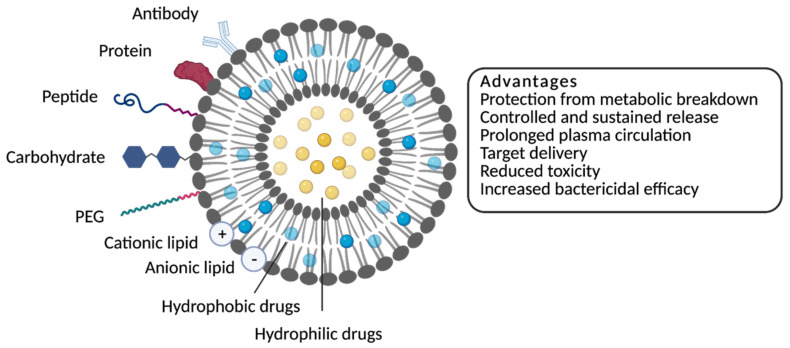
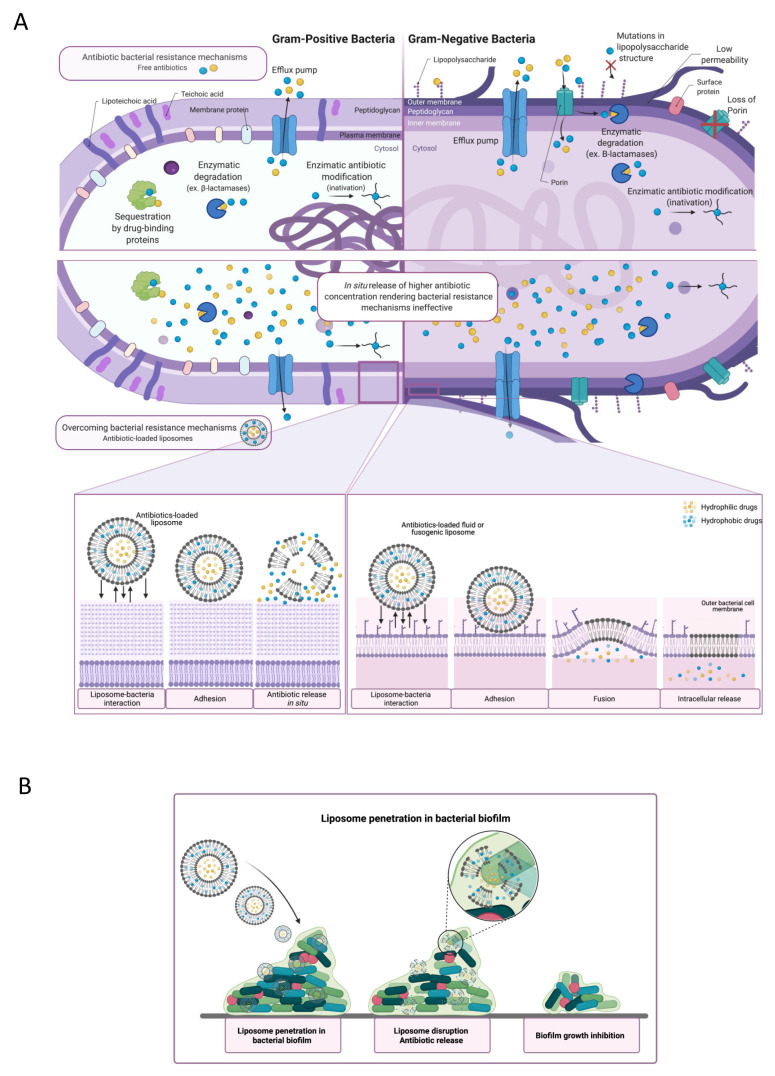
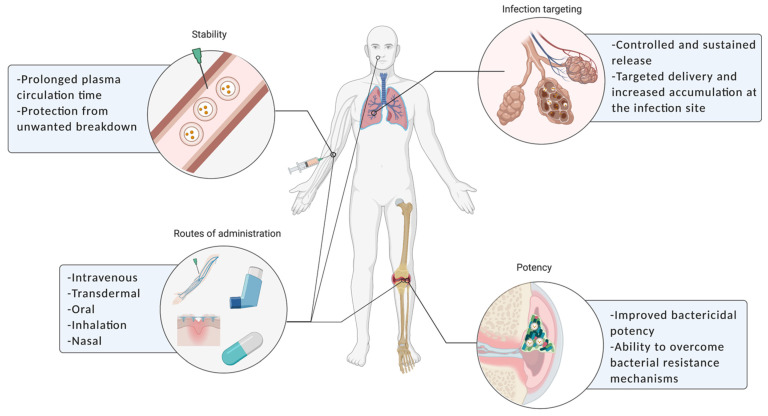
Antimicrobial drugs are key tools to prevent and treat bacterial infections. Despite the early success of antibiotics, the current treatment of bacterial infections faces serious challenges due to the emergence and spread of resistant bacteria. Moreover, the decline of research and private investment in new antibiotics further aggravates this antibiotic crisis era. Overcoming the complexity of antimicrobial resistance must go beyond the search of new classes of antibiotics and include the development of alternative solutions. The evolution of nanomedicine has allowed the design of new drug delivery systems with improved therapeutic index for the incorporated compounds. One of the most promising strategies is their association to lipid-based delivery (nano)systems. A drug's encapsulation in liposomes has been demonstrated to increase its accumulation at the infection site, minimizing drug toxicity and protecting the antibiotic from peripheral degradation. In addition, liposomes may be designed to fuse with bacterial cells, holding the potential to overcome antimicrobial resistance and biofilm formation and constituting a promising solution for the treatment of potential fatal multidrug-resistant bacterial infections, such as methicillin resistant . In this review, we aim to address the applicability of antibiotic encapsulated liposomes as an effective therapeutic strategy for bacterial infections.
抗菌药物是预防和治疗细菌感染的关键工具。尽管抗生素早期取得了成功,但由于耐药菌的出现和传播,目前细菌感染的治疗面临严峻挑战。此外,新抗生素研究和私人投资的减少进一步加剧了这个抗生素危机时代。克服抗菌药物耐药性的复杂性必须超越寻找新型抗生素,还应包括开发替代解决方案。纳米医学的发展使得能够设计出具有更高治疗指数的新型药物递送系统,用于所包载的化合物。最有前景的策略之一是将它们与基于脂质的递送(纳米)系统相结合。药物包封于脂质体已被证明可增加其在感染部位的蓄积,将药物毒性降至最低,并保护抗生素免受外周降解。此外,脂质体可设计成与细菌细胞融合,具有克服抗菌药物耐药性和生物膜形成的潜力,为治疗潜在致命的多重耐药细菌感染(如耐甲氧西林)构成一种有前景的解决方案。在本综述中,我们旨在探讨包载抗生素的脂质体作为细菌感染有效治疗策略的适用性。