Sean N. Parker Center for Allergy & Asthma Research at Stanford University and Division of Pulmonary, Allergy, and Critical Care Medicine, Stanford, CA.
Department of Pediatrics, Program in Immunology, Stanford University, Stanford, CA.
J Exp Med. 2021 Jul 5;218(7). doi: 10.1084/jem.20201793. Epub 2021 May 4.
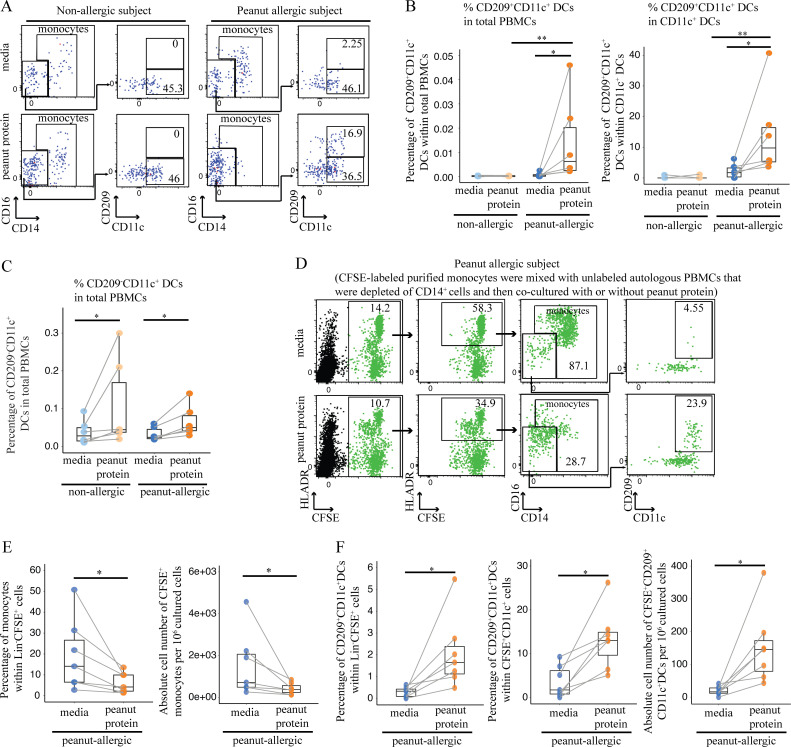
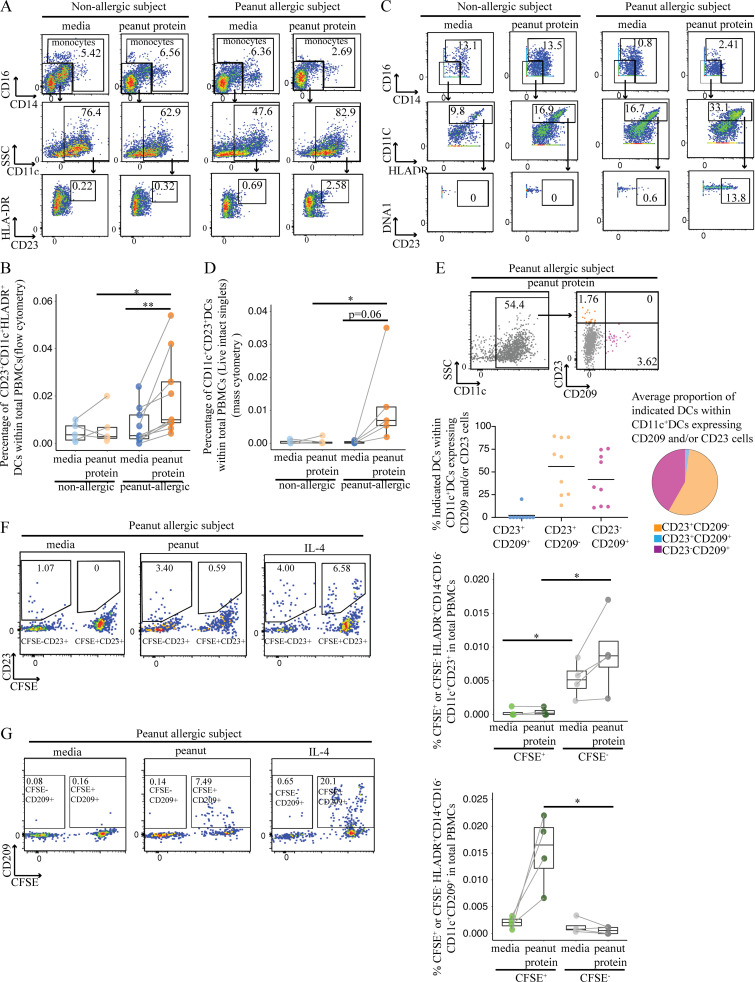
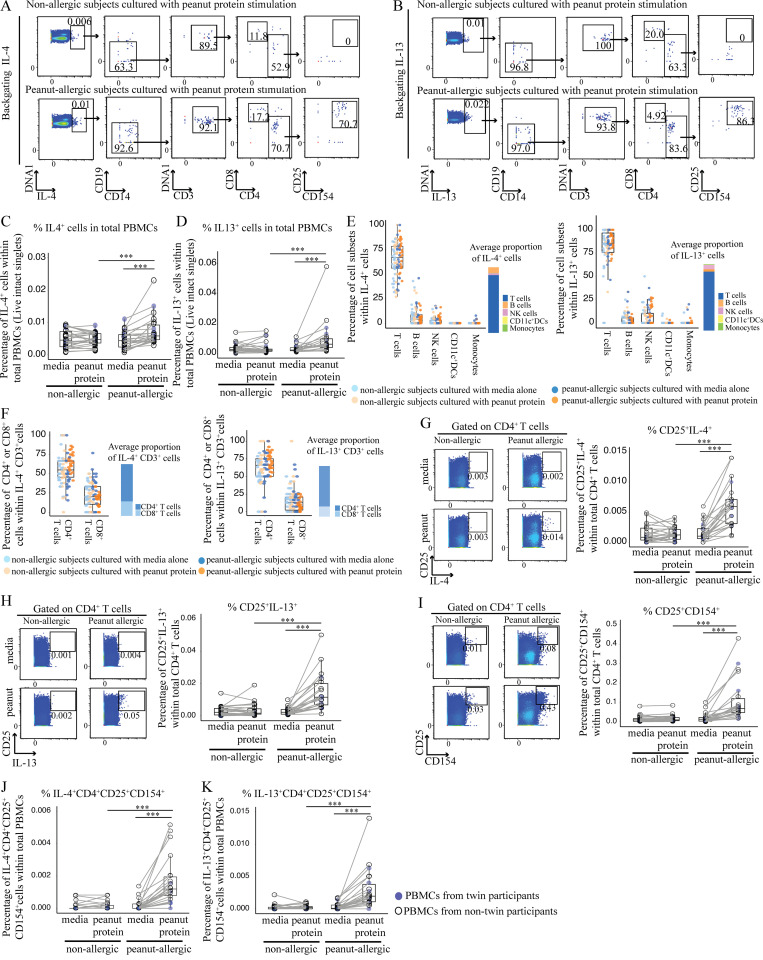
Food allergies are a leading cause of anaphylaxis, and cellular mechanisms involving antigen presentation likely play key roles in their pathogenesis. However, little is known about the response of specific antigen-presenting cell (APC) subsets to food allergens in the setting of food allergies. Here, we show that in peanut-allergic humans, peanut allergen drives the differentiation of CD209+ monocyte-derived dendritic cells (DCs) and CD23+ (FcєRII) myeloid dendritic cells through the action of allergen-specific CD4+ T cells. CD209+ DCs act reciprocally on the same peanut-specific CD4+ T cell population to reinforce Th2 cytokine expression in a positive feedback loop, which may explain the persistence of established food allergy. In support of this novel model, we show clinically that the initiation of oral immunotherapy (OIT) in peanut-allergic patients is associated with a decrease in CD209+ DCs, suggesting that breaking the cycle of positive feedback is associated with therapeutic effect.
食物过敏是引发过敏反应的主要原因,涉及抗原呈递的细胞机制可能在其发病机制中发挥关键作用。然而,人们对食物过敏背景下特定抗原呈递细胞(APC)亚群对食物过敏原的反应知之甚少。在这里,我们发现,在花生过敏的人群中,花生过敏原通过过敏原特异性 CD4+T 细胞的作用,驱动 CD209+单核细胞衍生的树突状细胞(DC)和 CD23+(FcєRII)髓样树突状细胞的分化。CD209+DC 与同一花生特异性 CD4+T 细胞群体相互作用,在正反馈环中增强 Th2 细胞因子的表达,这可能解释了已确立的食物过敏的持续性。为了支持这一新型模型,我们在临床研究中发现,花生过敏患者开始口服免疫治疗(OIT)与 CD209+DC 的减少相关,这表明打破正反馈循环与治疗效果相关。