Department of Mathematics, University of Florida, Gainesville, FL 32611, USA.
Emerging Pathogens Institute, University of Florida, Gainesville, FL 32608, USA.
J R Soc Interface. 2021 May;18(178):20210165. doi: 10.1098/rsif.2021.0165. Epub 2021 May 5.
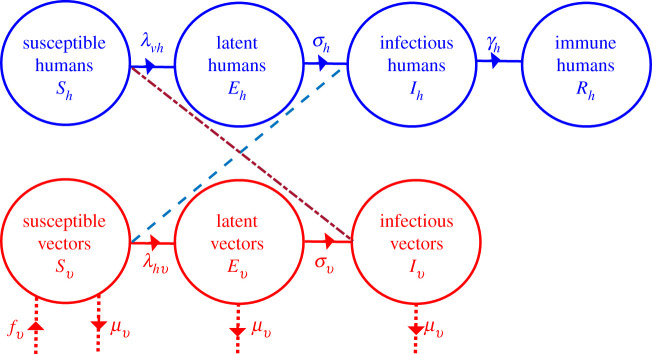
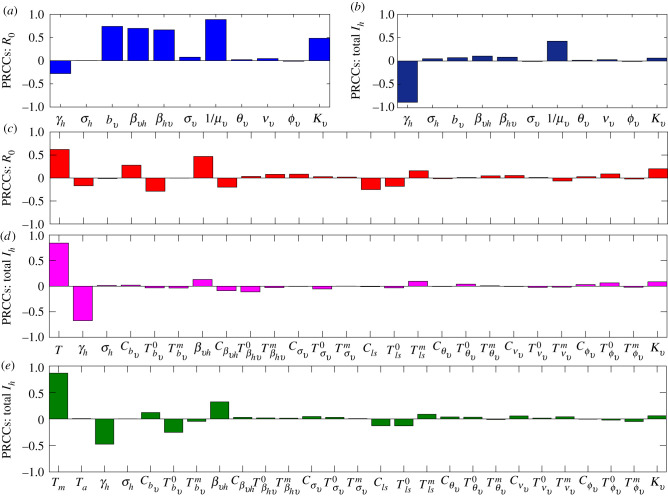
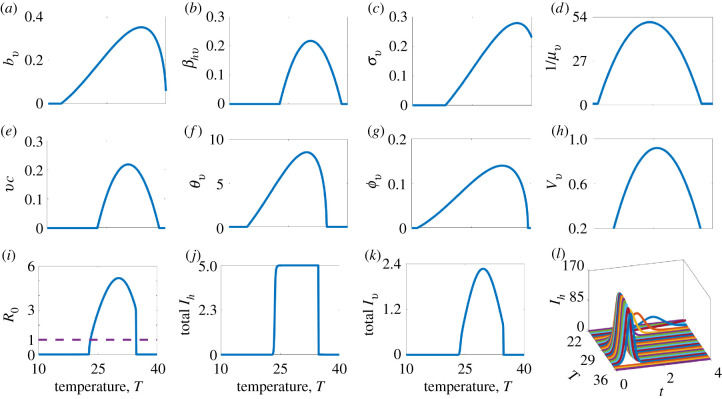
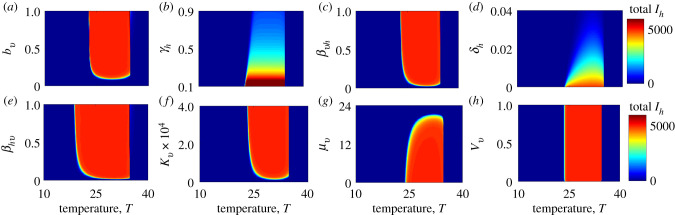
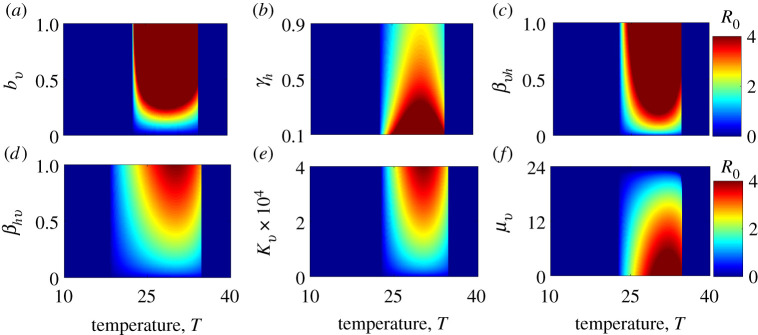
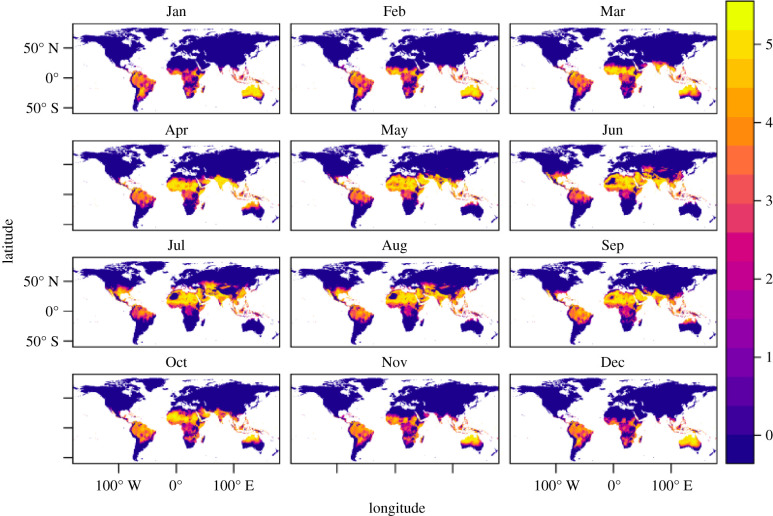
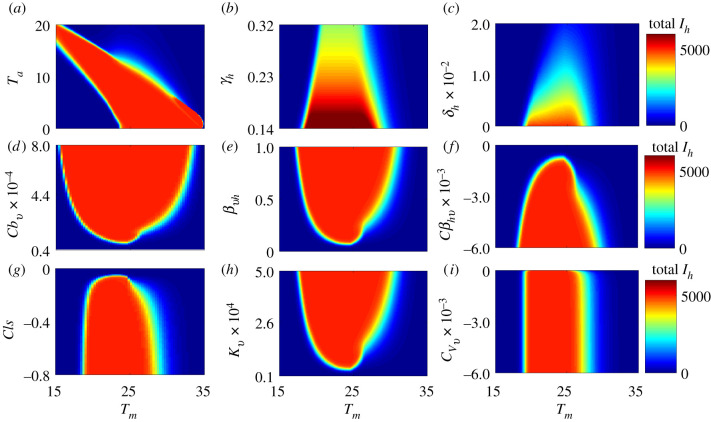
When a rare pathogen emerges to cause a pandemic, it is critical to understand its dynamics and the impact of mitigation measures. We use experimental data to parametrize a temperature-dependent model of Zika virus (ZIKV) transmission dynamics and analyse the effects of temperature variability and control-related parameters on the basic reproduction number () and the final epidemic size of ZIKV. Sensitivity analyses show that these two metrics are largely driven by different parameters, with the exception of temperature, which is the dominant driver of epidemic dynamics in the models. Our estimate has a single optimum temperature (≈30°C), comparable to other published results (≈29°C). However, the final epidemic size is maximized across a wider temperature range, from 24 to 36°C. The models indicate that ZIKV is highly sensitive to seasonal temperature variation. For example, although the model predicts that ZIKV transmission cannot occur at a constant temperature below 23°C (≈ average annual temperature of Rio de Janeiro, Brazil), the model predicts substantial epidemics for areas with a mean temperature of 20°C if there is seasonal variation of 10°C (≈ average annual temperature of Tampa, Florida). This suggests that the geographical range of ZIKV is wider than indicated from static models, underscoring the importance of climate dynamics and variation in the context of broader climate change on emerging infectious diseases.
当一种罕见的病原体出现并引发大流行时,了解其动态和缓解措施的影响至关重要。我们使用实验数据对寨卡病毒(ZIKV)传播动力学的温度相关模型进行参数化,并分析温度变化和控制相关参数对基本繁殖数()和 ZIKV 最终流行规模的影响。敏感性分析表明,这两个指标主要受不同参数驱动,除了温度之外,温度是模型中流行病动力学的主要驱动因素。我们的估计值有一个单一的最佳温度(≈30°C),与其他已发表的结果(≈29°C)相当。然而,最终的流行规模在更宽的温度范围内达到最大值,从 24°C 到 36°C。模型表明 ZIKV 对季节性温度变化非常敏感。例如,尽管模型预测在恒定温度低于 23°C(≈巴西里约热内卢的平均年温度)时,ZIKV 无法传播,但如果平均温度为 20°C 的地区存在 10°C 的季节性变化(≈佛罗里达州坦帕的平均年温度),则模型预测会出现大规模的流行病。这表明 ZIKV 的地理范围比静态模型所指示的更广泛,突显了气候动态和更广泛气候变化背景下的变化对新发传染病的重要性。