You Long, Cho Jae Youl
Department of Integrative Biotechnology, and Biomedical Institute for Convergence at SKKU (BICS), Sungkyunkwan University, Suwon, Republic of Korea.
Department of Biocosmetics, Sungkyunkwan University, Suwon, Republic of Korea.
J Ginseng Res. 2021 May;45(3):363-370. doi: 10.1016/j.jgr.2020.08.004. Epub 2020 Sep 1.
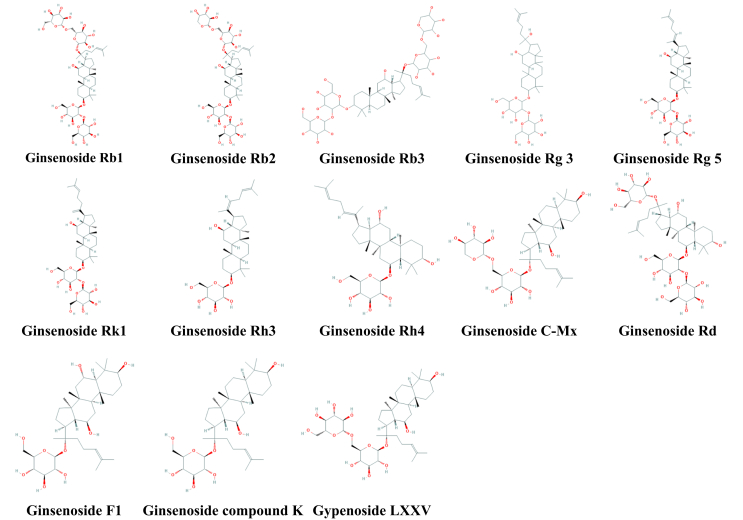
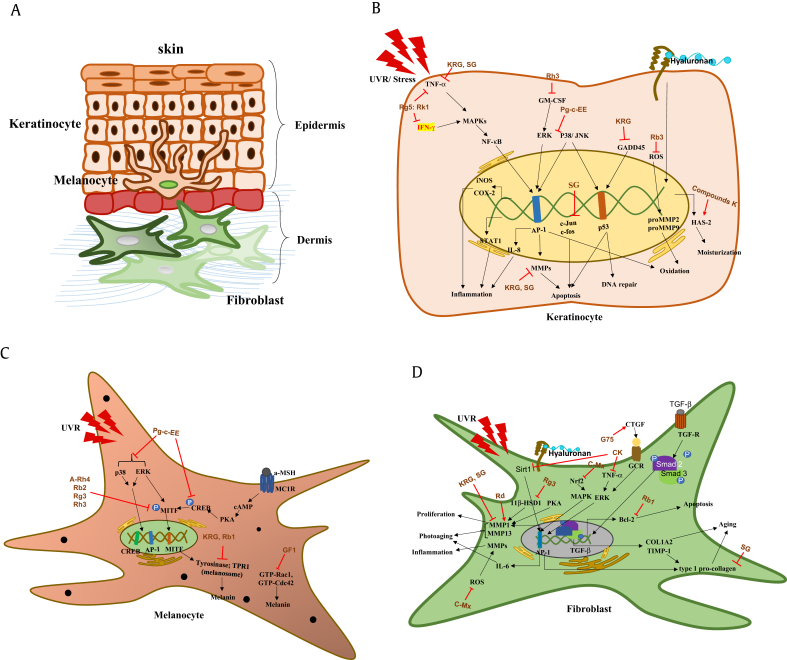
As the largest organ in our body, the skin acts as a barrier against external stress and damages. There are various cell types of skin, such as keratinocytes, melanocytes, fibroblasts, and skin stem cells. Korean ginseng, which is one of the biggest distributions of ginseng worldwide, is processed into different products, such as functional food, cosmetics, and medical supplies. This review aims to introduce the functional role of Korean ginseng on different dermal cell types, including the impact of Korean ginseng in anti-photodamaging, anti-inflammatory, anti-oxidative, anti-melanogenic, and wound healing activities, etc. We propose that this information could form the basis of future research of ginseng-derived components in skin health.
作为我们身体中最大的器官,皮肤起着抵御外部压力和损伤的屏障作用。皮肤有多种细胞类型,如角质形成细胞、黑素细胞、成纤维细胞和皮肤干细胞。高丽参是人参在全球分布最广的品种之一,被加工成不同的产品,如功能性食品、化妆品和医疗用品。这篇综述旨在介绍高丽参对不同皮肤细胞类型的功能作用,包括高丽参在抗光损伤、抗炎、抗氧化、抗黑素生成和伤口愈合等活动中的影响。我们认为,这些信息可以为未来人参衍生成分在皮肤健康方面的研究奠定基础。