Department of Life Science and Chemistry, Daejin University, 1007 Hoguk Road, Pocheon-si 11159, Korea.
Department of Chemistry and Research Institute of Basic Sciences, Kyung Hee University, 26 Kyungheedae-ro, Dongdaemun-gu, Seoul 02447, Korea.
Biosensors (Basel). 2021 May 11;11(5):149. doi: 10.3390/bios11050149.
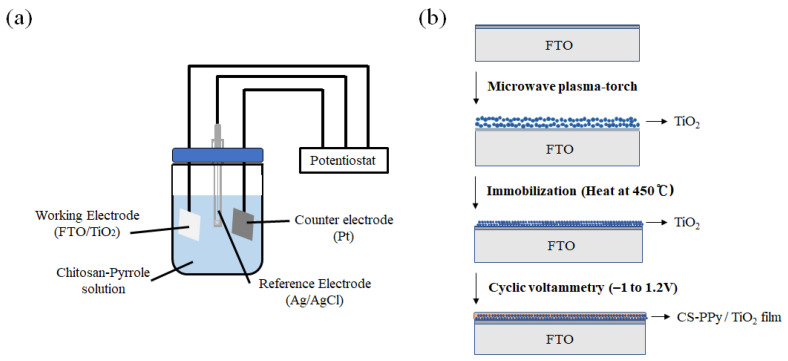
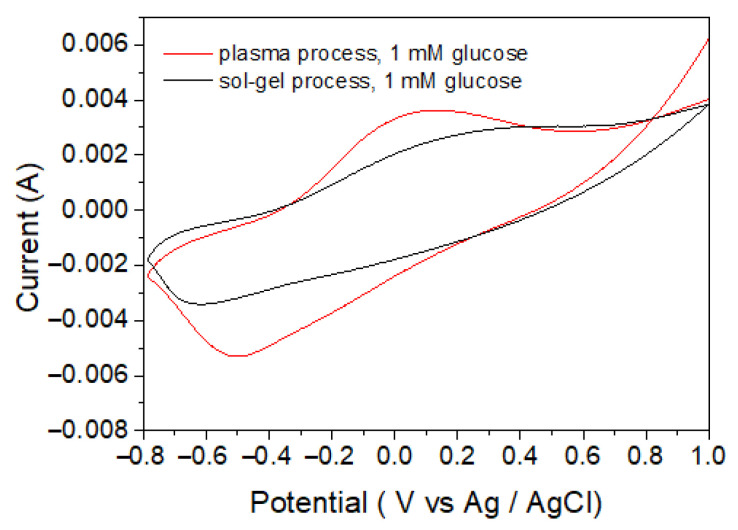
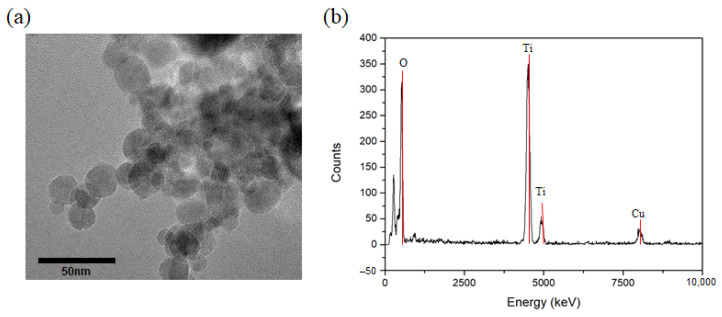
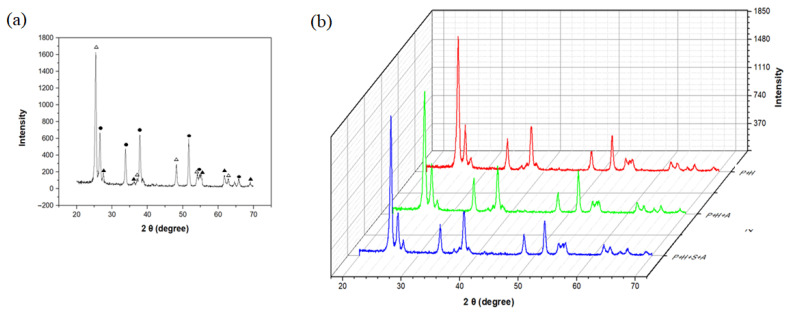
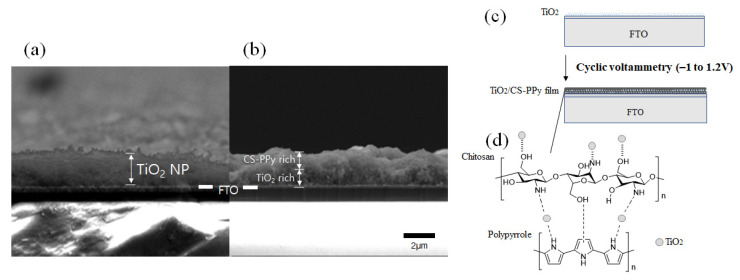
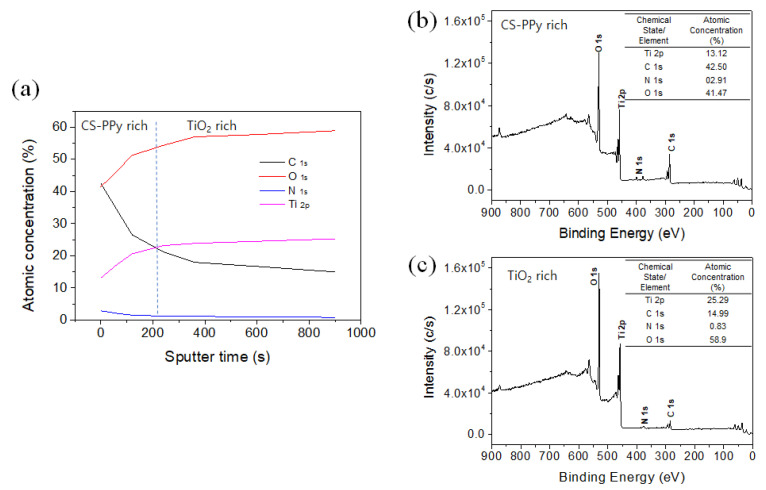
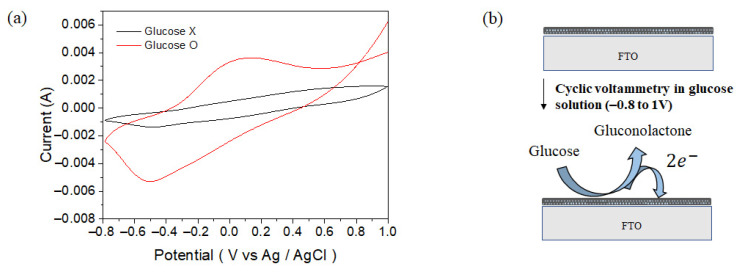
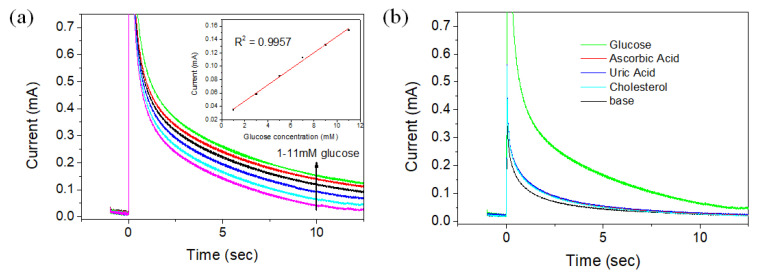
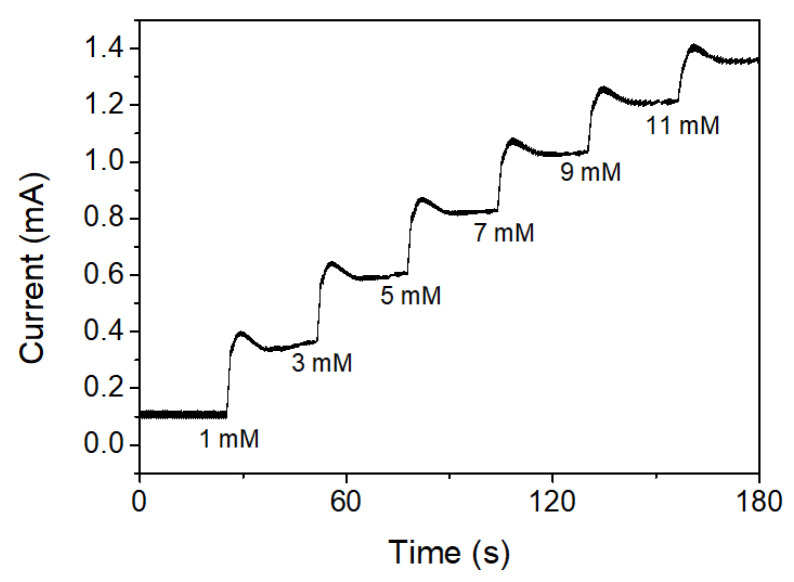
This study proposes a non-enzymatic glucose sensor fabricated by synthesizing high-purity TiO nanoparticles in thermal plasma and depositing it directly on a substrate and then depositing chitosan-polypyrrole (CS-PPy) conductive polymer films by electrochemical method. The structural properties of the deposited TiO nanoparticles were analyzed by X-ray diffraction (XRD) and dynamic light scattering (DLS) system. The chemical composition and structural properties of the TiO nanoparticle layer and the conductive polymer films were confirmed by X-ray photoelectron spectroscopy (XPS) spectra and scanning electron microscope (SEM). The glucose detection characteristics of the fabricated biosensor were determined by cyclic voltammetry (CV). CS-PPy/TiO biosensor showed high sensitivity of 302.0 µA mM cm ( = 0.9957) and low detection limit of 6.7 μM. The easily manufactured CS-PPy/TiO biosensor showed excellent selectivity and reactivity.
本研究提出了一种非酶葡萄糖传感器,通过在热等离子体中合成高纯度 TiO2 纳米粒子,并将其直接沉积在基底上,然后通过电化学方法沉积壳聚糖-聚吡咯(CS-PPy)导电聚合物膜来制备。沉积的 TiO2 纳米粒子的结构特性通过 X 射线衍射(XRD)和动态光散射(DLS)系统进行分析。通过 X 射线光电子能谱(XPS)光谱和扫描电子显微镜(SEM)确认了 TiO 纳米粒子层和导电聚合物膜的化学组成和结构特性。通过循环伏安法(CV)测定了所制备的生物传感器的葡萄糖检测特性。CS-PPy/TiO 生物传感器具有 302.0 µA mM cm-1(= 0.9957)的高灵敏度和 6.7 μM 的低检测限。易于制造的 CS-PPy/TiO 生物传感器表现出优异的选择性和反应性。