Department of Medical and Surgical Sciences, University of Foggia, Viale Pinto 1, 71122 Foggia, Italy.
Department of Biochemistry, Faculty of Medical Sciences in Zabrze, Medical University of Silesia in Katowice, Jordana 19, 41-808 Zabrze, Poland.
Int J Environ Res Public Health. 2021 May 11;18(10):5051. doi: 10.3390/ijerph18105051.
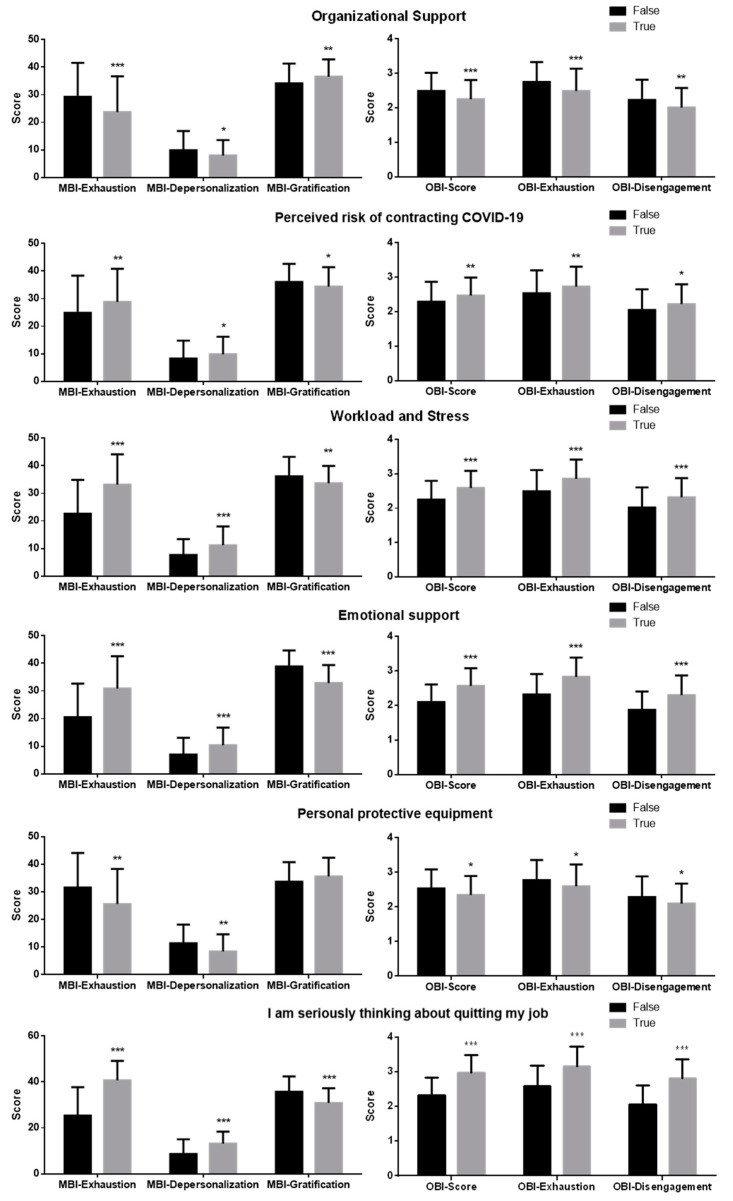
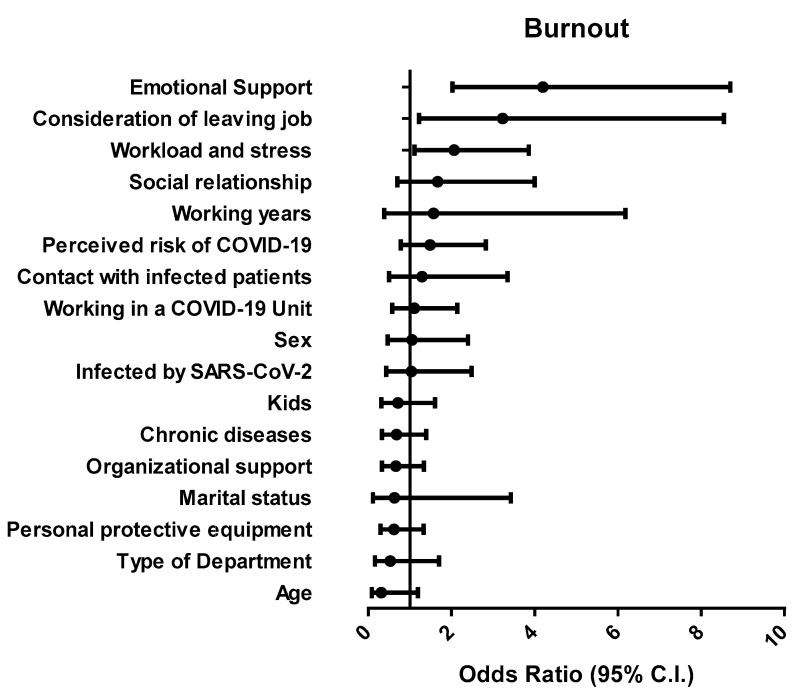
Safety of healthcare workers in hospitals is a major concern during the COVID-19 pandemic. Being exposed for several working hours per day to infected patients, nurses dealing with COVID-19 face several issues that lead to physical/psychological breakdown. This study focused on burnout and its associated factors in nurses working in an Italian University Hospital during the first wave of COVID-19 pandemic. We designed a web-based cross-sectional study addressed to nurses working at the University Hospital in Foggia, Italy. The online questionnaire was organized in sections aimed at collecting demographic and occupational variables, including the Maslach Burnout Inventory (MBI) and the Oldenburg Burnout Inventory (OBI). Two hundred and ninety-three nurses agreed to participate. According to MBI, we reported moderate/high emotional exhaustion in 76.5%, depersonalization in 50.2%, and personal gratification in 54.6% of participants. COVID-19-related burnout measured by OBI resulted medium/high in 89.1% of participants. Among demographic and occupational factors, a multivariate regression analysis identified emotional support, consideration of leaving job, and workload as predictive of burnout in nurses. In conclusion, this study suggests that the improvement of employer and family support to nurses, as well as reduction of workload and job-related stress, would contribute to reducing burnout in nurses during COVID-19 pandemics.
医护人员在医院的安全是 COVID-19 大流行期间的主要关注点。由于每天要接触感染患者数小时,处理 COVID-19 的护士面临着导致身体/心理崩溃的几个问题。这项研究专注于意大利一家大学医院 COVID-19 大流行第一波期间护士的倦怠及其相关因素。我们设计了一项针对意大利福贾大学医院工作的护士的基于网络的横断面研究。在线问卷分为几个部分,旨在收集人口统计学和职业变量,包括 Maslach 倦怠量表 (MBI) 和 Oldenburg 倦怠量表 (OBI)。293 名护士同意参加。根据 MBI,我们报告说,76.5%的参与者有中度/高度情绪耗竭,50.2%的参与者有去人格化,54.6%的参与者有个人成就感。由 OBI 测量的与 COVID-19 相关的倦怠在 89.1%的参与者中表现为中度/高度。在人口统计学和职业因素中,多变量回归分析确定情感支持、考虑离职和工作量是护士倦怠的预测因素。总之,这项研究表明,改善雇主和家庭对护士的支持,以及减少工作量和工作相关压力,将有助于减少 COVID-19 大流行期间护士的倦怠。