Department of Management, Technology, and Economics, ETH Zurich, Zurich, Switzerland.
Department of Environmental Systems Science, ETH Zurich, Zurich, Switzerland.
PLoS One. 2021 Jun 2;16(6):e0252827. doi: 10.1371/journal.pone.0252827. eCollection 2021.
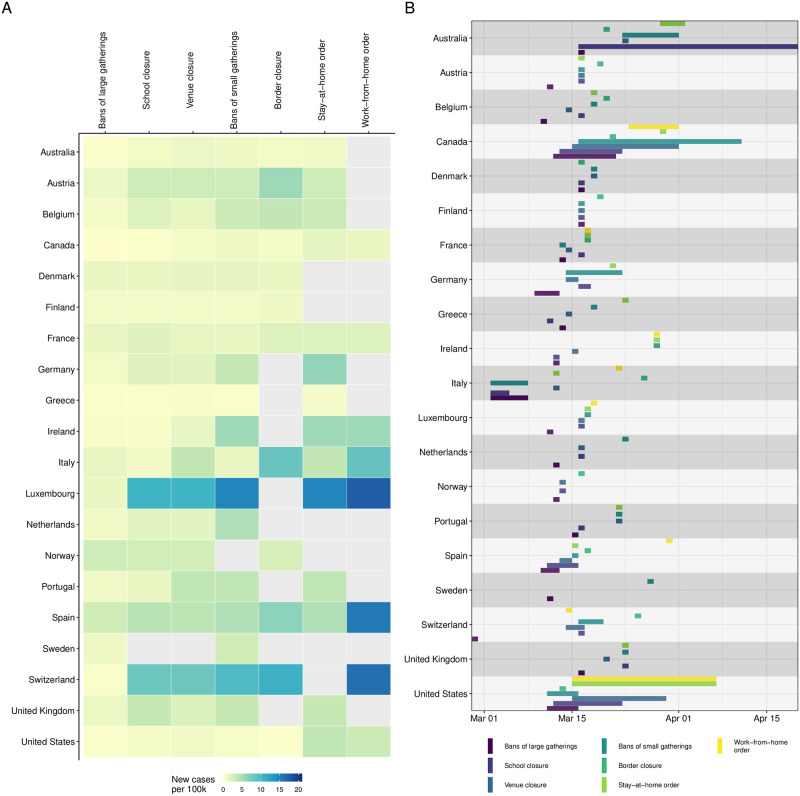
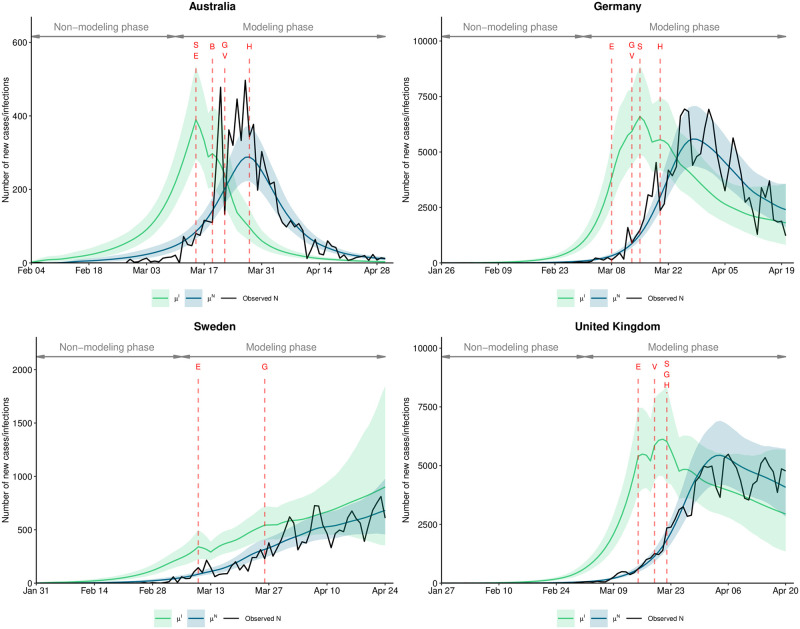
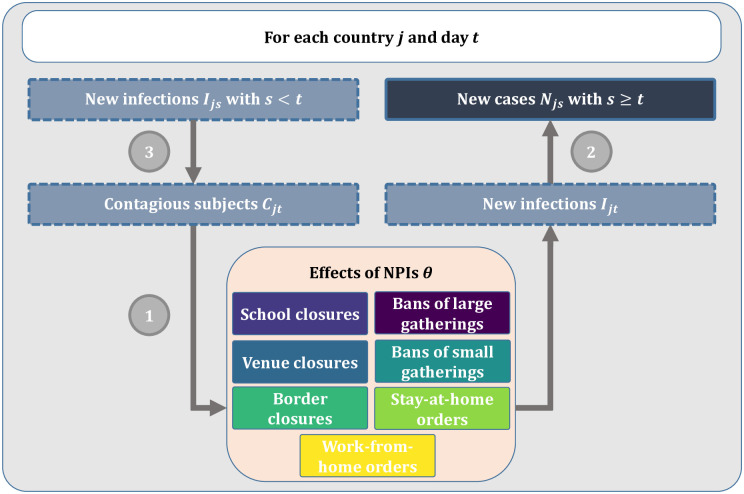
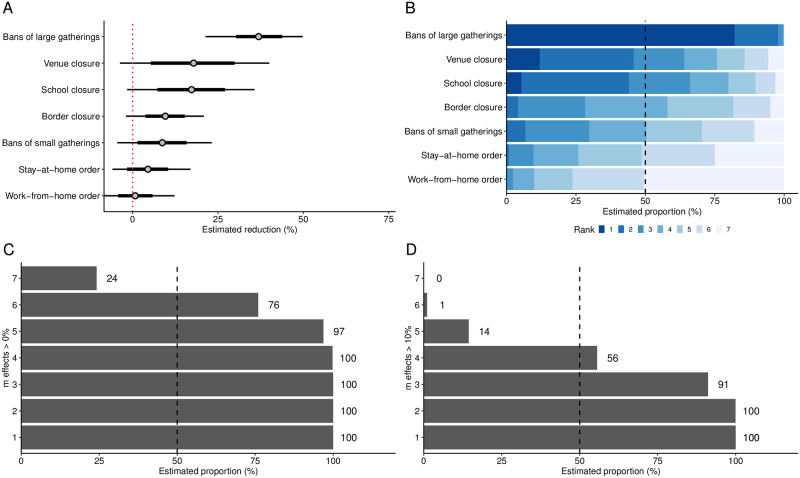
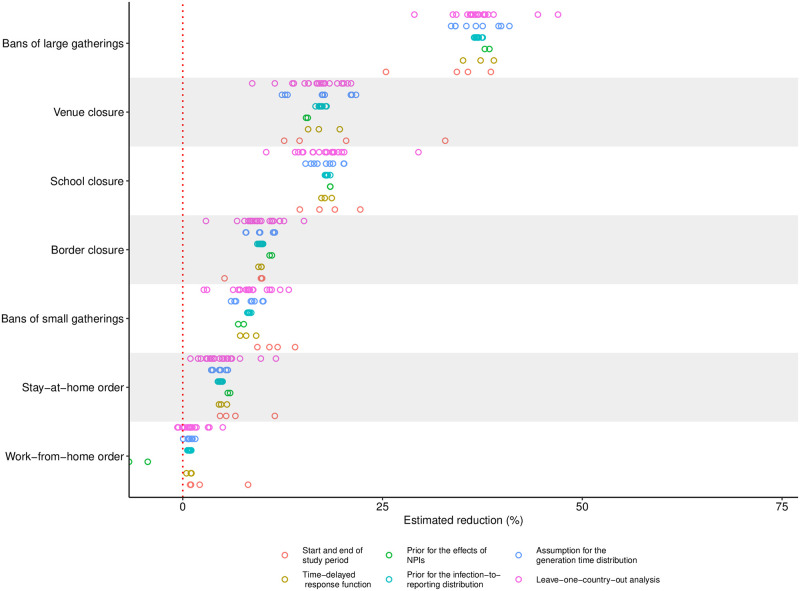
The novel coronavirus (SARS-CoV-2) has rapidly developed into a global epidemic. To control its spread, countries have implemented non-pharmaceutical interventions (NPIs), such as school closures, bans of small gatherings, or even stay-at-home orders. Here we study the effectiveness of seven NPIs in reducing the number of new infections, which was inferred from the reported cases of COVID-19 using a semi-mechanistic Bayesian hierarchical model. Based on data from the first epidemic wave of n = 20 countries (i.e., the United States, Canada, Australia, the EU-15 countries, Norway, and Switzerland), we estimate the relative reduction in the number of new infections attributed to each NPI. Among the NPIs considered, bans of large gatherings were most effective, followed by venue and school closures, whereas stay-at-home orders and work-from-home orders were least effective. With this retrospective cross-country analysis, we provide estimates regarding the effectiveness of different NPIs during the first epidemic wave.
新型冠状病毒(SARS-CoV-2)迅速发展成为全球性流行病。为了控制其传播,各国已采取非药物干预措施(NPIs),如关闭学校、禁止小型集会、甚至居家令。在这里,我们使用半机械主义贝叶斯层次模型,根据从 COVID-19 报告病例中推断出的结果,研究了七种 NPI 减少新感染数量的效果。基于来自 20 个国家(即美国、加拿大、澳大利亚、欧盟 15 个国家、挪威和瑞士)的第一波疫情数据,我们估计了每一种 NPI 对新感染数量减少的相对影响。在所考虑的 NPI 中,禁止大型集会的效果最为显著,其次是关闭场所和学校,而居家令和远程办公令的效果则相对较弱。通过这项回顾性的跨国分析,我们就第一波疫情期间不同 NPI 的效果提供了估计。