Hebinck Aniek, Zurek Monika, Achterbosch Thom, Forkman Björn, Kuijsten Anneleen, Kuiper Marijke, Nørrung Birgit, Veer Pieter van 't, Leip Adrian
Environmental Change Institute, University of Oxford, United Kingdom.
Dutch Research Institute for Transitions (DRIFT), Erasmus University Rotterdam, Netherlands.
Glob Food Sec. 2021 Jun;29:100546. doi: 10.1016/j.gfs.2021.100546.
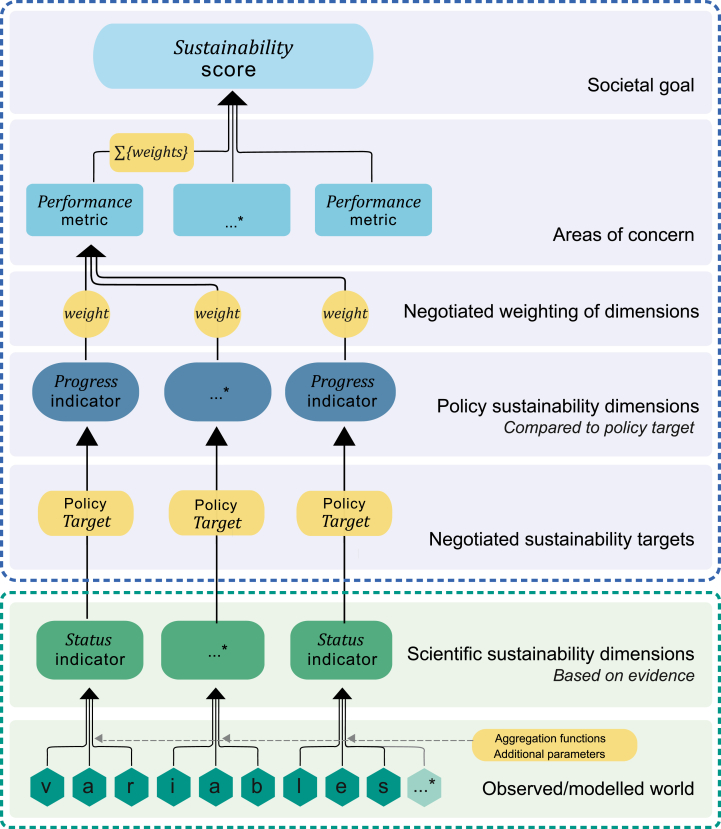
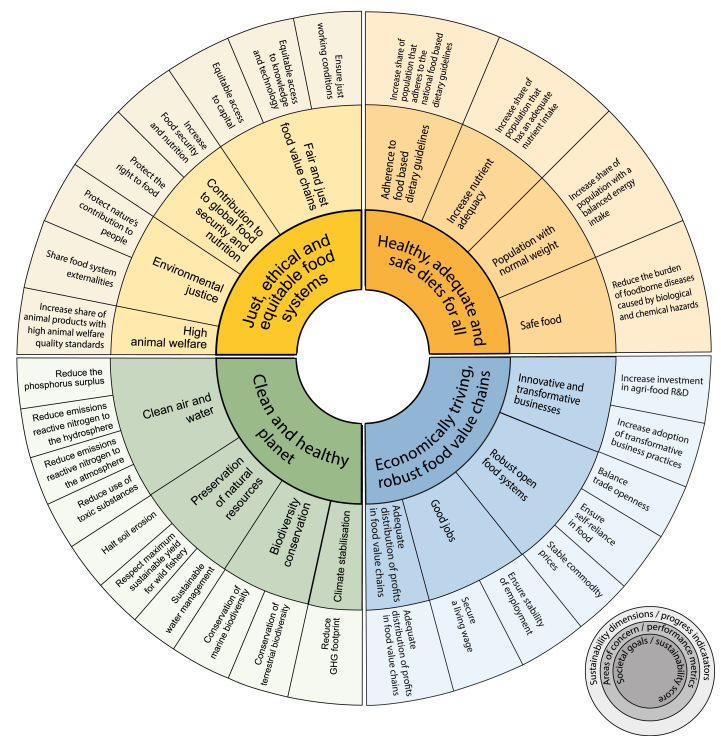
Growing acknowledgement that food systems require transformation, demands comprehensive sustainability assessments that can support decision-making and sustainability governance. To do so, assessment frameworks must be able to make trade-offs and synergies visible and allow for inclusive negotiation on food system outcomes relevant to diverse food system actors. This paper reviews literature and frameworks and builds on stakeholder input to present a Sustainability Compass made up of a comprehensive set of metrics for food system assessments. The Compass defines sustainability scores for four societal goals, underpinned by areas of concern. We demonstrate proof of concept of the operationalization of the approach and its metrics. The Sustainability Compass is able to generate comprehensive food system insights that enables reflexive evaluation and multi-actor negotiation for policy making.
越来越多的人认识到粮食系统需要转型,这就要求进行全面的可持续性评估,以支持决策和可持续性治理。为此,评估框架必须能够使权衡和协同效应显现出来,并允许就与不同粮食系统行为者相关的粮食系统成果进行包容性谈判。本文回顾了相关文献和框架,并基于利益相关者的意见,提出了一个可持续性指南针,它由一套全面的粮食系统评估指标组成。该指南针为四个社会目标定义了可持续性得分,并以关注领域为支撑。我们展示了该方法及其指标可操作性的概念验证。可持续性指南针能够产生全面的粮食系统见解,从而为政策制定进行反思性评估和多行为者谈判。