Division of Exercise Nutrition and Metabolism, Faculty of Sport Sciences, Hacettepe University, 06800 Ankara, Turkey.
China Institute of Sport and Health Science, Beijing Sport University, Beijing 100192, China.
Int J Environ Res Public Health. 2021 Jul 5;18(13):7201. doi: 10.3390/ijerph18137201.
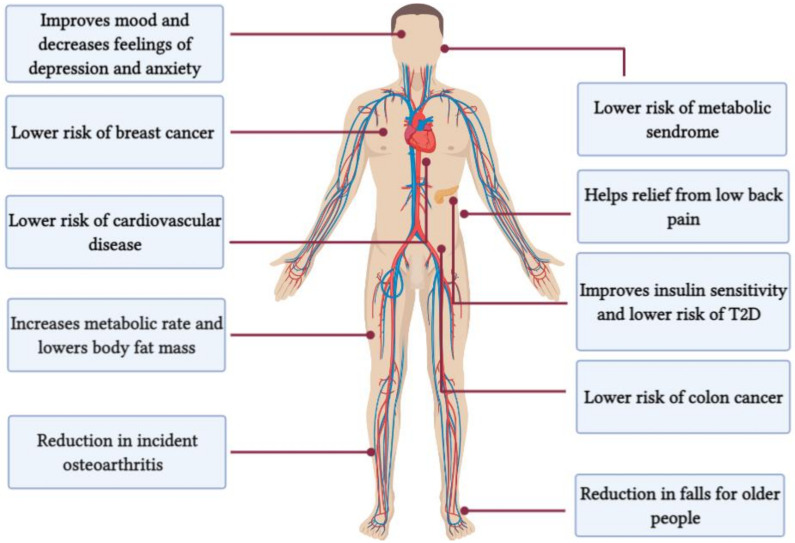
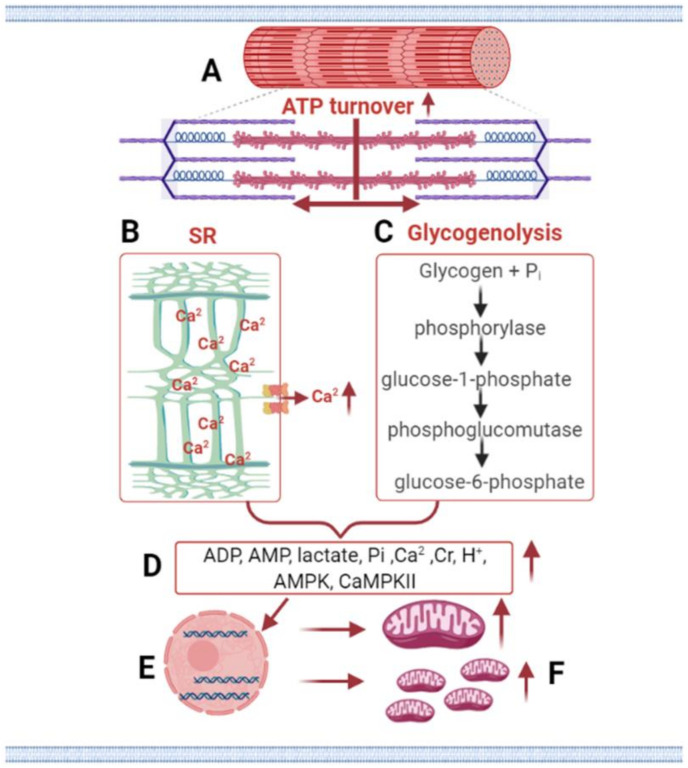
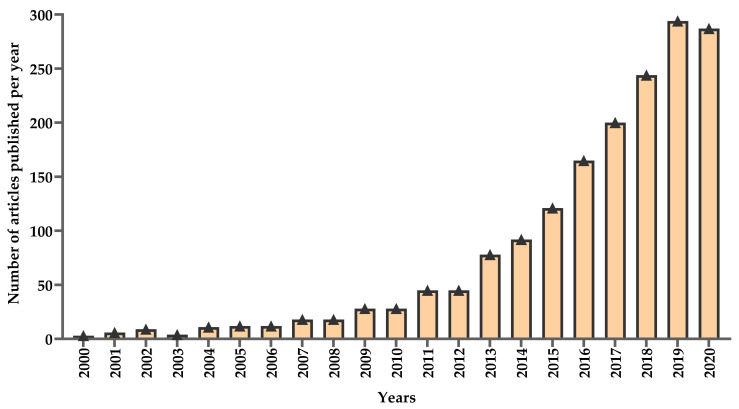
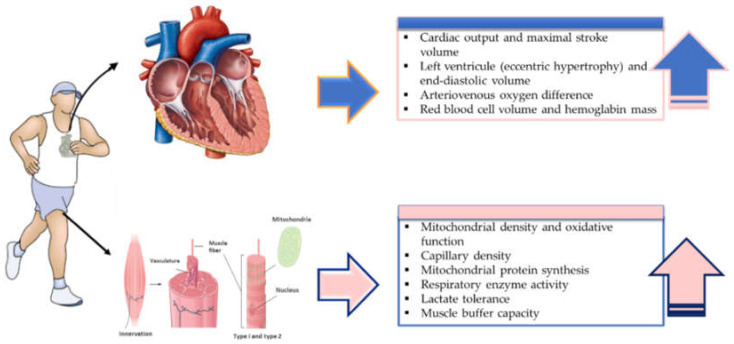
Engaging in regular exercise results in a range of physiological adaptations offering benefits for exercise capacity and health, independent of age, gender or the presence of chronic diseases. Accumulating evidence shows that lack of time is a major impediment to exercise, causing physical inactivity worldwide. This issue has resulted in momentum for interval training models known to elicit higher enjoyment and induce adaptations similar to or greater than moderate-intensity continuous training, despite a lower total exercise volume. Although there is no universal definition, high-intensity interval exercise is characterized by repeated short bursts of intense activity, performed with a "near maximal" or "all-out" effort corresponding to ≥90% of maximal oxygen uptake or >75% of maximal power, with periods of rest or low-intensity exercise. Research has indicated that high-intensity interval training induces numerous physiological adaptations that improve exercise capacity (maximal oxygen uptake, aerobic endurance, anaerobic capacity etc.) and metabolic health in both clinical and healthy (athletes, active and inactive individuals without any apparent disease or disorder) populations. In this paper, a brief history of high-intensity interval training is presented, based on the novel findings of some selected studies on exercise capacity and health, starting from the early 1920s to date. Further, an overview of the mechanisms underlying the physiological adaptations in response to high-intensity interval training is provided.
经常锻炼会导致一系列的生理适应,无论年龄、性别或是否患有慢性疾病,都能提高运动能力和健康水平。越来越多的证据表明,缺乏时间是锻炼的主要障碍,导致全球范围内的身体活动不足。这一问题促使人们采用间歇训练模式,这种模式被认为可以带来更高的愉悦感,并产生与中等强度持续训练相似或更大的适应,尽管总运动量较低。尽管没有普遍的定义,但高强度间歇训练的特点是反复进行短暂的剧烈活动,以“接近最大”或“全力以赴”的强度进行,相当于最大摄氧量的≥90%或最大力量的>75%,期间进行休息或低强度运动。研究表明,高强度间歇训练可引起许多生理适应,提高运动能力(最大摄氧量、有氧耐力、无氧能力等)和代谢健康,无论是在临床人群还是健康人群(运动员、活跃和不活跃的个体,没有任何明显的疾病或障碍)中都是如此。本文简要回顾了高强度间歇训练的历史,基于一些关于运动能力和健康的精选研究的新发现,追溯到 20 世纪 20 年代至今。此外,还概述了高强度间歇训练引起的生理适应的机制。