Department of Pharmaceutical Chemistry, Faculty of Pharmacy and Health Sciences, Universiti Kuala Lumpur Royal College of Medicine Perak, Ipoh, Perak, 30450, Malaysia.
Faculty of Pharmacy & Centre of Excellence for Biomaterials Engineering, AIMST University, Kedah, 08100, Malaysia.
Drug Des Devel Ther. 2021 Nov 3;15:4527-4549. doi: 10.2147/DDDT.S338548. eCollection 2021.
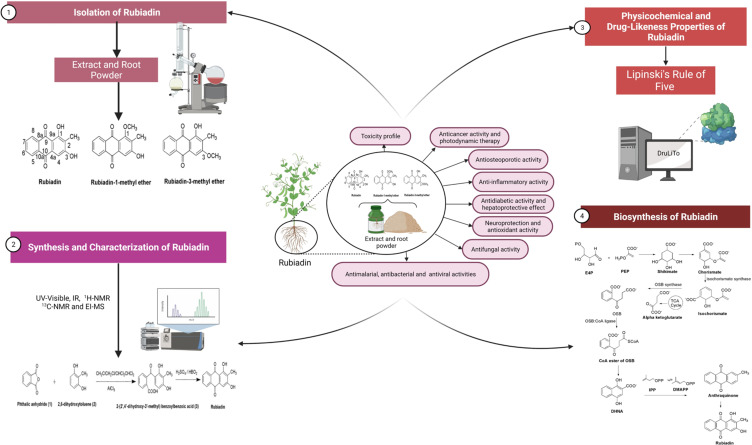
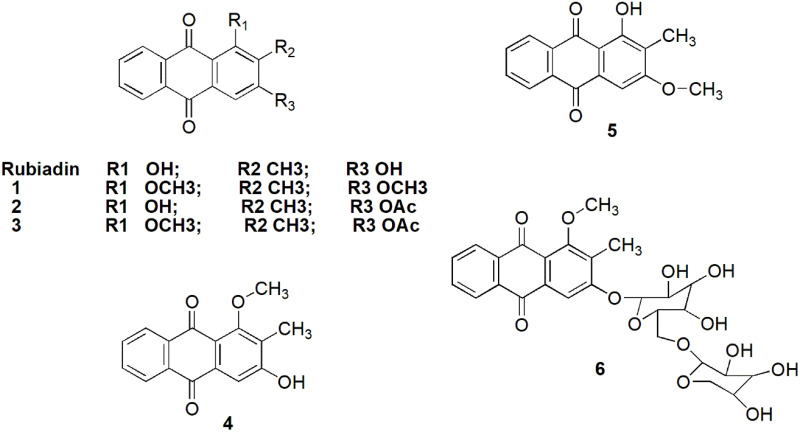
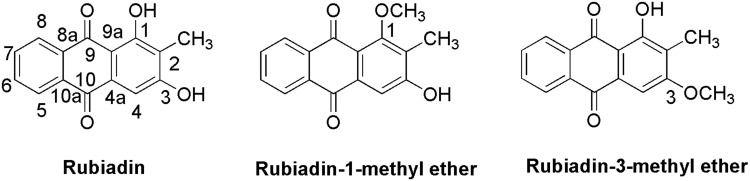
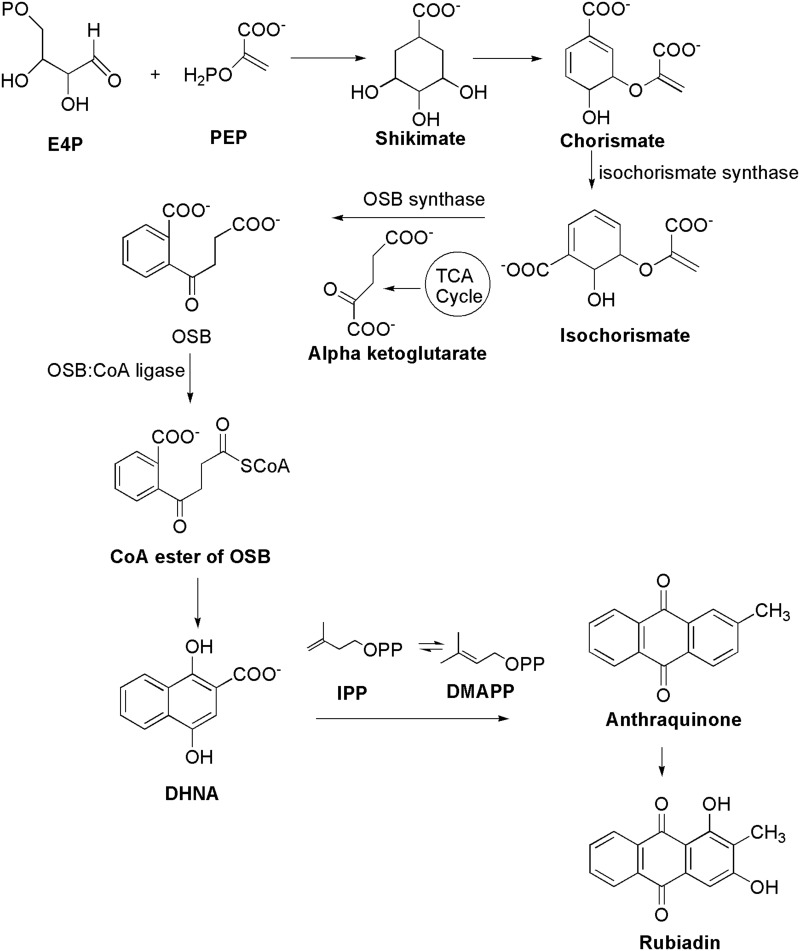
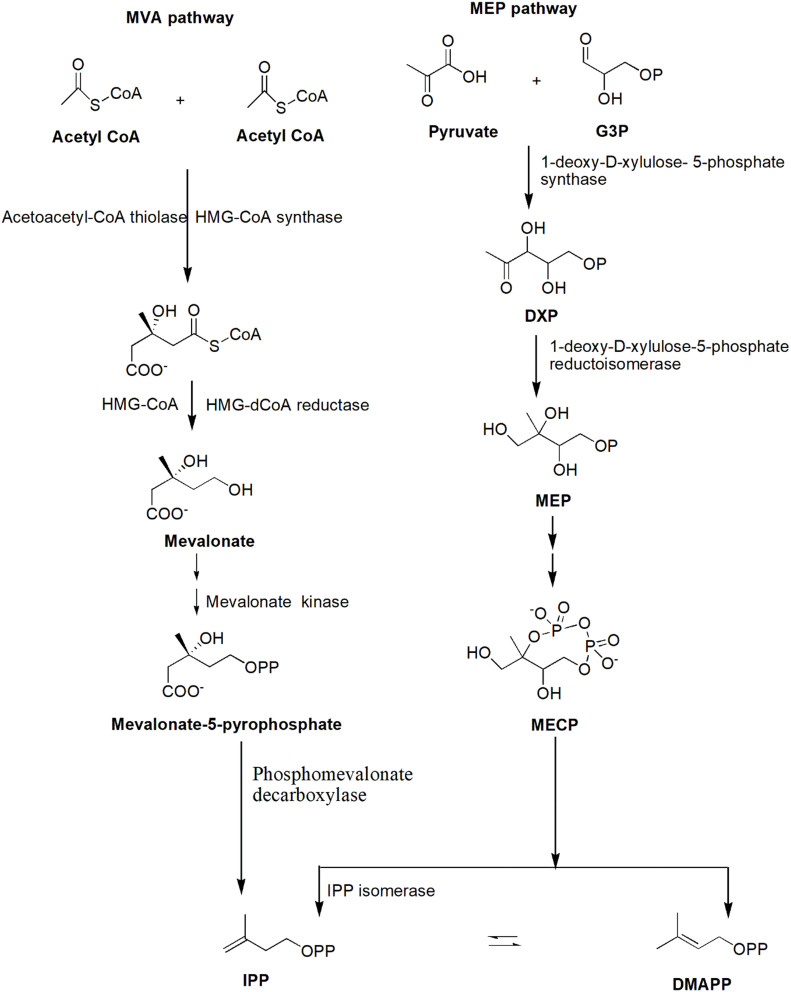
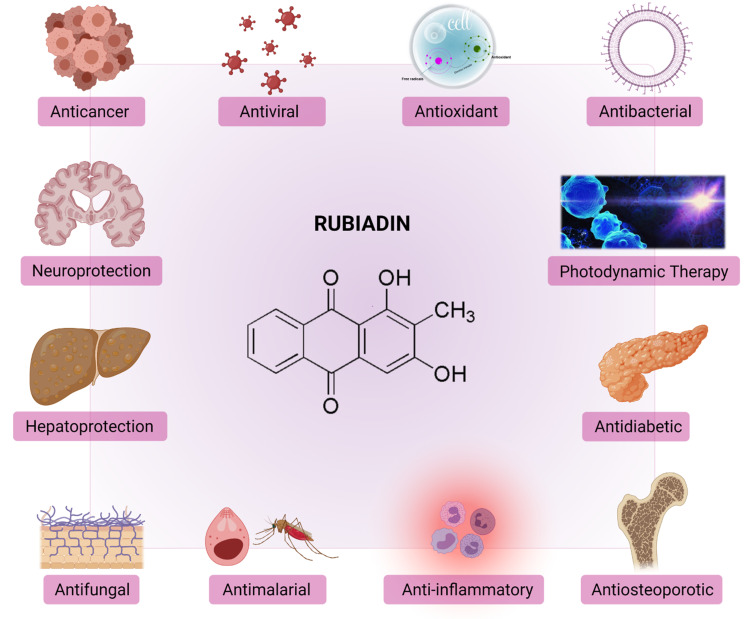
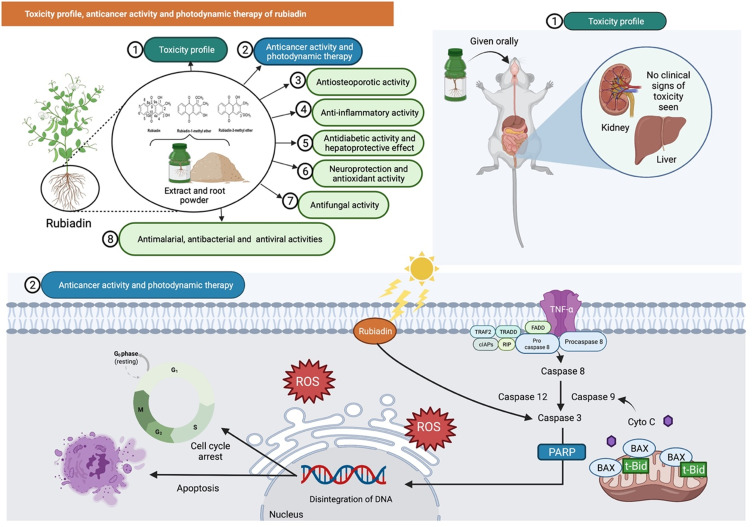
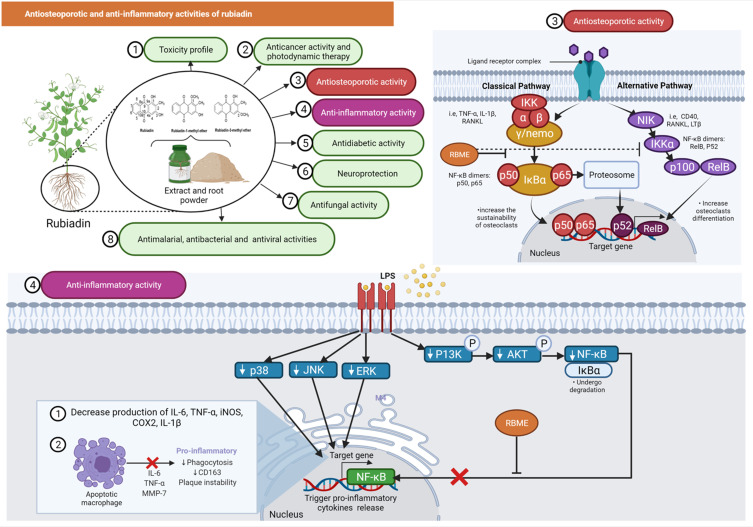
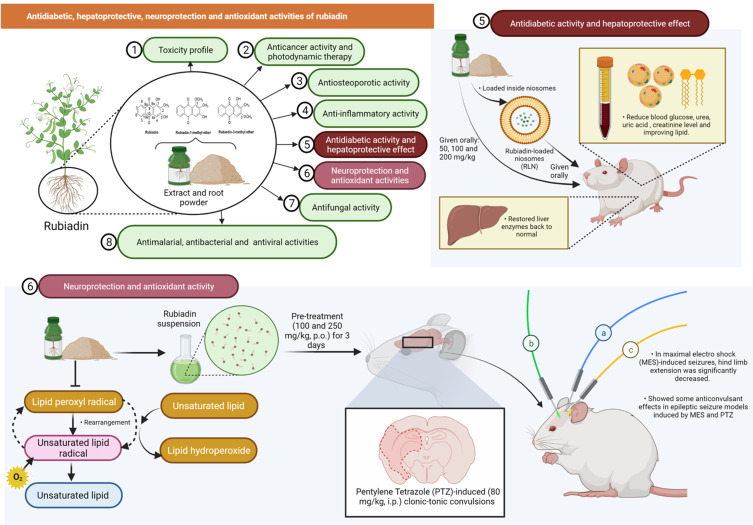
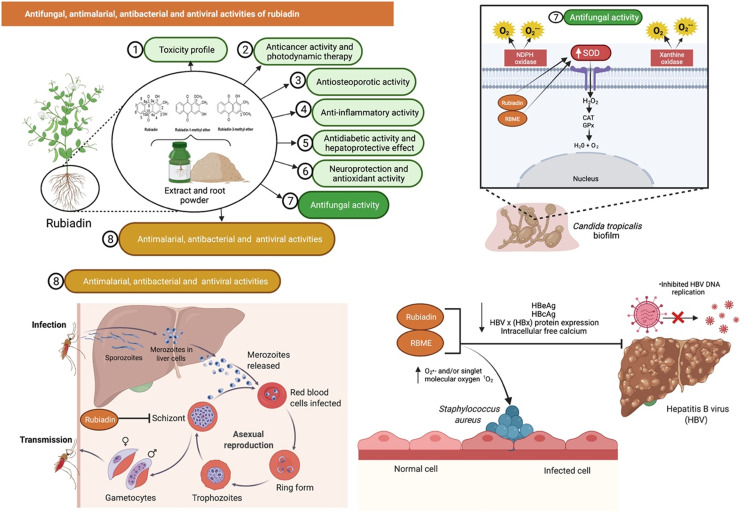
Anthraquinones (AQs) are found in a variety of consumer products, including foods, nutritional supplements, drugs, and traditional medicines, and have a wide range of pharmacological actions. Rubiadin, a 1,3-dihydroxy-2-methyl anthraquinone, primarily originates from Linn (Rubiaceae). It was first discovered in 1981 and has been reported for many biological activities. However, no review has been reported so far to create awareness about this molecule and its role in future drug discovery. Therefore, the present review aimed to provide comprehensive evidence of Rubiadin's phytochemistry, biosynthesis, physicochemical properties, biological properties and therapeutic potential. Relevant literature was gathered from numerous scientific databases including PubMed, ScienceDirect, Scopus and Google Scholar between 1981 and up-to-date. The distribution of Rubiadin in numerous medicinal plants, as well as its method of isolation, synthesis, characterisation, physiochemical properties and possible biosynthesis pathways, was extensively covered in this review. Following a rigorous screening and tabulating, a thorough description of Rubiadin's biological properties was gathered, which were based on scientific evidences. Rubiadin fits all five of Lipinski's rule for drug-likeness properties. Then, the in depth physiochemical characteristics of Rubiadin were investigated. The simple technique for Rubiadin's isolation from and the procedure of synthesis was described. Rubiadin is also biosynthesized via the polyketide and chorismate/o-succinylbenzoic acid pathways. Rubiadin is a powerful molecule with anticancer, antiosteoporotic, hepatoprotective, neuroprotective, anti-inflammatory, antidiabetic, antioxidant, antibacterial, antimalarial, antifungal, and antiviral properties. The mechanism of action for the majority of the pharmacological actions reported, however, is unknown. In addition to this review, an in silico molecular docking study was performed against proteins with PDB IDs: 3AOX, 6OLX, 6OSP, and 6SDC to support the anticancer properties of Rubiadin. The toxicity profile, pharmacokinetics and possible structural modifications were also described. Rubiadin was also proven to have the highest binding affinity to the targeted proteins in an in silico study; thus, we believe it may be a potential anticancer molecule. In order to present Rubiadin as a novel candidate for future therapeutic development, advanced studies on preclinical, clinical trials, bioavailability, permeability and administration of safe doses are necessary.
蒽醌类化合物(AQs)存在于各种消费品中,包括食品、营养补充剂、药物和传统药物,具有广泛的药理作用。红紫素,一种 1,3-二羟基-2-甲基蒽醌,主要来源于 Linn(茜草科)。它于 1981 年首次被发现,并已报道具有许多生物活性。然而,到目前为止,还没有报道对这种分子及其在未来药物发现中的作用进行综述,以提高认识。因此,本综述旨在提供红紫素的植物化学、生物合成、物理化学性质、生物学特性和治疗潜力的综合证据。相关文献从包括 PubMed、ScienceDirect、Scopus 和 Google Scholar 在内的多个科学数据库中收集,时间范围为 1981 年至今。本综述广泛涵盖了红紫素在众多药用植物中的分布,以及其分离、合成、表征、物理化学性质和可能的生物合成途径。经过严格的筛选和制表,收集了基于科学证据的红紫素生物学特性的详细描述。红紫素符合 Lipinski 药物相似性五原则。然后,深入研究了红紫素的物理化学特性。描述了从 中分离红紫素的简单技术和合成步骤。红紫素也通过聚酮体和色氨酸/邻琥珀酰苯甲酸途径生物合成。红紫素是一种具有强大功效的分子,具有抗癌、抗骨质疏松、保肝、神经保护、抗炎、抗糖尿病、抗氧化、抗菌、抗疟、抗真菌和抗病毒特性。然而,大多数报道的药理作用的作用机制尚不清楚。除了本综述外,还针对 PDB IDs:3AOX、6OLX、6OSP 和 6SDC 的蛋白质进行了计算机分子对接研究,以支持红紫素的抗癌特性。还描述了毒性概况、药代动力学和可能的结构修饰。计算机模拟研究还表明,红紫素与靶向蛋白具有最高的结合亲和力;因此,我们认为它可能是一种有潜力的抗癌分子。为了将红紫素作为未来治疗开发的新候选物呈现出来,有必要进行临床前、临床试验、生物利用度、渗透性和安全剂量给药的高级研究。