Department of Bioengineering, Lehigh University, Bethlehem, PA, USA.
Department of Psychology, University of Maryland, College Park, MD, USA.
Neuroimage. 2022 Feb 1;246:118774. doi: 10.1016/j.neuroimage.2021.118774. Epub 2021 Nov 30.
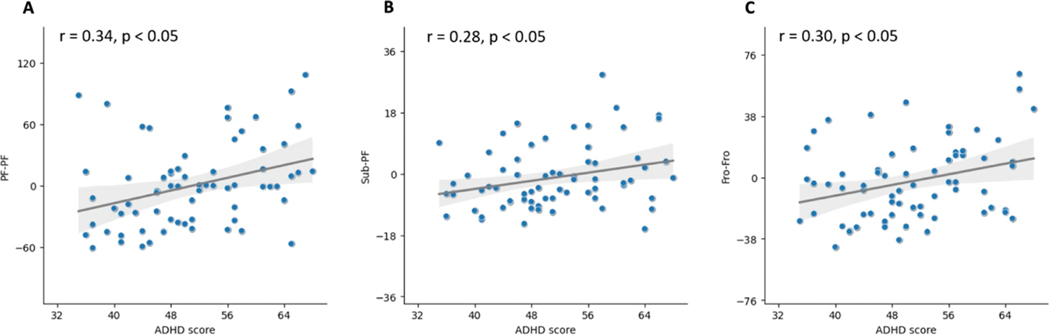
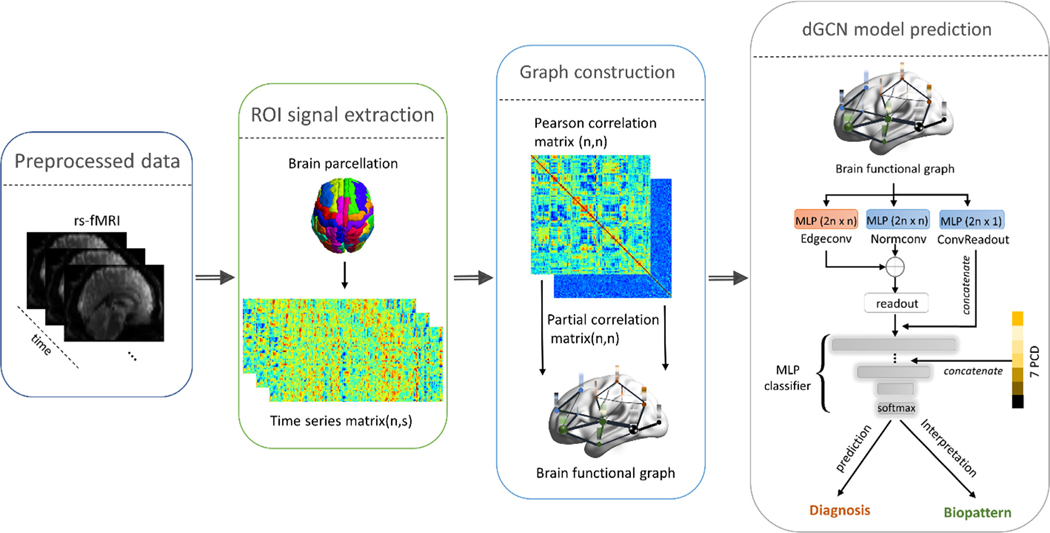
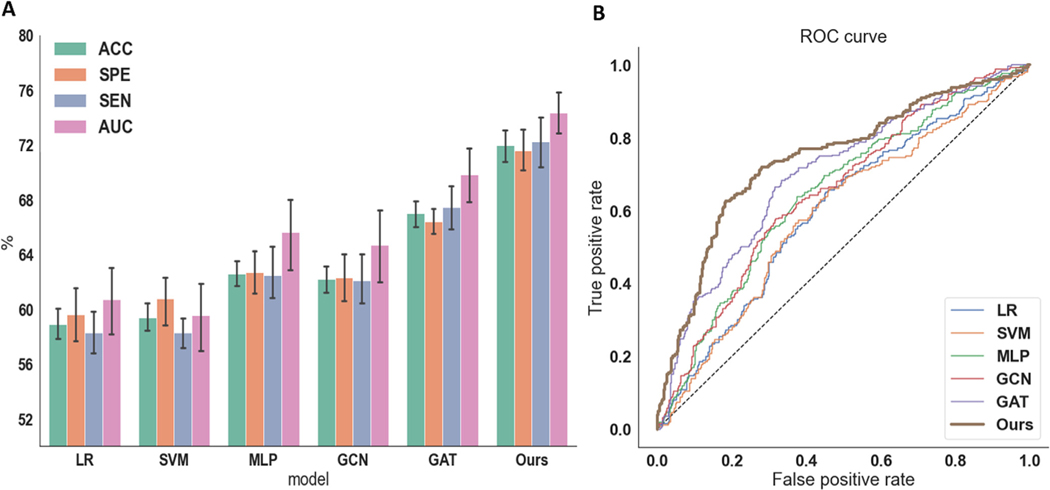
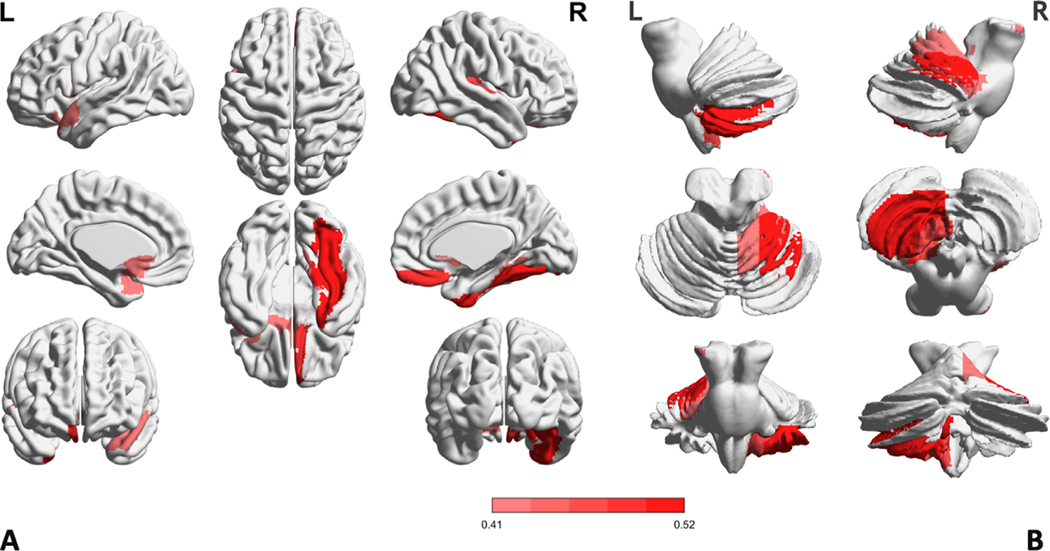
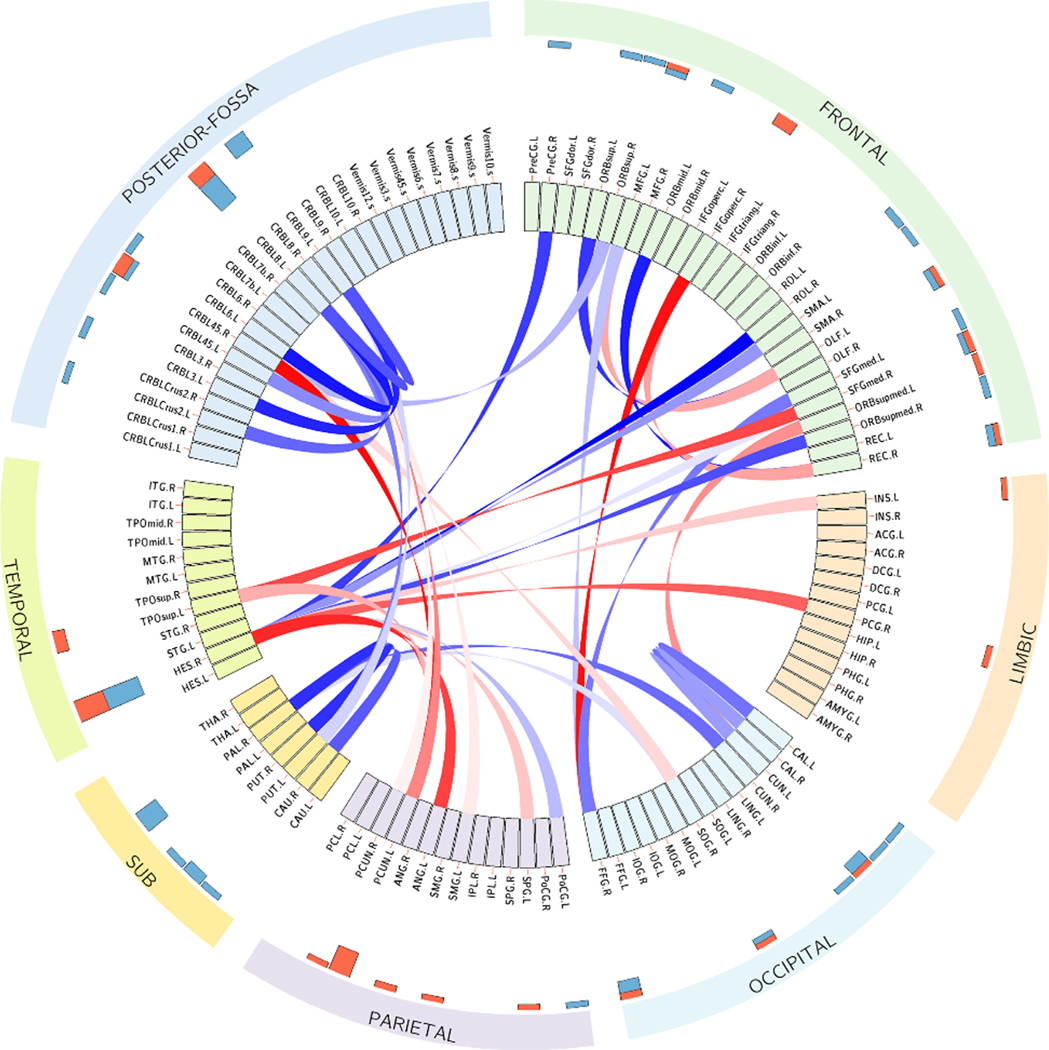
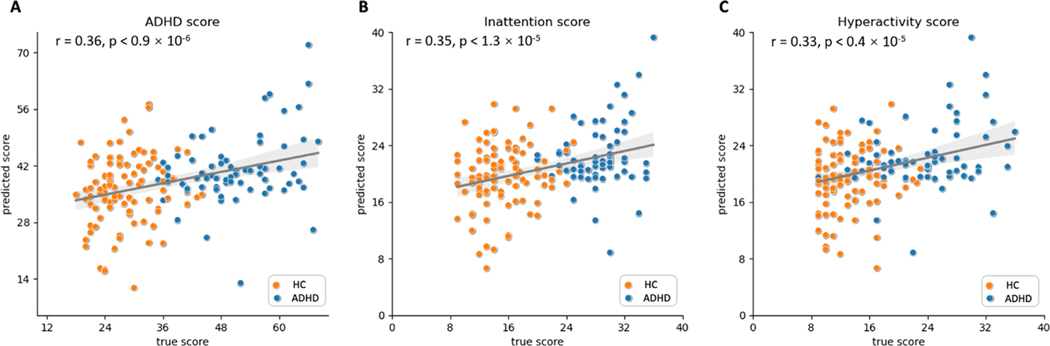
The pathological mechanism of attention deficit hyperactivity disorder (ADHD) is incompletely specified, which leads to difficulty in precise diagnosis. Functional magnetic resonance imaging (fMRI) has emerged as a common neuroimaging technique for studying the brain functional connectome. Most existing methods that have either ignored or simply utilized graph structure, do not fully leverage the potentially important topological information which may be useful in characterizing brain disorders. There is a crucial need for designing novel and efficient approaches which can capture such information. To this end, we propose a new dynamic graph convolutional network (dGCN), which is trained with sparse brain regional connections from dynamically calculated graph features. We also develop a novel convolutional readout layer to improve graph representation. Our extensive experimental analysis demonstrates significantly improved performance of dGCN for ADHD diagnosis compared with existing machine learning and deep learning methods. Visualizations of the salient regions of interest (ROIs) and connectivity based on informative features learned by our model show that the identified functional abnormalities mainly involve brain regions in temporal pole, gyrus rectus, and cerebellar gyri from temporal lobe, frontal lobe, and cerebellum, respectively. A positive correlation was further observed between the identified connectomic abnormalities and ADHD symptom severity. The proposed dGCN model shows great promise in providing a functional network-based precision diagnosis of ADHD and is also broadly applicable to brain connectome-based study of mental disorders.
注意缺陷多动障碍(ADHD)的病理机制尚未完全明确,这导致了精确诊断的困难。功能磁共振成像(fMRI)已成为研究大脑功能连接组的常用神经影像学技术。大多数现有的方法要么忽略了,要么简单地利用了图结构,没有充分利用潜在的重要拓扑信息,这些信息可能有助于表征大脑疾病。因此,迫切需要设计新的、有效的方法来捕捉这种信息。为此,我们提出了一种新的动态图卷积网络(dGCN),该网络是基于动态计算的图特征的稀疏脑区连接进行训练的。我们还开发了一种新的卷积读出层来提高图表示能力。我们的广泛实验分析表明,与现有的机器学习和深度学习方法相比,dGCN 对 ADHD 的诊断性能有了显著提高。基于我们模型学习的信息特征的显著感兴趣区(ROI)和连通性的可视化显示,识别出的功能异常主要涉及颞叶、额叶和小脑的颞极回、直回和小脑回。进一步观察到,确定的连接组异常与 ADHD 症状严重程度呈正相关。所提出的 dGCN 模型在提供基于功能网络的 ADHD 精确诊断方面显示出巨大的潜力,并且也广泛适用于基于大脑连接组的精神障碍研究。