Sagandira Cloudius R, Siyawamwaya Margaret, Watts Paul
Nelson Mandela University, University Way, Port Elizabeth 6031, South Africa.
University of Zimbabwe, 630 Churchill Avenue, Mount Pleasant, Harare, Zimbabwe.
Arab J Chem. 2020 Nov;13(11):7886-7908. doi: 10.1016/j.arabjc.2020.09.020. Epub 2020 Sep 23.
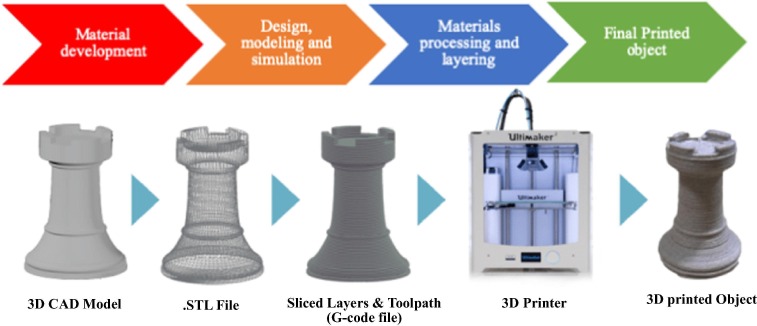
The realization of a downward spiralling of diseases in developing countries requires them to become self-sufficient in pharmaceutical products. One of the ways to meet this need is by boosting the local production of active pharmaceutical ingredients and embracing enabling technologies. Both 3D printing and continuous flow chemistry are being exploited rapidly and they are opening huge avenues of possibilities in the chemical and pharmaceutical industries due to their well-documented benefits. The main barrier to entry for the continuous flow chemistry technique in low-income settings is the cost of set-up and maintenance through purchasing of spare flow reactors. This review article discusses the technical considerations for the convergence of state-of-the-art technologies, 3D printing and continuous flow chemistry for pharmaceutical manufacturing applications in developing countries. An overview of the 3D printing technique and its application in fabrication of continuous flow components and systems is provided. Finally, quality considerations for satisfying regulatory requirements for the approval of 3D printed equipment are underscored. An in-depth understanding of the interrelated aspects in the implementation of these technologies is crucial for the realization of sustainable, good quality chemical reactionware.
发展中国家要实现疾病发生率的螺旋式下降,就需要在药品方面实现自给自足。满足这一需求的途径之一是提高活性药物成分的本地产量,并采用适用技术。3D打印和连续流化学都在迅速得到应用,由于其诸多已被充分证明的优势,它们正在化学和制药行业开辟巨大的可能性。连续流化学技术在低收入地区应用的主要障碍是通过购买备用流动反应器进行设置和维护的成本。这篇综述文章讨论了在发展中国家将最先进技术、3D打印和连续流化学融合用于制药制造应用的技术考量。提供了3D打印技术及其在连续流部件和系统制造中的应用概述。最后,强调了满足3D打印设备审批监管要求的质量考量。深入了解这些技术实施过程中的相互关联方面对于实现可持续、高质量的化学反应器至关重要。