Department of Electrical, Electronic and System Engineering, Universiti Kebangsaan Malaysia, Bangi 43600, Selangor, Malaysia.
Department of Physics and Electronics, Dr. Ram Manohar Lohia Avadh University, Ayodhya 224001, India.
Sensors (Basel). 2021 Dec 20;21(24):8485. doi: 10.3390/s21248485.
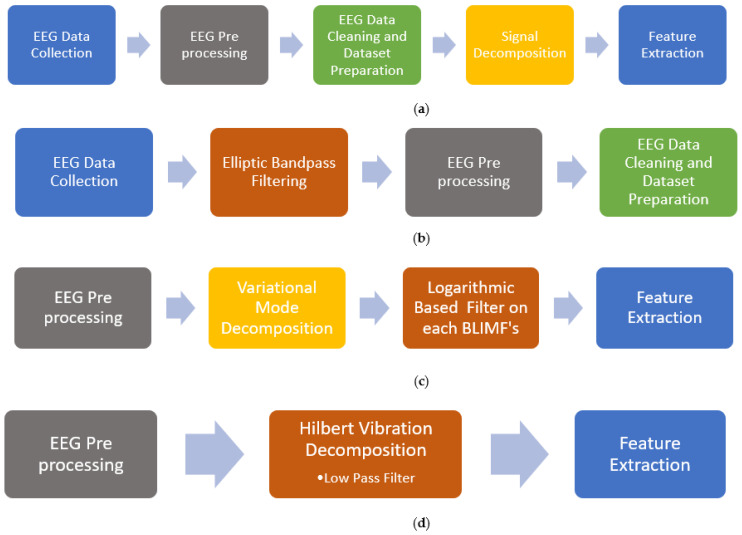
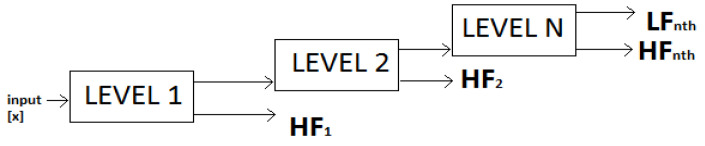
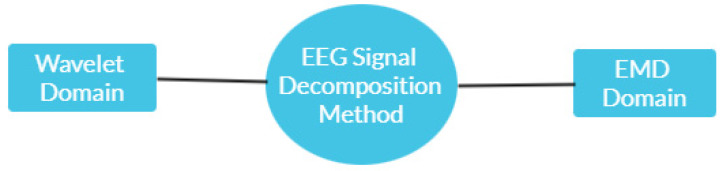
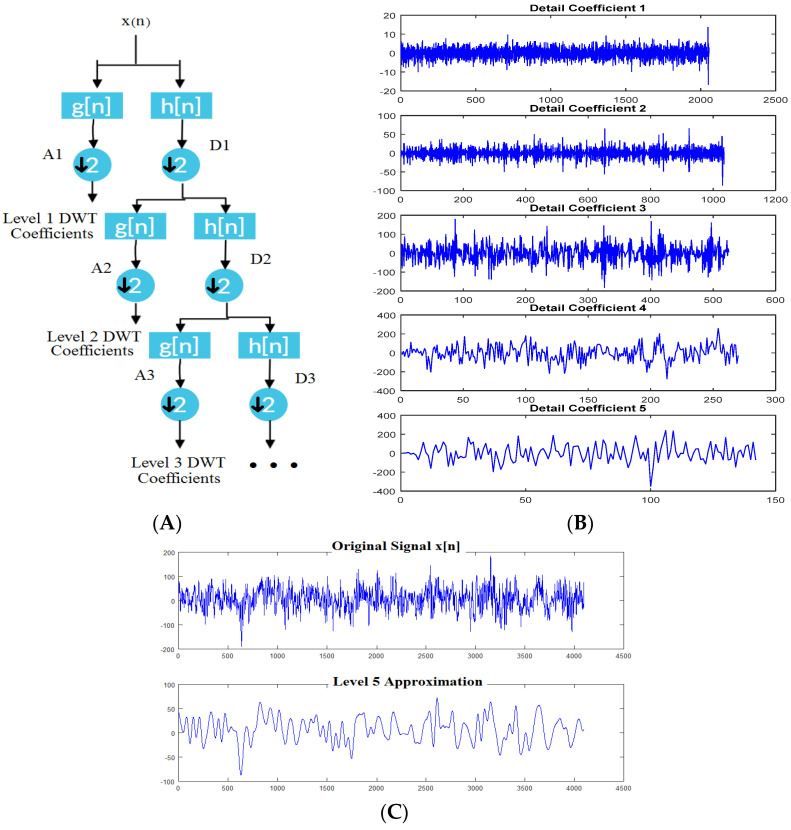
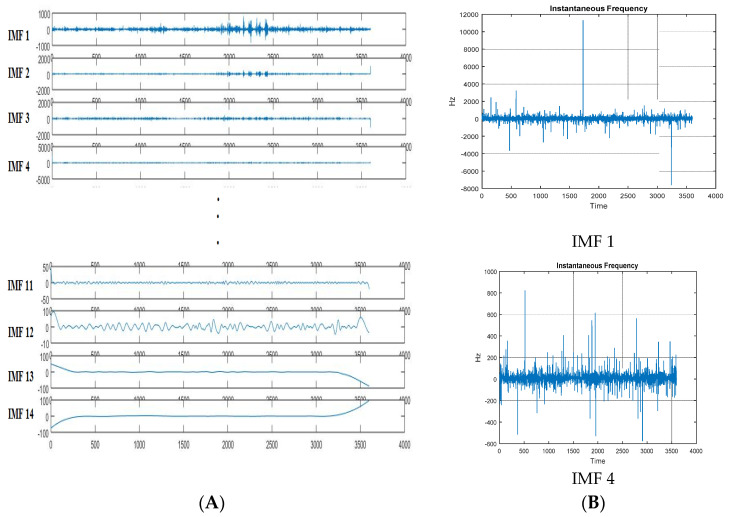
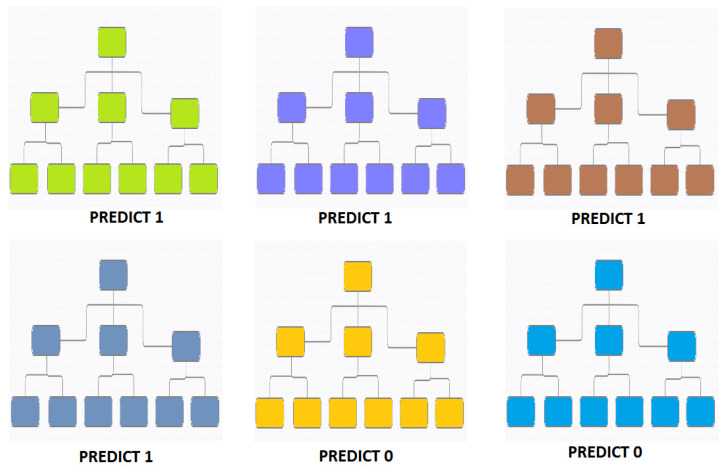
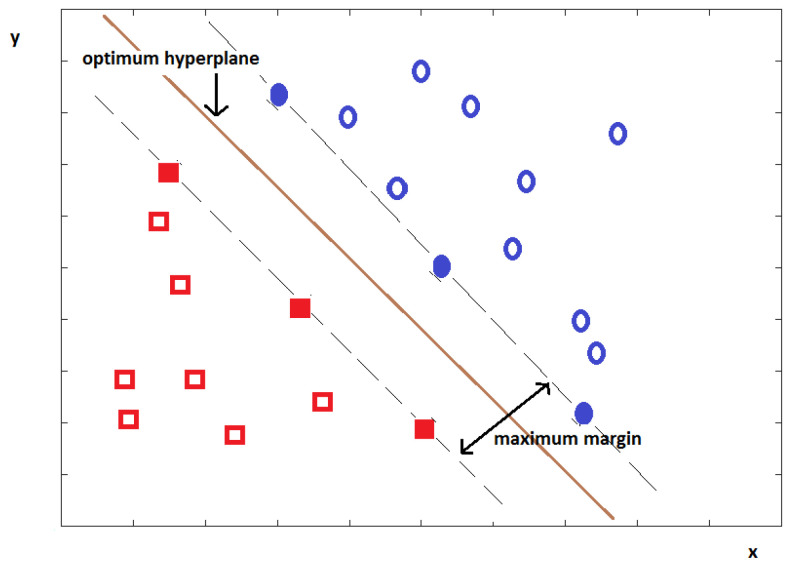
Epileptic seizures are temporary episodes of convulsions, where approximately 70 percent of the diagnosed population can successfully manage their condition with proper medication and lead a normal life. Over 50 million people worldwide are affected by some form of epileptic seizures, and their accurate detection can help millions in the proper management of this condition. Increasing research in machine learning has made a great impact on biomedical signal processing and especially in electroencephalogram (EEG) data analysis. The availability of various feature extraction techniques and classification methods makes it difficult to choose the most suitable combination for resource-efficient and correct detection. This paper intends to review the relevant studies of wavelet and empirical mode decomposition-based feature extraction techniques used for seizure detection in epileptic EEG data. The articles were chosen for review based on their Journal Citation Report, feature selection methods, and classifiers used. The high-dimensional EEG data falls under the category of '3N' biosignals-nonstationary, nonlinear, and noisy; hence, two popular classifiers, namely random forest and support vector machine, were taken for review, as they are capable of handling high-dimensional data and have a low risk of over-fitting. The main metrics used are sensitivity, specificity, and accuracy; hence, some papers reviewed were excluded due to insufficient metrics. To evaluate the overall performances of the reviewed papers, a simple mean value of all metrics was used. This review indicates that the system that used a Stockwell transform wavelet variant as a feature extractor and SVM classifiers led to a potentially better result.
癫痫发作是一种短暂的抽搐发作,大约 70%的确诊患者可以通过适当的药物治疗成功控制病情并过上正常的生活。全球有超过 5000 万人受到某种形式的癫痫发作的影响,准确检测可以帮助数百万人正确管理这种疾病。机器学习的研究进展对生物医学信号处理产生了重大影响,尤其是在脑电图 (EEG) 数据分析方面。各种特征提取技术和分类方法的出现使得选择最合适的组合变得困难,既要资源高效,又要正确检测。本文旨在回顾基于小波和经验模态分解的特征提取技术在癫痫 EEG 数据中的癫痫发作检测的相关研究。根据期刊引文报告、特征选择方法和使用的分类器选择文章进行回顾。高维 EEG 数据属于“3N”生物信号——非平稳、非线性和噪声,因此选择了两种流行的分类器,即随机森林和支持向量机进行回顾,因为它们能够处理高维数据,并且过度拟合的风险较低。主要使用的指标是敏感性、特异性和准确性;因此,由于指标不足,一些被回顾的论文被排除在外。为了评估所回顾论文的整体性能,使用了所有指标的简单平均值。本综述表明,使用斯托克威尔变换小波变体作为特征提取器和 SVM 分类器的系统可能会产生更好的结果。