Chadaga Krishnaraj, Chakraborty Chinmay, Prabhu Srikanth, Umakanth Shashikiran, Bhat Vivekananda, Sampathila Niranjana
Department of Computer Science and Engineering, Manipal Institute of Technology, Manipal Academy of Higher Education, Manipal, India.
Department of Electronics and Communication, Birla Institute of Technology, Mesra, India.
Interdiscip Sci. 2022 Jun;14(2):452-470. doi: 10.1007/s12539-021-00499-4. Epub 2022 Feb 8.
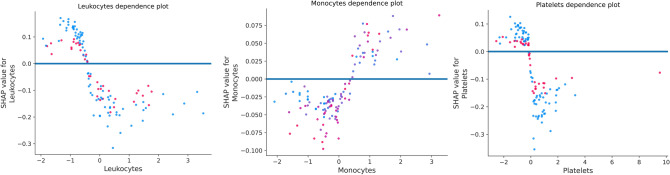
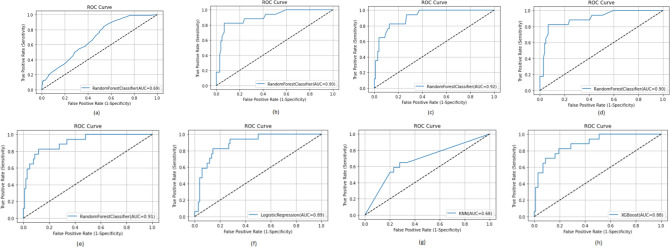
Coronavirus 2 (SARS-CoV-2), often known by the name COVID-19, is a type of acute respiratory syndrome that has had a significant influence on both economy and health infrastructure worldwide. This novel virus is diagnosed utilising a conventional method known as the RT-PCR (Reverse Transcription Polymerase Chain Reaction) test. This approach, however, produces a lot of false-negative and erroneous outcomes. According to recent studies, COVID-19 can also be diagnosed using X-rays, CT scans, blood tests and cough sounds. In this article, we use blood tests and machine learning to predict the diagnosis of this deadly virus. We also present an extensive review of various existing machine-learning applications that diagnose COVID-19 from clinical and laboratory markers. Four different classifiers along with a technique called Synthetic Minority Oversampling Technique (SMOTE) were used for classification. Shapley Additive Explanations (SHAP) method was utilized to calculate the gravity of each feature and it was found that eosinophils, monocytes, leukocytes and platelets were the most critical blood parameters that distinguished COVID-19 infection for our dataset. These classifiers can be utilized in conjunction with RT-PCR tests to improve sensitivity and in emergency situations such as a pandemic outbreak that might happen due to new strains of the virus. The positive results indicate the prospective use of an automated framework that could help clinicians and medical personnel diagnose and screen patients.
严重急性呼吸综合征冠状病毒2(SARS-CoV-2),通常被称为COVID-19,是一种急性呼吸综合征,对全球经济和卫生基础设施都产生了重大影响。这种新型病毒通过一种称为逆转录聚合酶链反应(RT-PCR)检测的传统方法进行诊断。然而,这种方法会产生大量假阴性和错误结果。根据最近的研究,COVID-19也可以通过X射线、CT扫描、血液检测和咳嗽声音来诊断。在本文中,我们使用血液检测和机器学习来预测这种致命病毒的诊断。我们还对各种现有的机器学习应用进行了广泛综述,这些应用从临床和实验室指标诊断COVID-19。使用了四种不同的分类器以及一种称为合成少数类过采样技术(SMOTE)的技术进行分类。利用夏普利值加性解释(SHAP)方法计算每个特征的重要性,发现嗜酸性粒细胞、单核细胞、白细胞和血小板是区分我们数据集中COVID-19感染的最关键血液参数。这些分类器可以与RT-PCR检测结合使用,以提高灵敏度,并用于紧急情况,如可能因病毒新毒株引发的大流行爆发。阳性结果表明了一个自动化框架的潜在用途,该框架可以帮助临床医生和医务人员诊断和筛查患者。