Department of Vascular Medicine, Amsterdam University Medical Centers, University of Amsterdam, Meibergdreef 9, 1105 AZ Amsterdam, The Netherlands.
Department of Cardiology, Amsterdam University Medical Centers, Vrije Universiteit Amsterdam, Amsterdam, The Netherlands.
Eur Heart J. 2022 Apr 19;43(16):1569-1577. doi: 10.1093/eurheartj/ehac055.
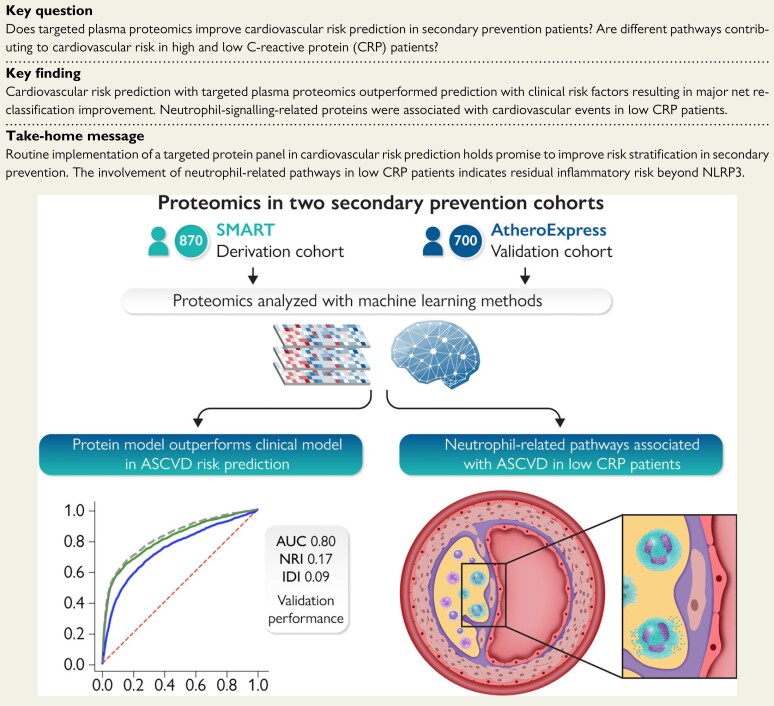
Current risk scores do not accurately identify patients at highest risk of recurrent atherosclerotic cardiovascular disease (ASCVD) in need of more intensive therapeutic interventions. Advances in high-throughput plasma proteomics, analysed with machine learning techniques, may offer new opportunities to further improve risk stratification in these patients.
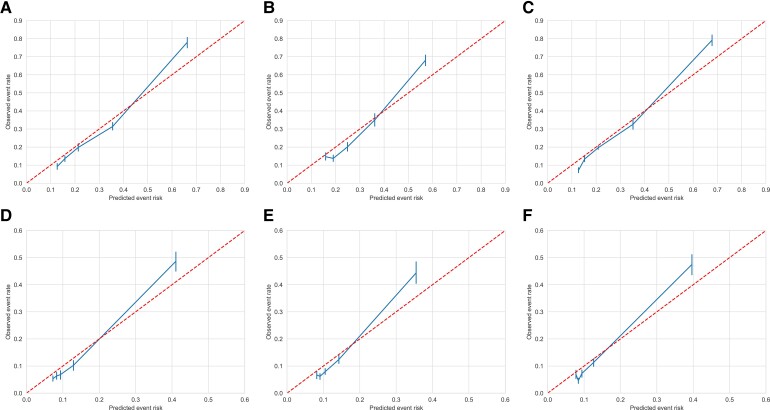
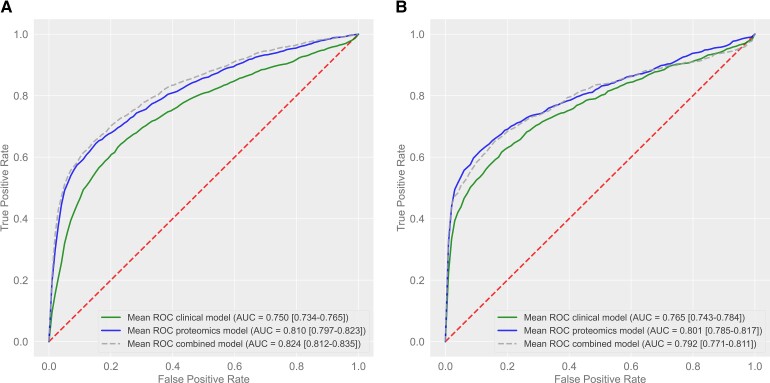
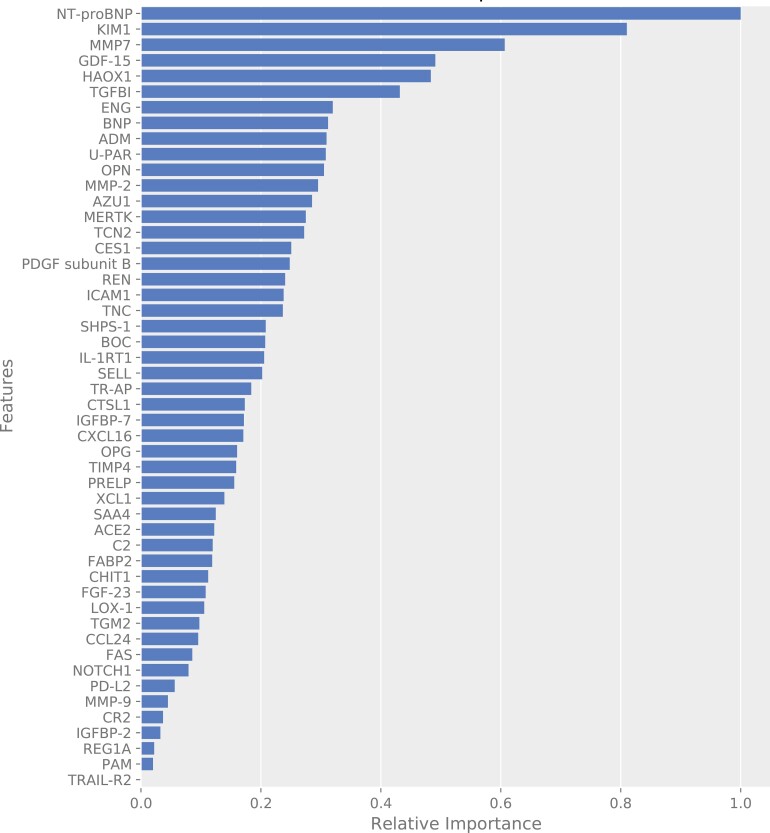
Targeted plasma proteomics was performed in two secondary prevention cohorts: the Second Manifestations of ARTerial disease (SMART) cohort (n = 870) and the Athero-Express cohort (n = 700). The primary outcome was recurrent ASCVD (acute myocardial infarction, ischaemic stroke, and cardiovascular death). Machine learning techniques with extreme gradient boosting were used to construct a protein model in the derivation cohort (SMART), which was validated in the Athero-Express cohort and compared with a clinical risk model. Pathway analysis was performed to identify specific pathways in high and low C-reactive protein (CRP) patient subsets. The protein model outperformed the clinical model in both the derivation cohort [area under the curve (AUC): 0.810 vs. 0.750; P < 0.001] and validation cohort (AUC: 0.801 vs. 0.765; P < 0.001), provided significant net reclassification improvement (0.173 in validation cohort) and was well calibrated. In contrast to a clear interleukin-6 signal in high CRP patients, neutrophil-signalling-related proteins were associated with recurrent ASCVD in low CRP patients.
A proteome-based risk model is superior to a clinical risk model in predicting recurrent ASCVD events. Neutrophil-related pathways were found in low CRP patients, implying the presence of a residual inflammatory risk beyond traditional NLRP3 pathways. The observed net reclassification improvement illustrates the potential of proteomics when incorporated in a tailored therapeutic approach in secondary prevention patients.
目前的风险评分无法准确识别需要更强化治疗干预的复发性动脉粥样硬化性心血管疾病(ASCVD)高危患者。高通量血浆蛋白质组学的进展,结合机器学习技术分析,可能为进一步改善这些患者的风险分层提供新的机会。
在两个二级预防队列中进行了靶向血浆蛋白质组学研究:第二次动脉疾病表现(SMART)队列(n=870)和动脉表达队列(n=700)。主要结局是复发性 ASCVD(急性心肌梗死、缺血性卒中和心血管死亡)。使用极端梯度增强的机器学习技术在推导队列(SMART)中构建了一个蛋白质模型,并在 Athero-Express 队列中进行了验证,并与临床风险模型进行了比较。进行了途径分析,以确定高和低 C 反应蛋白(CRP)患者亚组中的特定途径。该蛋白质模型在推导队列(曲线下面积[AUC]:0.810 比 0.750;P<0.001)和验证队列(AUC:0.801 比 0.765;P<0.001)中均优于临床模型,提供了显著的净重新分类改善(验证队列中为 0.173),并且具有良好的校准度。与高 CRP 患者中明显的白细胞介素 6 信号相反,中性粒细胞信号相关蛋白与低 CRP 患者的复发性 ASCVD 相关。
基于蛋白质组的风险模型在预测复发性 ASCVD 事件方面优于临床风险模型。在低 CRP 患者中发现了与中性粒细胞相关的途径,这表明在传统 NLRP3 途径之外存在残留的炎症风险。观察到的净重新分类改善说明了蛋白质组学在二级预防患者中纳入个性化治疗方法时的潜在价值。