School of Information Science and TechnologyUniversity of Science and Technology of China (USTC) Hefei 230027 China.
Epilepsy Center, Department of NeurosurgeryThe First Affiliated Hospital of USTC, Division of Life Sciences and MedicineUniversity of Science and Technology of China, Hefei Anhui 230001 China.
IEEE J Transl Eng Health Med. 2022 Jan 18;10:4900209. doi: 10.1109/JTEHM.2022.3144037. eCollection 2022.
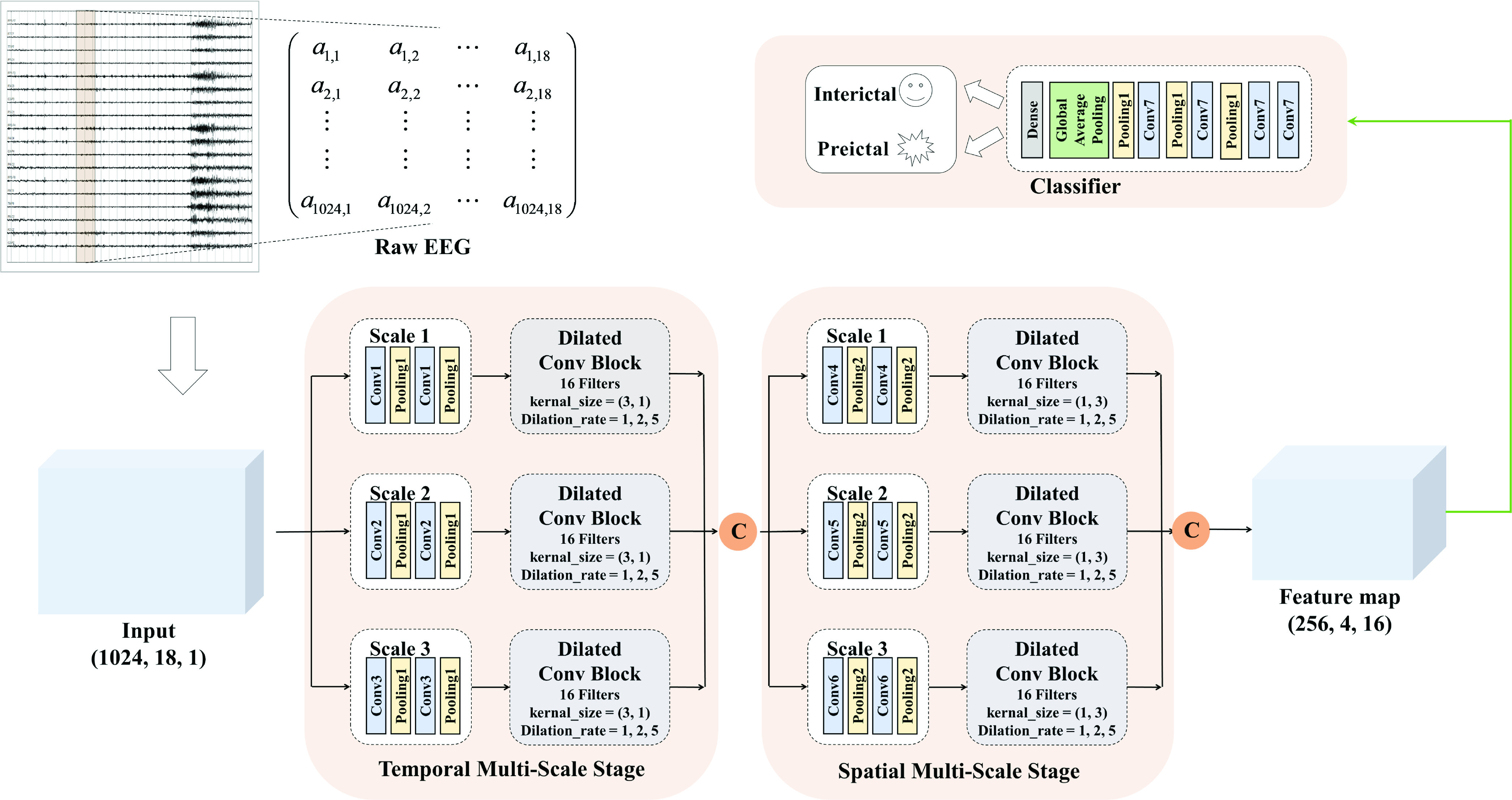
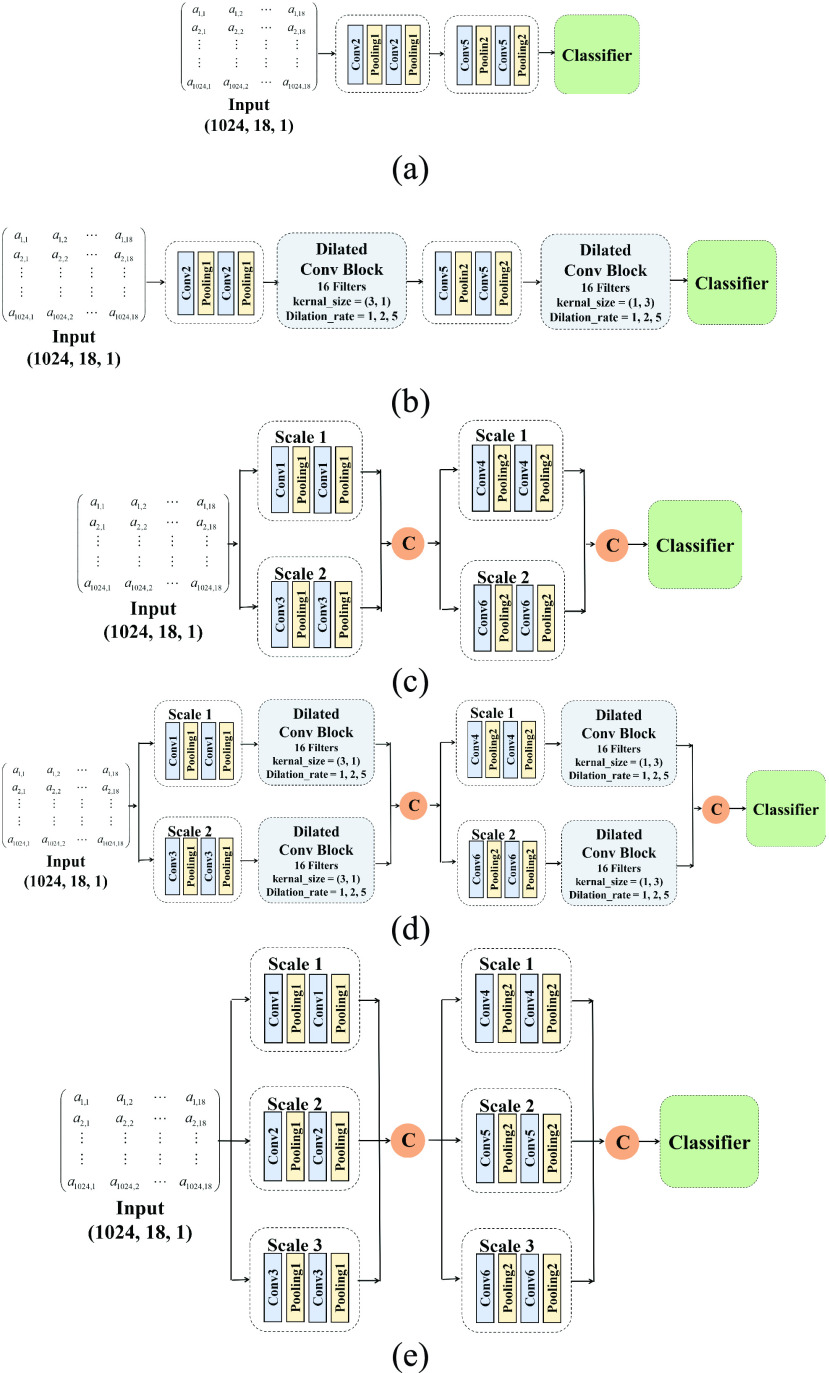
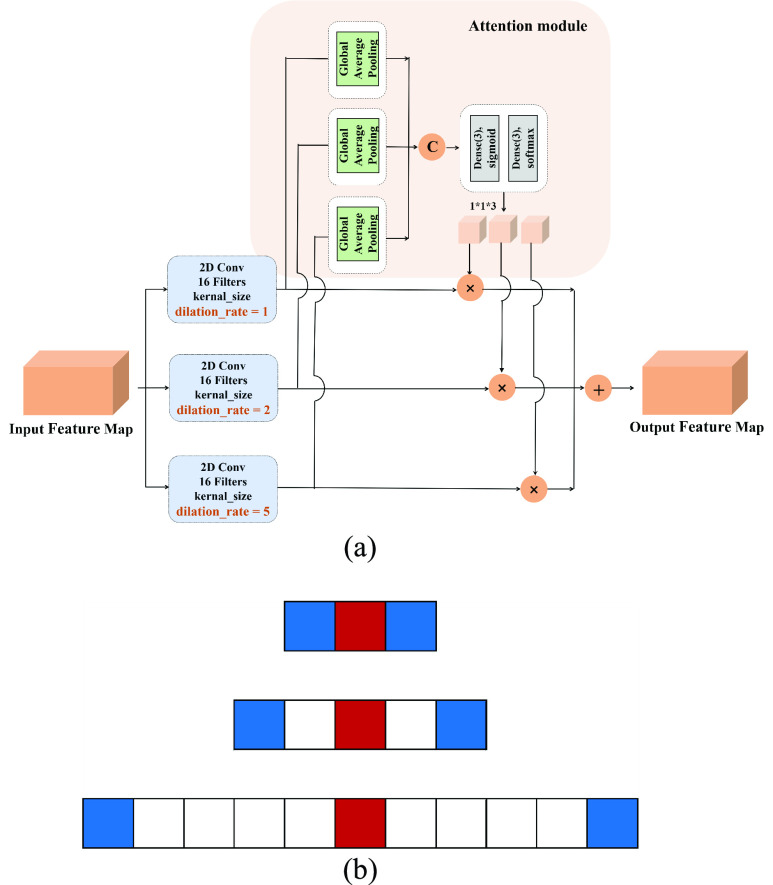
Epileptic seizure prediction based on scalp electroencephalogram (EEG) is of great significance for improving the quality of life of patients with epilepsy. In recent years, a number of studies based on deep learning methods have been proposed to address this issue and achieve excellent performance. However, most studies on epileptic seizure prediction by EEG fail to take full advantage of temporal-spatial multi-scale features of EEG signals, while EEG signals carry information in multiple temporal and spatial scales. To this end, in this study, we proposed an end-to-end framework by using a temporal-spatial multi-scale convolutional neural network with dilated convolutions for patient-specific seizure prediction. Specifically, the model divides the EEG processing pipeline into two stages: the temporal multi-scale stage and the spatial multi-scale stage. In each stage, we firstly extract the multi-scale features along the corresponding dimension. A dilated convolution block is then conducted on these features to expand our model's receptive fields further and systematically aggregate global information. Furthermore, we adopt a feature-weighted fusion strategy based on an attention mechanism to achieve better feature fusion and eliminate redundancy in the dilated convolution block. The proposed model obtains an average sensitivity of 93.3%, an average false prediction rate of 0.007 per hour, and an average proportion of time-in-warning of 6.3% testing in 16 patients from the CHB-MIT dataset with the leave-one-out method. Conclusion: Our model achieves superior performance in comparison to state-of-the-art methods, providing a promising solution for EEG-based seizure prediction.
基于头皮脑电图 (EEG) 的癫痫发作预测对于提高癫痫患者的生活质量具有重要意义。近年来,提出了许多基于深度学习方法的研究来解决这个问题,并取得了优异的性能。然而,大多数基于 EEG 的癫痫发作预测研究未能充分利用 EEG 信号的时-空多尺度特征,而 EEG 信号在多个时间和空间尺度上携带信息。为此,在这项研究中,我们提出了一种端到端框架,使用具有扩张卷积的时空多尺度卷积神经网络进行患者特定的癫痫发作预测。
具体来说,该模型将 EEG 处理管道分为两个阶段:时间多尺度阶段和空间多尺度阶段。在每个阶段中,我们首先沿着相应的维度提取多尺度特征。然后在这些特征上进行扩张卷积块,进一步扩展我们模型的感受野,并系统地聚合全局信息。此外,我们采用基于注意力机制的特征加权融合策略来实现更好的特征融合并消除扩张卷积块中的冗余。
该模型采用留一法在 16 名 CHB-MIT 数据集患者中获得了平均敏感性为 93.3%、平均假阳性率为每小时 0.007、平均预警时间比例为 6.3%的测试结果。结论:与最先进的方法相比,我们的模型在性能上表现优异,为基于 EEG 的癫痫发作预测提供了一种有前途的解决方案。