Department of Applied Physics, Aalto University, Espoo, Finland.
Department of Mathematics and Systems Analysis, Aalto University, Espoo, Finland.
PLoS Comput Biol. 2022 Apr 7;18(4):e1009974. doi: 10.1371/journal.pcbi.1009974. eCollection 2022 Apr.
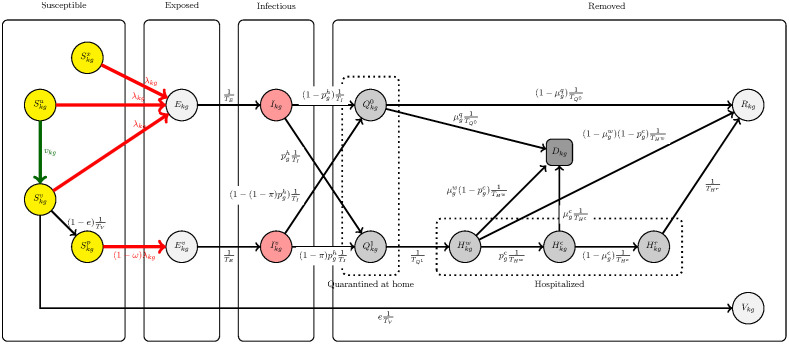
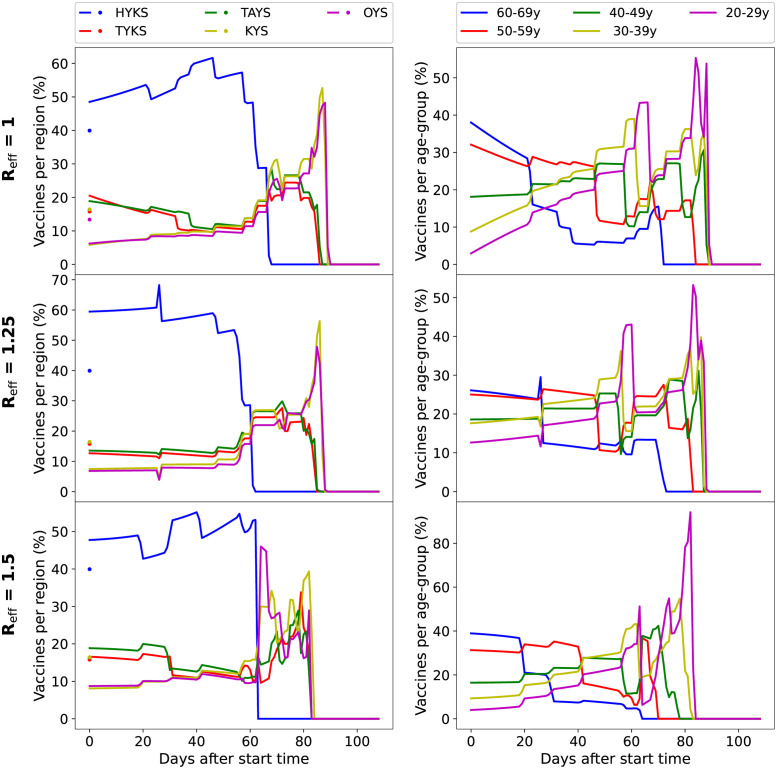
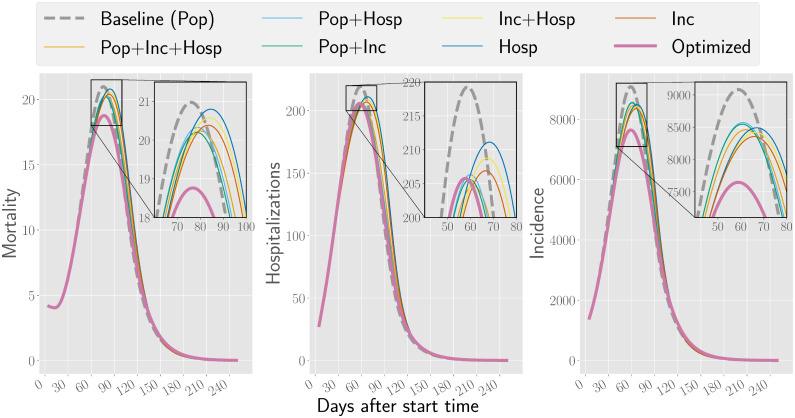
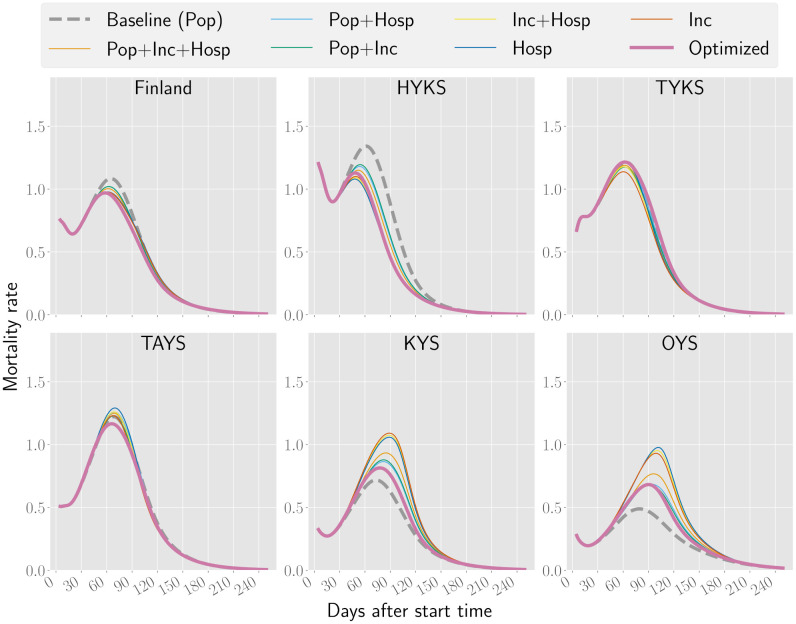
We evaluate the efficiency of various heuristic strategies for allocating vaccines against COVID-19 and compare them to strategies found using optimal control theory. Our approach is based on a mathematical model which tracks the spread of disease among different age groups and across different geographical regions, and we introduce a method to combine age-specific contact data to geographical movement data. As a case study, we model the epidemic in the population of mainland Finland utilizing mobility data from a major telecom operator. Our approach allows to determine which geographical regions and age groups should be targeted first in order to minimize the number of deaths. In the scenarios that we test, we find that distributing vaccines demographically and in an age-descending order is not optimal for minimizing deaths and the burden of disease. Instead, more lives could be saved by using strategies which emphasize high-incidence regions and distribute vaccines in parallel to multiple age groups. The level of emphasis that high-incidence regions should be given depends on the overall transmission rate in the population. This observation highlights the importance of updating the vaccination strategy when the effective reproduction number changes due to the general contact patterns changing and new virus variants entering.
我们评估了针对 COVID-19 分配疫苗的各种启发式策略的效率,并将其与使用最优控制理论找到的策略进行了比较。我们的方法基于一个数学模型,该模型跟踪疾病在不同年龄组和不同地理区域之间的传播,我们引入了一种将特定年龄的接触数据与地理移动数据相结合的方法。作为一个案例研究,我们利用主要电信运营商的移动数据,对芬兰大陆的人口中的疫情进行建模。我们的方法可以确定应首先针对哪些地理区域和年龄组,以最大程度地减少死亡人数。在我们测试的场景中,我们发现,为了最大限度地减少死亡人数和疾病负担,按人口分布和年龄递减的方式分配疫苗并不是最优的。相反,通过使用强调高发地区并同时向多个年龄组分发疫苗的策略,可以挽救更多生命。强调高发地区的程度取决于人群中的总传播率。这一观察结果强调了在由于一般接触模式的变化和新病毒变体的出现导致有效繁殖数发生变化时,更新疫苗接种策略的重要性。