Jetto Cuckoo Teresa, Nambiar Akshaya, Manjithaya Ravi
Autophagy Laboratory, Molecular Biology and Genetics Unit, Jawaharlal Nehru Centre for Advanced Scientific Research, Bengaluru, India.
Neuroscience Unit, Jawaharlal Nehru Centre for Advanced Scientific Research, Bengaluru, India.
Front Cell Dev Biol. 2022 Mar 22;10:837337. doi: 10.3389/fcell.2022.837337. eCollection 2022.
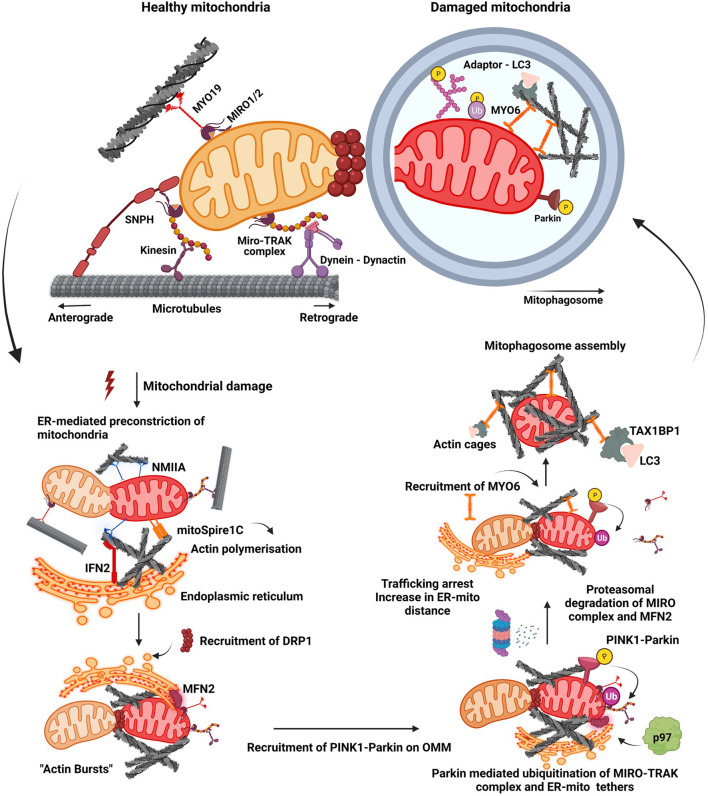
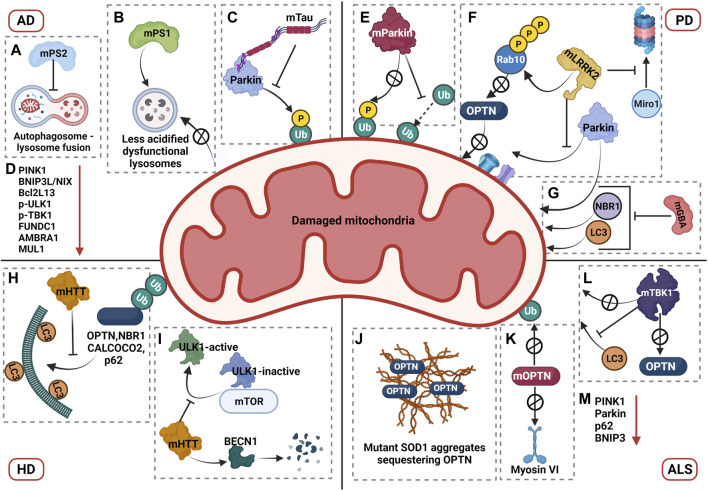
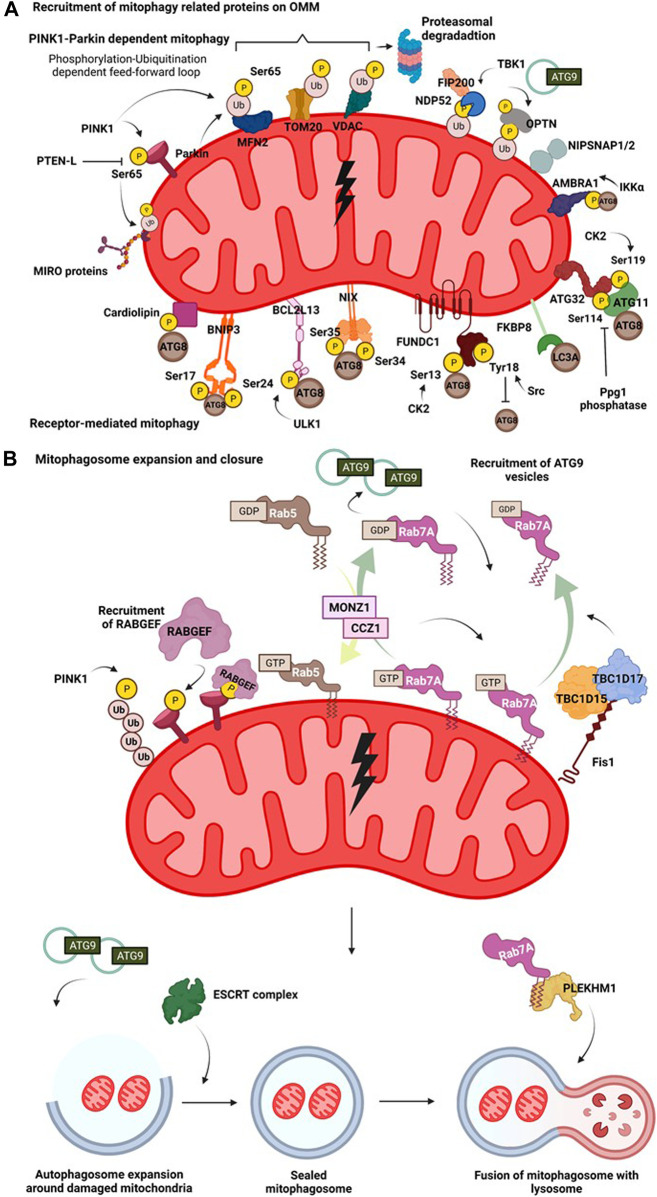
Macroautophagy (henceforth autophagy) an evolutionary conserved intracellular pathway, involves lysosomal degradation of damaged and superfluous cytosolic contents to maintain cellular homeostasis. While autophagy was initially perceived as a bulk degradation process, a surfeit of studies in the last 2 decades has revealed that it can also be selective in choosing intracellular constituents for degradation. In addition to the core autophagy machinery, these selective autophagy pathways comprise of distinct molecular players that are involved in the capture of specific cargoes. The diverse organelles that are degraded by selective autophagy pathways are endoplasmic reticulum (ERphagy), lysosomes (lysophagy), mitochondria (mitophagy), Golgi apparatus (Golgiphagy), peroxisomes (pexophagy) and nucleus (nucleophagy). Among these, the main focus of this review is on the selective autophagic pathway involved in mitochondrial turnover called mitophagy. The mitophagy pathway encompasses diverse mechanisms involving a complex interplay of a multitude of proteins that confers the selective recognition of damaged mitochondria and their targeting to degradation autophagy. Mitophagy is triggered by cues that signal the mitochondrial damage such as disturbances in mitochondrial fission-fusion dynamics, mitochondrial membrane depolarisation, enhanced ROS production, mtDNA damage as well as developmental cues such as erythrocyte maturation, removal of paternal mitochondria, cardiomyocyte maturation and somatic cell reprogramming. As research on the mechanistic aspects of this complex pathway is progressing, emerging roles of new players such as the NIPSNAP proteins, Miro proteins and ER-Mitochondria contact sites (ERMES) are being explored. Although diverse aspects of this pathway are being investigated in depth, several outstanding questions such as distinct molecular players of basal mitophagy, selective dominance of a particular mitophagy adapter protein over the other in a given physiological condition, molecular mechanism of how specific disease mutations affect this pathway remain to be addressed. In this review, we aim to give an overview with special emphasis on molecular and signalling pathways of mitophagy and its dysregulation in neurodegenerative disorders.
巨自噬(以下简称自噬)是一种进化保守的细胞内途径,涉及对受损和多余的胞质内容物进行溶酶体降解,以维持细胞内稳态。虽然自噬最初被认为是一种大量降解过程,但在过去20年中大量研究表明,它在选择细胞内成分进行降解时也具有选择性。除了核心自噬机制外,这些选择性自噬途径还包括参与捕获特定货物的不同分子参与者。通过选择性自噬途径降解的各种细胞器包括内质网(内质网自噬)、溶酶体(溶酶体自噬)、线粒体(线粒体自噬)、高尔基体(高尔基体自噬)、过氧化物酶体(过氧化物酶体自噬)和细胞核(核自噬)。其中,本综述的主要重点是参与线粒体周转的选择性自噬途径,即线粒体自噬。线粒体自噬途径包含多种机制,涉及众多蛋白质的复杂相互作用,这些蛋白质赋予对受损线粒体的选择性识别及其靶向降解(自噬)。线粒体自噬由信号线粒体损伤的线索触发,如线粒体裂变 - 融合动力学的紊乱、线粒体膜去极化、活性氧产生增加、线粒体DNA损伤以及发育线索,如红细胞成熟、父本线粒体的去除、心肌细胞成熟和体细胞重编程。随着对这一复杂途径机制方面的研究不断进展,诸如NIPSNAP蛋白、Miro蛋白和内质网 - 线粒体接触位点(ERMES)等新参与者的新作用正在被探索。尽管该途径的各个方面正在深入研究,但仍有几个突出问题有待解决,如基础线粒体自噬的独特分子参与者、在给定生理条件下特定线粒体自噬衔接蛋白相对于其他蛋白的选择性优势、特定疾病突变影响该途径的分子机制。在本综述中,我们旨在进行概述,特别强调线粒体自噬的分子和信号通路及其在神经退行性疾病中的失调。