Department of Psychology, School of Life and Medical Sciences, Sport and Geography, University of Hertfordshire, Hertfordshire, United Kingdom.
PLoS One. 2022 May 4;17(5):e0267360. doi: 10.1371/journal.pone.0267360. eCollection 2022.
Research into paranormal beliefs and cognitive functioning has expanded considerably since the last review almost 30 years ago, prompting the need for a comprehensive review. The current systematic review aims to identify the reported associations between paranormal beliefs and cognitive functioning, and to assess study quality.
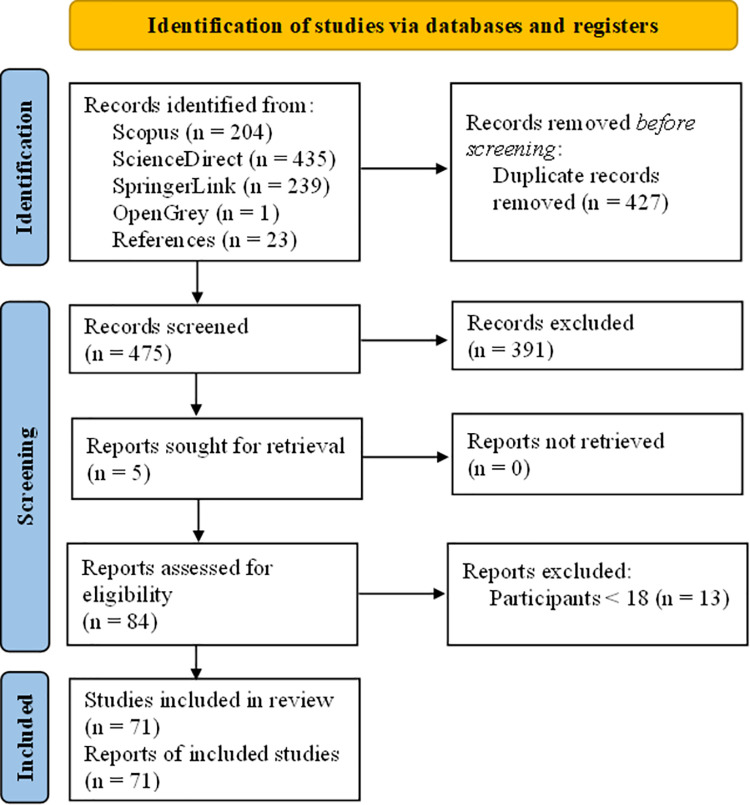
We searched four databases (Scopus, ScienceDirect, SpringerLink, and OpenGrey) from inception until May 2021. Inclusion criteria comprised papers published in English that contained original data assessing paranormal beliefs and cognitive function in healthy adult samples. Study quality and risk of bias was assessed using the Appraisal tool for Cross-Sectional Studies (AXIS) and results were synthesised through narrative review. The review adhered to the Preferred Reporting Items for Systematic Reviews and Meta-Analyses (PRISMA) guidelines and was preregistered as part of a larger registration on the Open Science Framework (https://osf.io/uzm5v).
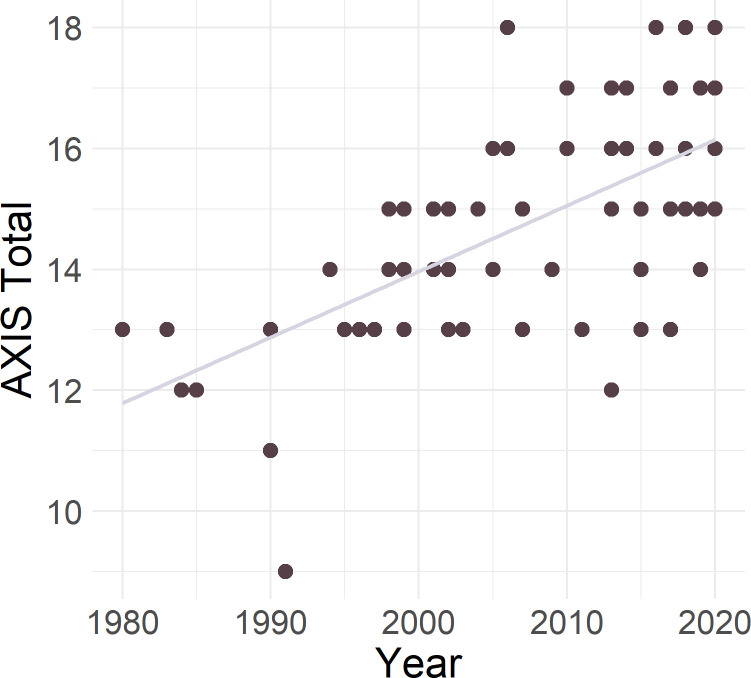
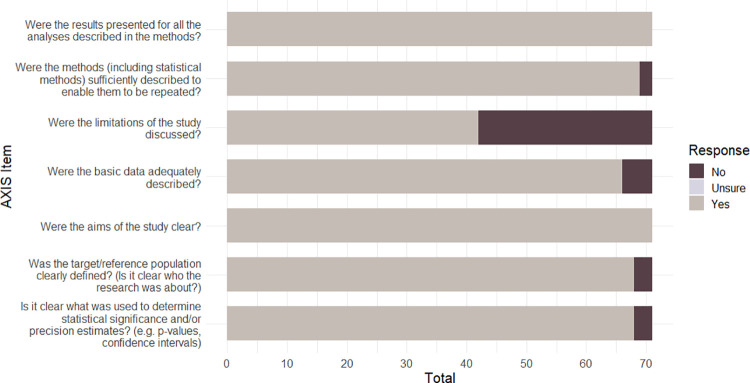
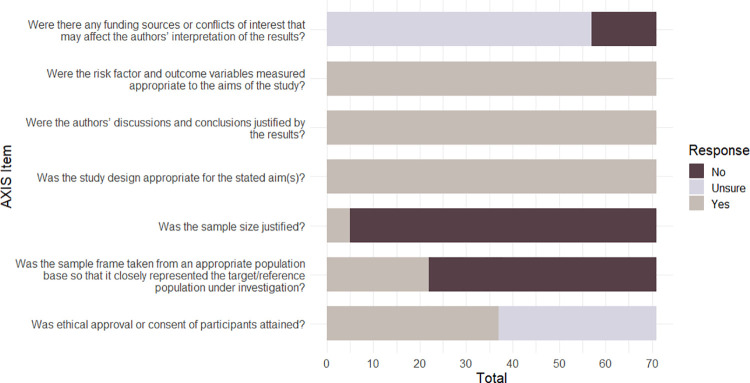
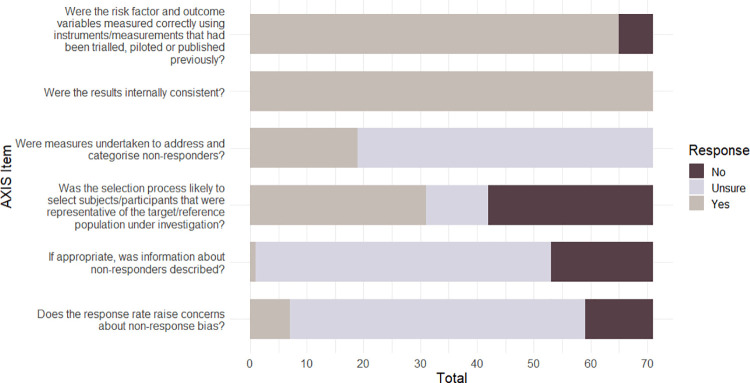
From 475 identified studies, 71 (n = 20,993) met our inclusion criteria. Studies were subsequently divided into the following six categories: perceptual and cognitive biases (k = 19, n = 3,397), reasoning (k = 17, n = 9,661), intelligence, critical thinking, and academic ability (k = 12, n = 2,657), thinking style (k = 13, n = 4,100), executive function and memory (k = 6, n = 810), and other cognitive functions (k = 4, n = 368). Study quality was rated as good-to-strong for 75% of studies and appears to be improving across time. Nonetheless, we identified areas of methodological weakness including: the lack of preregistration, discussion of limitations, a-priori justification of sample size, assessment of nonrespondents, and the failure to adjust for multiple testing. Over 60% of studies have recruited undergraduates and 30% exclusively psychology undergraduates, which raises doubt about external validity. Our narrative synthesis indicates high heterogeneity of study findings. The most consistent associations emerge for paranormal beliefs with increased intuitive thinking and confirmatory bias, and reduced conditional reasoning ability and perception of randomness.
Although study quality is good, areas of methodological weakness exist. In addressing these methodological issues, we propose that authors engage with preregistration of data collection and analysis procedures. At a conceptual level, we argue poorer cognitive performance across seemingly disparate cognitive domains might reflect the influence of an over-arching executive dysfunction.
自近 30 年前上一次综述以来,对超自然信仰和认知功能的研究已经大大扩展,因此需要进行全面的综述。本系统综述旨在确定超自然信仰与认知功能之间报告的关联,并评估研究质量。
我们从四个数据库(Scopus、ScienceDirect、SpringerLink 和 OpenGrey)中搜索了从成立到 2021 年 5 月的所有数据。纳入标准包括以英文发表的包含评估健康成年样本中超自然信仰和认知功能的原始数据的论文。使用横断面研究评估工具 (AXIS) 评估研究质量和偏倚风险,并通过叙述性综述综合结果。该综述遵循系统评价和荟萃分析的首选报告项目 (PRISMA) 指南,并作为更大规模的开放科学框架 (https://osf.io/uzm5v) 注册的一部分进行了预先注册。
从 475 项已确定的研究中,有 71 项(n = 20,993)符合我们的纳入标准。随后,研究被分为以下六个类别:感知和认知偏差(k = 19,n = 3,397)、推理(k = 17,n = 9,661)、智力、批判性思维和学术能力(k = 12,n = 2,657)、思维方式(k = 13,n = 4,100)、执行功能和记忆(k = 6,n = 810)和其他认知功能(k = 4,n = 368)。75%的研究质量被评为良好至强,并且似乎随着时间的推移而在提高。尽管如此,我们还是发现了一些方法上的弱点,包括:缺乏预先登记、讨论局限性、对样本量的先验合理性、对未回复者的评估,以及未能对多重检验进行调整。超过 60%的研究招募了本科生,30%专门招募心理学本科生,这让人怀疑研究的外部有效性。我们的叙述性综述表明,研究结果存在高度异质性。与超自然信仰最一致的关联是直觉思维和确认偏差的增加,以及条件推理能力和对随机性的感知的降低。
尽管研究质量良好,但仍存在方法上的弱点。在解决这些方法问题时,我们建议作者参与数据收集和分析程序的预先登记。在概念层面上,我们认为在看似不同的认知领域中较差的认知表现可能反映了一个总体执行功能障碍的影响。