School of Chemistry and Physics, College of Agriculture Engineering and Science, University of KwaZulu-Natal, Durban 4041, South Africa.
Int J Mol Sci. 2022 Apr 22;23(9):4638. doi: 10.3390/ijms23094638.
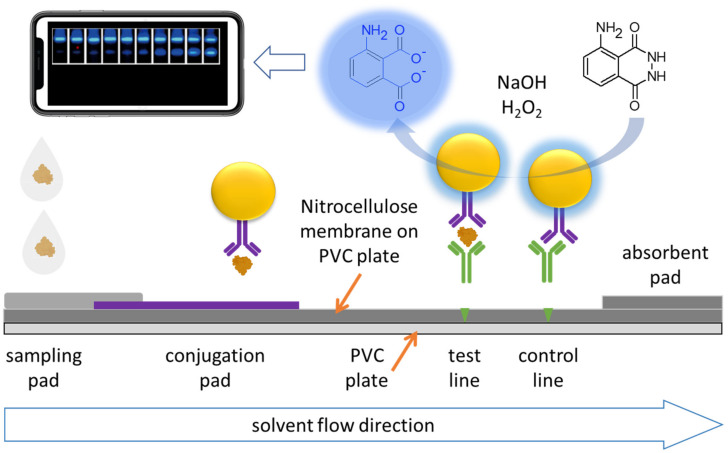
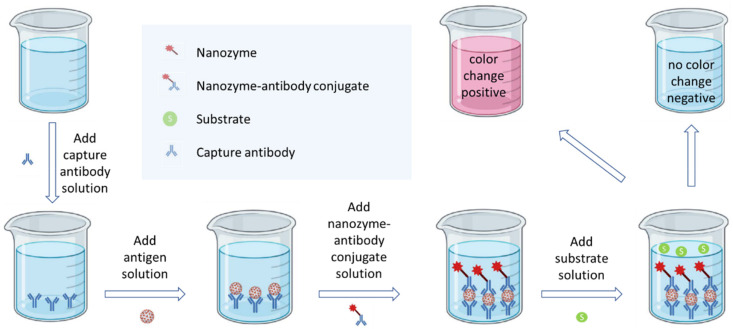
Nanozymes are synthetic nanoparticulate materials that mimic the biological activities of enzymes by virtue of their surface chemistry. Enzymes catalyze biological reactions with a very high degree of specificity. Examples include the horseradish peroxidase, lactate, glucose, and cholesterol oxidases. For this reason, many industrial uses of enzymes outside their natural environments have been developed. Similar to enzymes, many industrial applications of nanozymes have been developed and used. Unlike the enzymes, however, nanozymes are cost-effectively prepared, purified, stored, and reproducibly and repeatedly used for long periods of time. The detection and identification of pathogens is among some of the reported applications of nanozymes. Three of the methodologic milestones in the evolution of pathogen detection and identification include the incubation and growth, immunoassays and the polymerase chain reaction (PCR) strategies. Although advances in the history of pathogen detection and identification have given rise to novel methods and devices, these are still short of the response speed, accuracy and cost required for point-of-care use. Debuting recently, nanozymology offers significant improvements in the six methodological indicators that are proposed as being key in this review, including simplicity, sensitivity, speed of response, cost, reliability, and durability of the immunoassays and PCR strategies. This review will focus on the applications of nanozymes in the detection and identification of pathogens in samples obtained from foods, natural, and clinical sources. It will highlight the impact of nanozymes in the enzyme-linked immunosorbent and PCR strategies by discussing the mechanistic improvements and the role of the design and architecture of the nanozyme nanoconjugates. Because of their contribution to world health burden, the three most important pathogens that will be considered include viruses, bacteria and fungi. Although not quite seen as pathogens, the review will also consider the detection of cancer cells and helminth parasites. The review leaves very little doubt that nanozymology has introduced remarkable advances in enzyme-linked immunosorbent assays and PCR strategies for detecting these five classes of pathogens. However, a gap still exists in the application of nanozymes to detect and identify fungal pathogens directly, although indirect strategies in which nanozymes are used have been reported. From a mechanistic point of view, the nanozyme technology transfer to laboratory research methods in PCR and enzyme-linked immunosorbent assay studies, and the point-of-care devices such as electronic biosensors and lateral flow detection strips, that is currently taking place, is most likely to give rise to no small revolution in each of the six methodological indicators for pathogen detection and identification. While the evidence of widespread research reports, clinical trials and point-of-care device patents support this view, the gaps that still exist point to a need for more basic research studies to be conducted on the applications of nanozymology in pathogen detection and identification. The multidisciplinary nature of the research on the application of nanozymes in the detection and identification of pathogens requires chemists and physicists for the design, fabrication, and characterization of nanozymes; microbiologists for the design, testing and analysis of the methodologies, and clinicians or clinical researchers for the evaluation of the methodologies and devices in the clinic. Many reports have also implicated required skills in mathematical modelling, and electronic engineering. While the review will conclude with a synopsis of the impact of nanozymology on the detection and identification of viruses, bacteria, fungi, cancer cells, and helminths, it will also point out opportunities that exist in basic research as well as opportunities for innovation aimed at novel laboratory methodologies and devices. In this regard there is no doubt that there are numerous unexplored research areas in the application of nanozymes for the detection of pathogens. For example, most research on the applications of nanozymes for the detection and identification of fungi is so far limited only to the detection of mycotoxins and other chemical compounds associated with fungal infection. Therefore, there is scope for exploration of the application of nanozymes in the direct detection of fungi in foods, especially in the agricultural production thereof. Many fungal species found in seeds severely compromise their use by inactivating the germination thereof. Fungi also produce mycotoxins that can severely compromise the health of humans if consumed.
纳米酶是通过表面化学模拟酶的生物活性的合成纳米颗粒材料。酶以非常高的特异性催化生物反应。例如辣根过氧化物酶、乳酸、葡萄糖和胆固醇氧化酶。出于这个原因,许多酶在其自然环境之外的工业用途已经得到了开发。类似的酶,许多纳米酶的工业应用已经得到了开发和使用。然而,与酶不同的是,纳米酶的制备、纯化、储存成本效益高,可以重复使用很长时间。病原体的检测和鉴定就是纳米酶的一些报道应用之一。病原体检测和鉴定方法学的三个里程碑包括孵育和生长、免疫测定和聚合酶链反应(PCR)策略。尽管病原体检测和鉴定的历史上的进展带来了新的方法和设备,但这些仍然缺乏即时护理使用所需的响应速度、准确性和成本。最近推出的纳米酶学在提出的六个方法学指标中显著提高了免疫测定和 PCR 策略的改进,包括简单性、敏感性、响应速度、成本、可靠性和耐用性。本综述将重点介绍纳米酶在从食品、自然和临床来源获得的样本中检测和鉴定病原体的应用。它将通过讨论纳米酶纳米缀合物的设计和结构的改进作用和酶联免疫吸附和 PCR 策略的作用,突出纳米酶在酶联免疫吸附和 PCR 策略中的应用。由于它们对世界卫生负担的贡献,将考虑三种最重要的病原体,包括病毒、细菌和真菌。尽管不能被视为病原体,但该综述还将考虑对癌细胞和寄生虫的检测。该综述几乎毫无疑问地表明,纳米酶学在检测这些五类病原体的酶联免疫吸附和 PCR 策略方面取得了显著进展。然而,在直接检测真菌病原体方面,纳米酶的应用仍然存在差距,尽管已经报道了间接策略。从机制的角度来看,纳米酶技术向聚合酶链反应和酶联免疫吸附试验研究的实验室研究方法以及电子生物传感器和横向流动检测条等即时护理设备的转移,目前正在发生,很可能在病原体检测和鉴定的六个方法学指标中引发不小的革命。虽然广泛的研究报告、临床试验和即时护理设备专利的证据支持这一观点,但仍然存在的差距表明,需要在纳米酶学在病原体检测和鉴定中的应用方面进行更多的基础研究。纳米酶在病原体检测和鉴定中的应用研究的多学科性质需要化学家、物理学家设计、制造和表征纳米酶;微生物学家设计、测试和分析方法,以及临床医生或临床研究人员在临床上评估方法和设备。许多报告还暗示需要数学建模和电子工程方面的技能。虽然该综述将以纳米酶学对病毒、细菌、真菌、癌细胞和寄生虫检测和鉴定的影响摘要结束,但它还将指出基础研究中的机会以及针对新的实验室方法和设备的创新机会。在这方面,毫无疑问,在纳米酶应用于病原体检测方面存在许多尚未探索的研究领域。例如,目前大多数关于纳米酶在真菌检测和鉴定中的应用研究仅限于检测真菌毒素和与真菌感染相关的其他化学化合物。因此,在食品中直接检测真菌,特别是在农业生产中,有探索纳米酶应用的空间。在种子中发现的许多真菌物种严重破坏了它们的发芽能力。真菌还产生真菌毒素,如果被人类食用,会严重损害人类健康。