Center for Public Health and Environmental Assessment, Health & Environmental Effects Assessment Division (HEEAD), U.S. Environmental Protection Agency (U.S. EPA), Durham, North Carolina, USA.
Center for Public Health and Environmental Assessment, Chemical & Pollutant Assessment Division (CPAD), U.S. EPA, Durham, North Carolina, USA.
Environ Health Perspect. 2022 May;130(5):56001. doi: 10.1289/EHP10343. Epub 2022 May 17.
Per- and polyfluoroalkyl substances (PFAS) are a large class of synthetic (man-made) chemicals widely used in consumer products and industrial processes. Thousands of distinct PFAS exist in commerce. The 2019 U.S. Environmental Protection Agency (U.S. EPA) Per- and Polyfluoroalkyl Substances (PFAS) Action Plan outlines a multiprogram national research plan to address the challenge of PFAS. One component of this strategy involves the use of systematic evidence map (SEM) approaches to characterize the evidence base for hundreds of PFAS.
SEM methods were used to summarize available epidemiological and animal bioassay evidence for a set of PFAS that were prioritized in 2019 by the U.S. EPA's Center for Computational Toxicology and Exposure (CCTE) for toxicity and toxicokinetic assay testing.
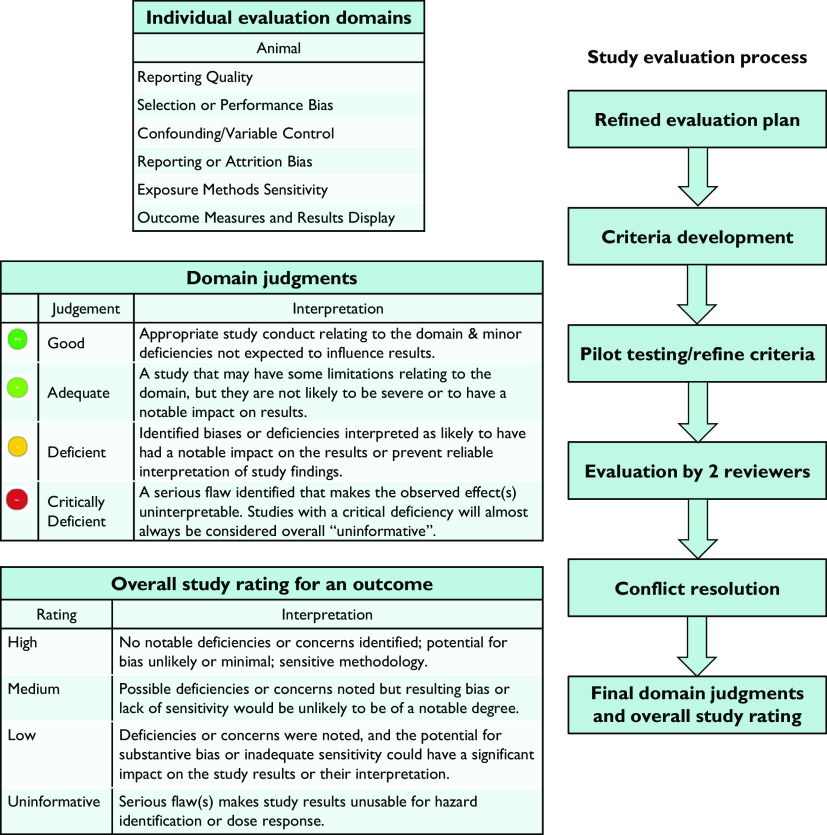
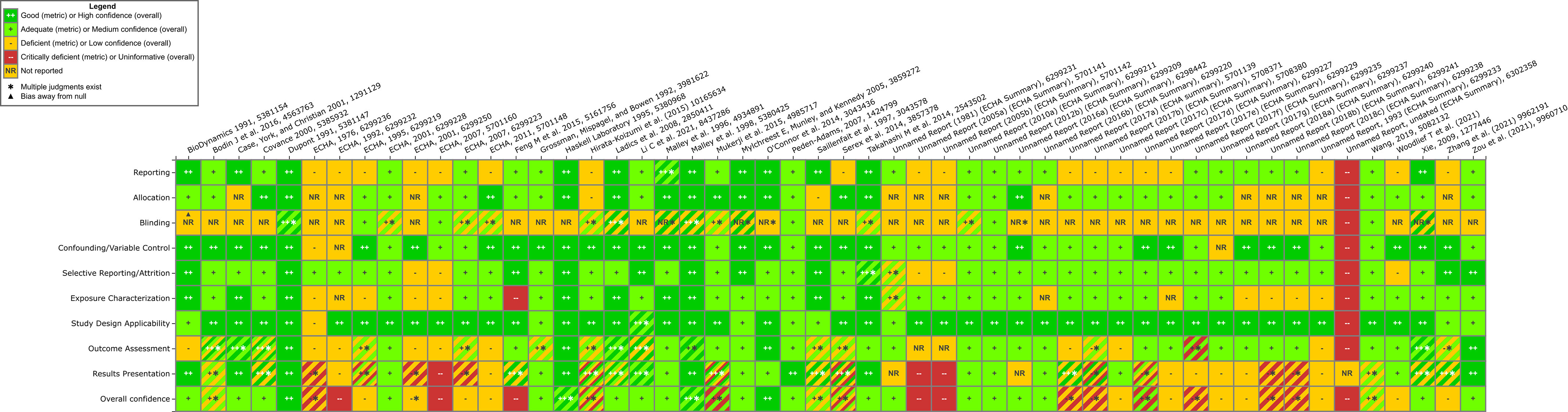
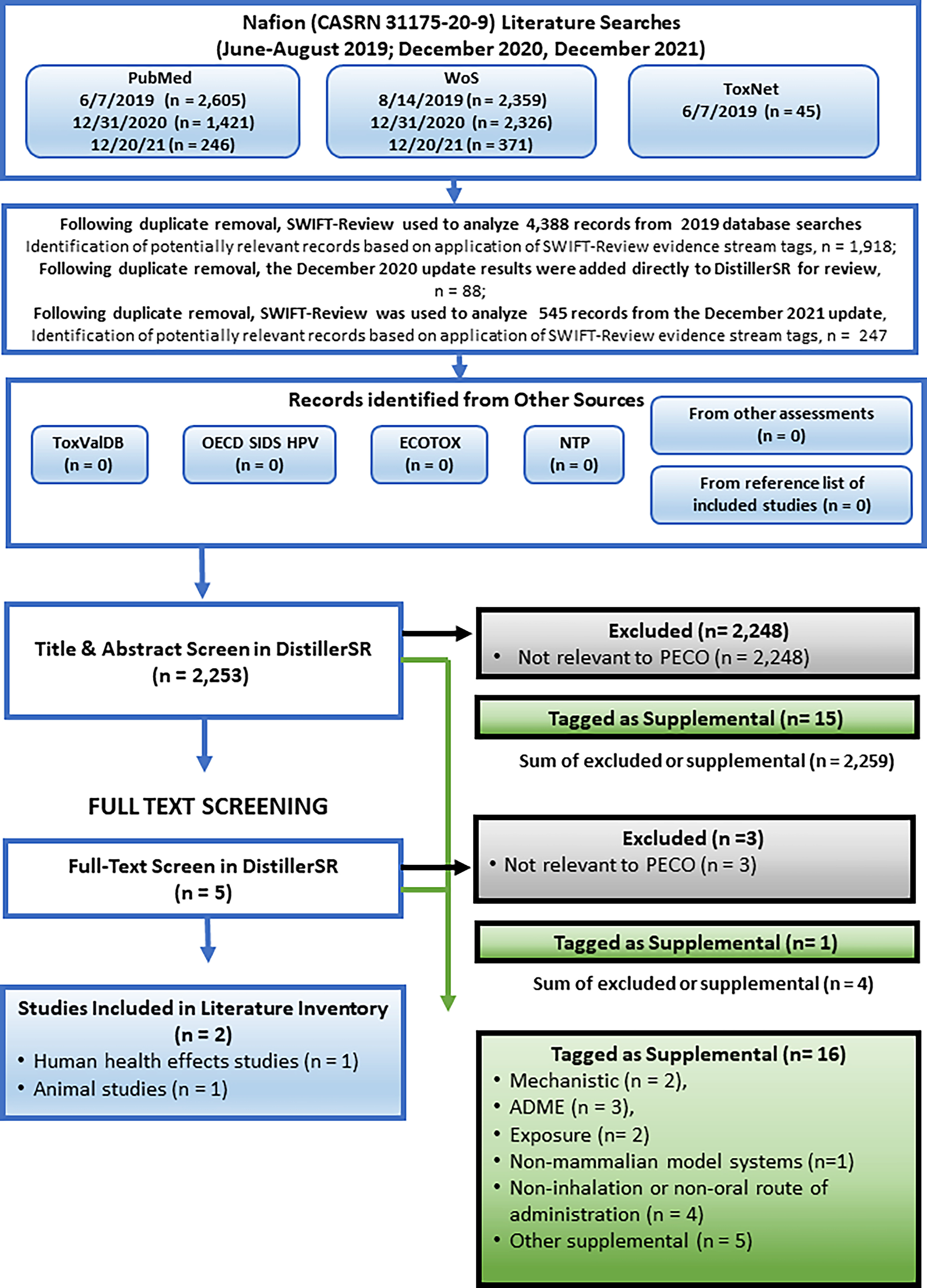
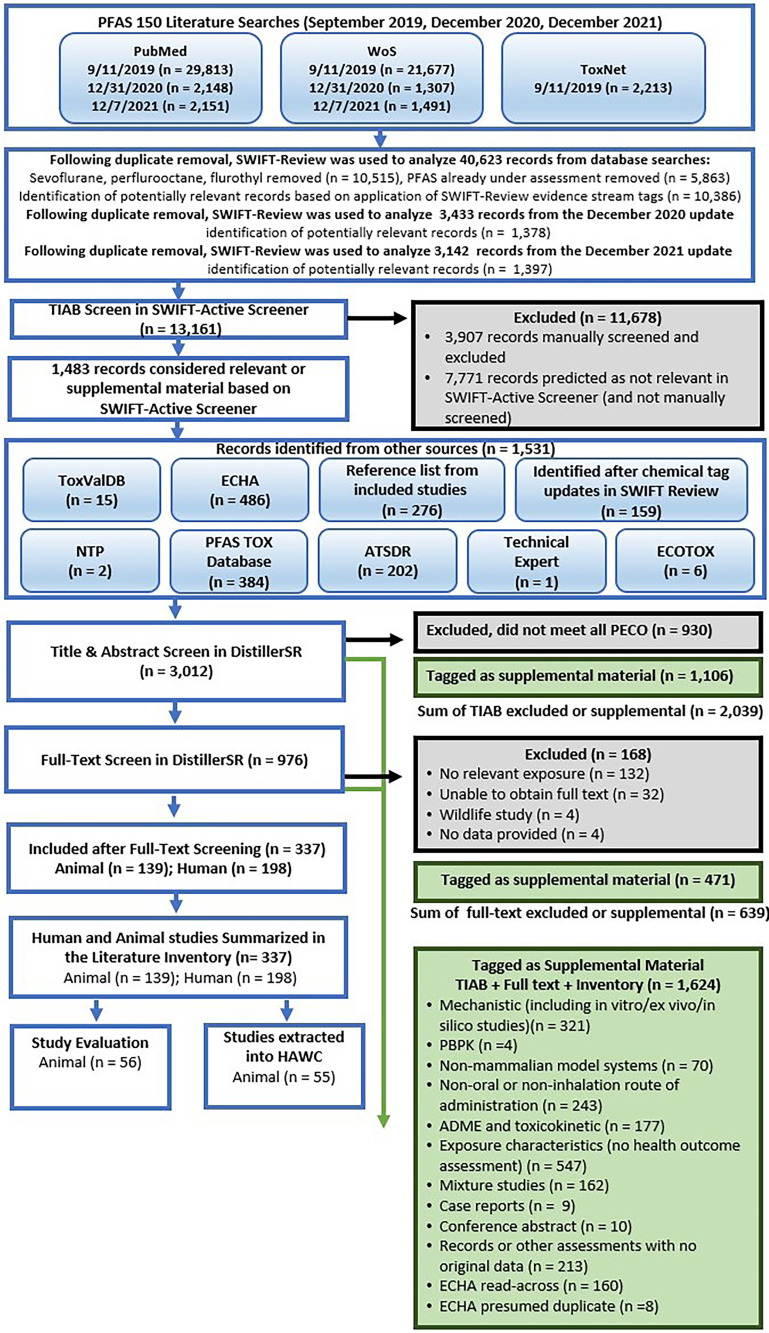
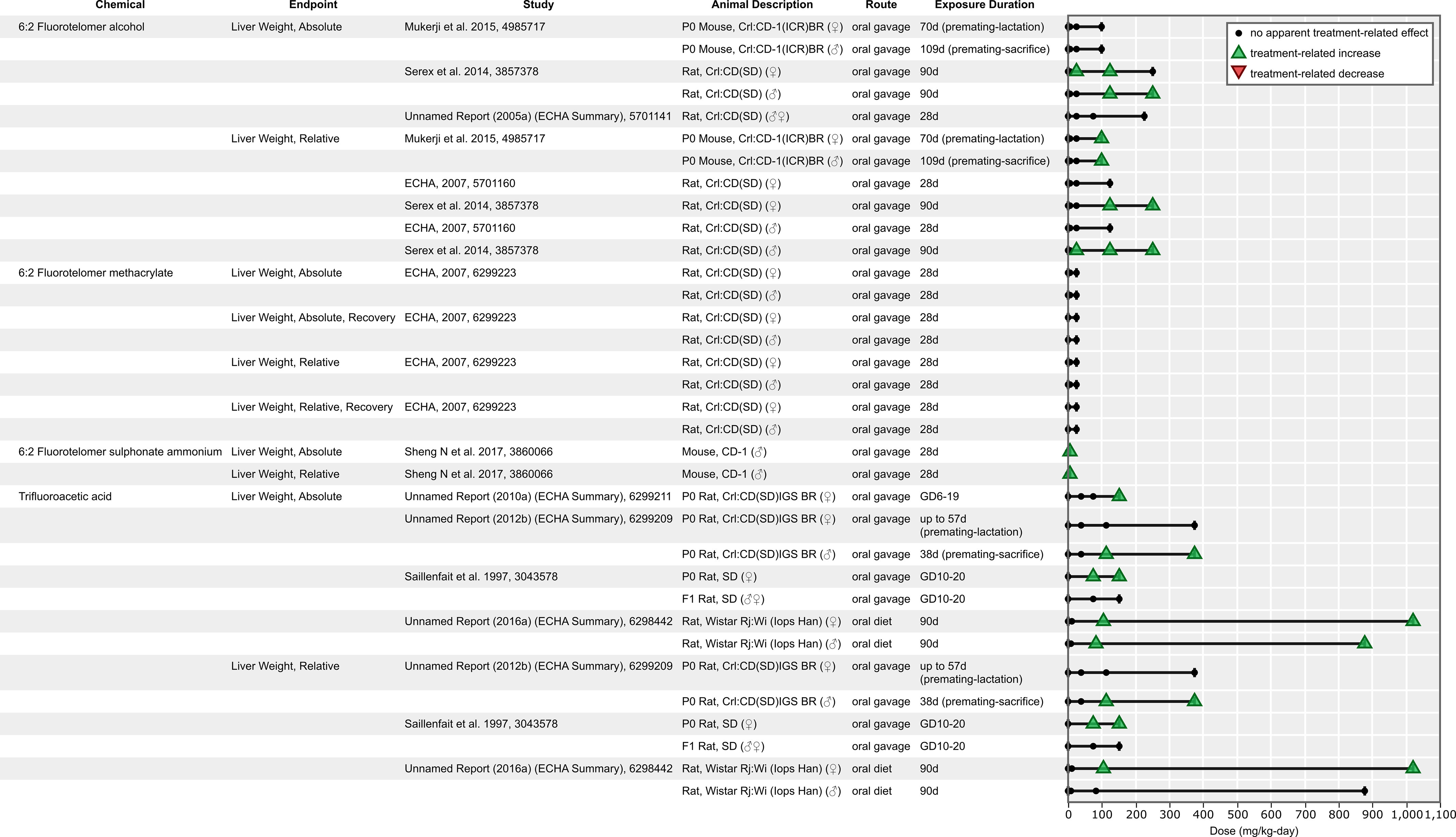
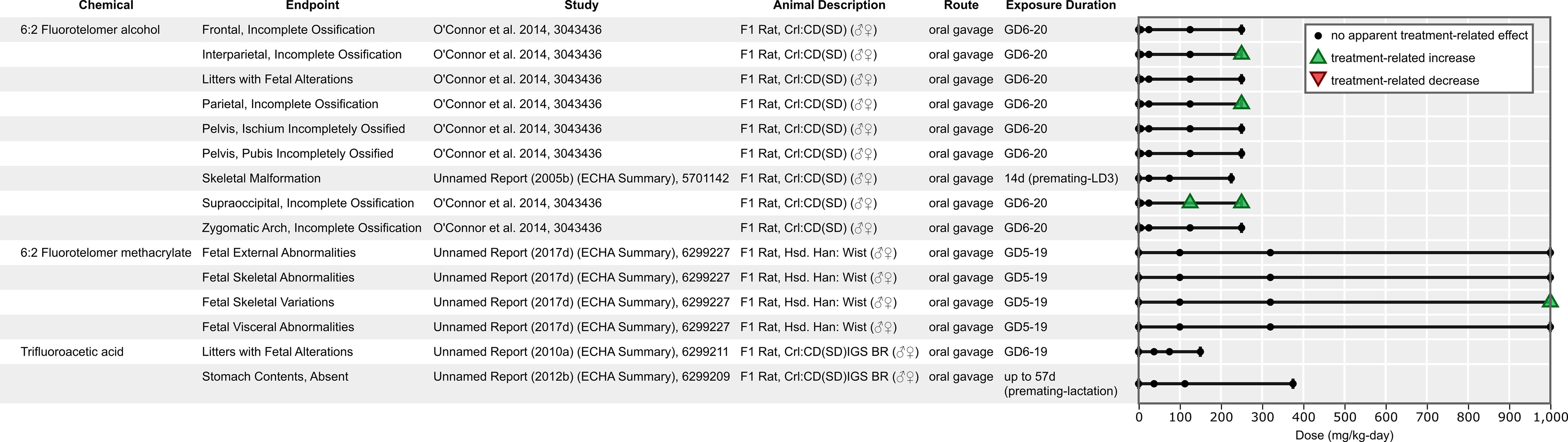
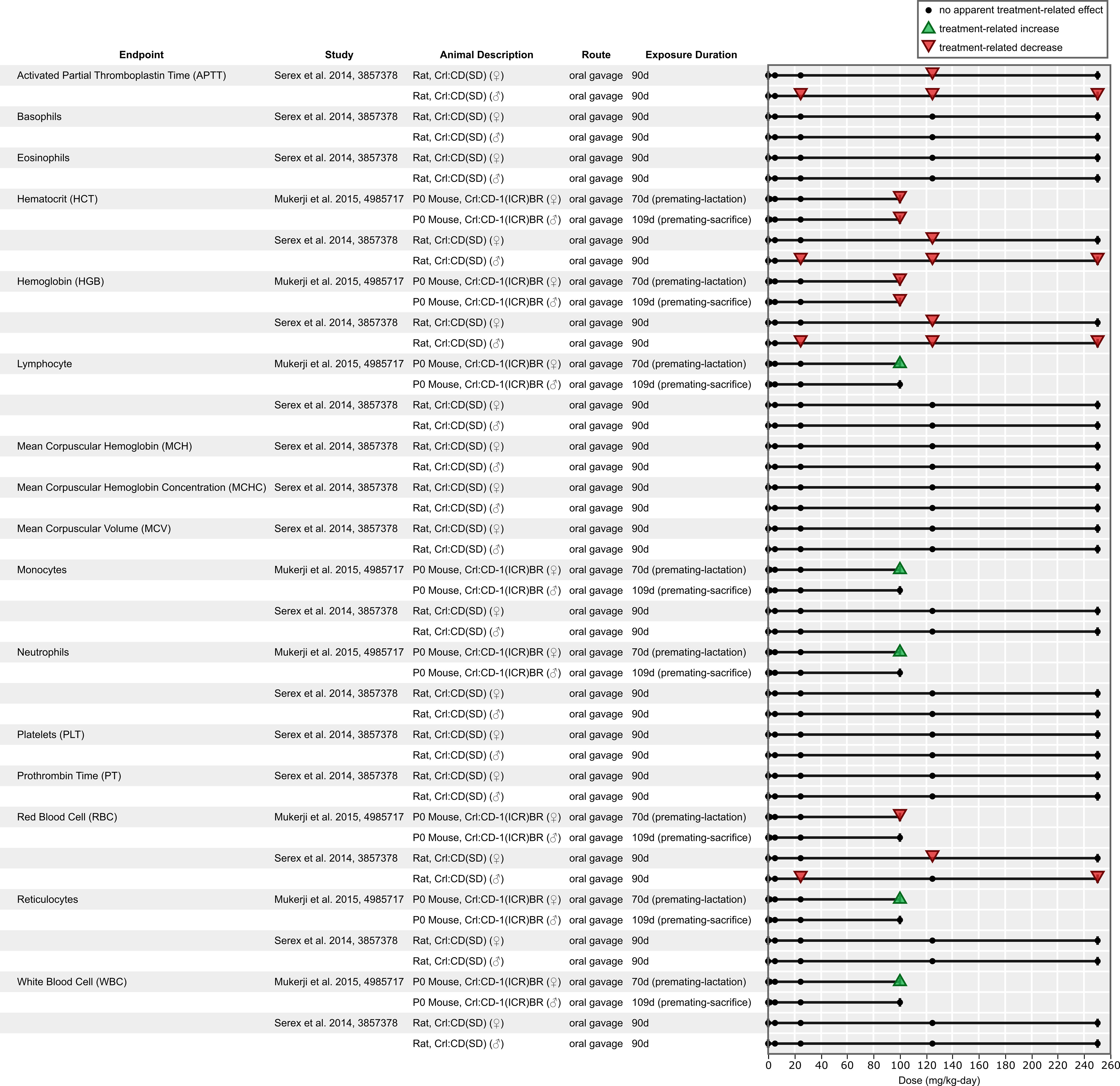
Systematic review methods were used to identify and screen literature using manual review and machine-learning software. The Populations, Exposures, Comparators, and Outcomes (PECO) criteria were kept broad to identify mammalian animal bioassay and epidemiological studies that could inform human hazard identification. A variety of supplemental content was also tracked, including information on model systems; exposure measurement-only studies in humans; and absorption, distribution, metabolism, and excretion (ADME). Animal bioassay and epidemiology studies meeting PECO criteria were summarized with respect to study design, and health system(s) were assessed. Because animal bioassay studies with exposure duration (or reproductive/developmental study design) were most useful to CCTE analyses, these studies underwent study evaluation and detailed data extraction. All data extraction is publicly available online as interactive visuals with downloadable metadata.
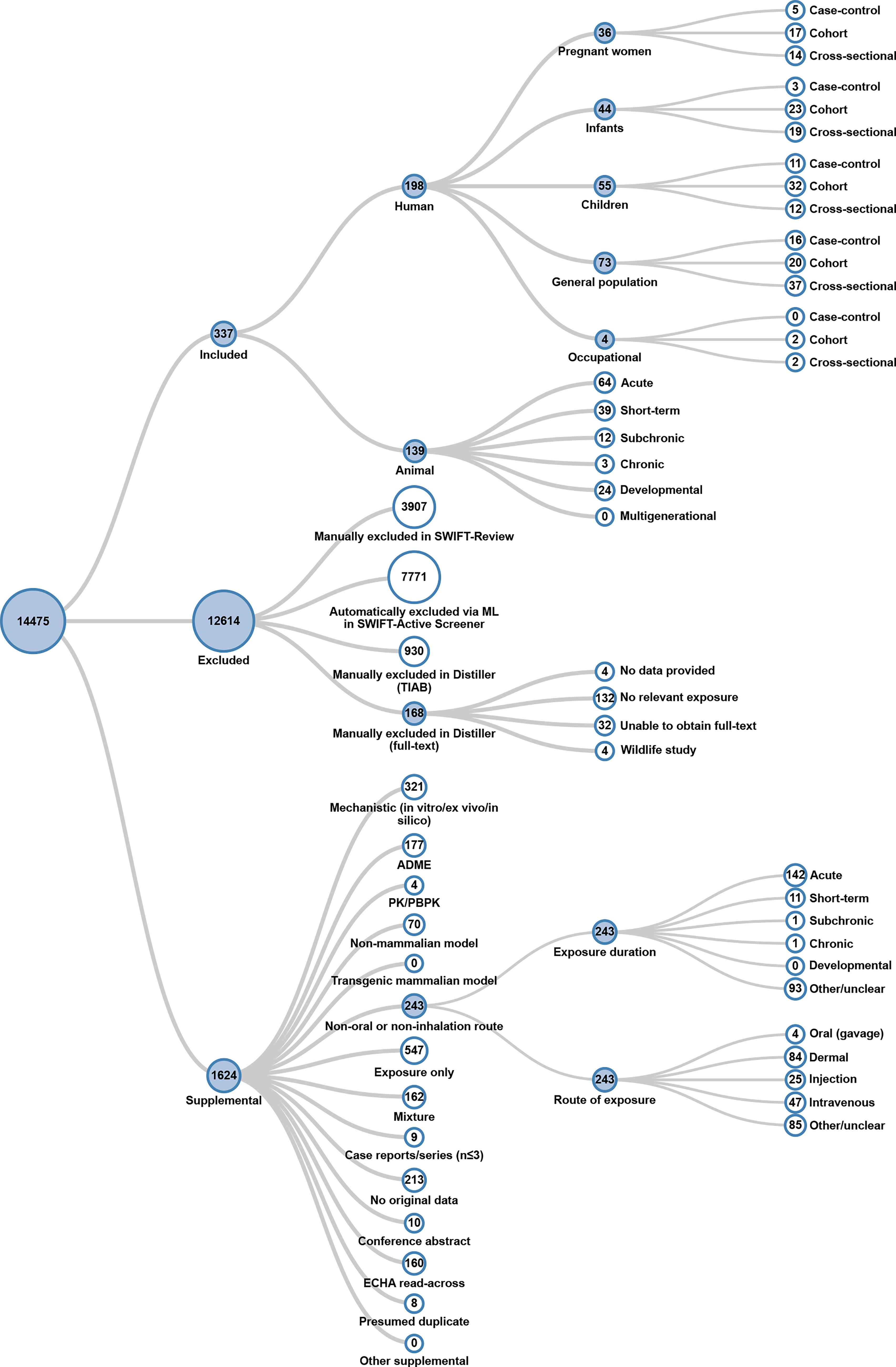
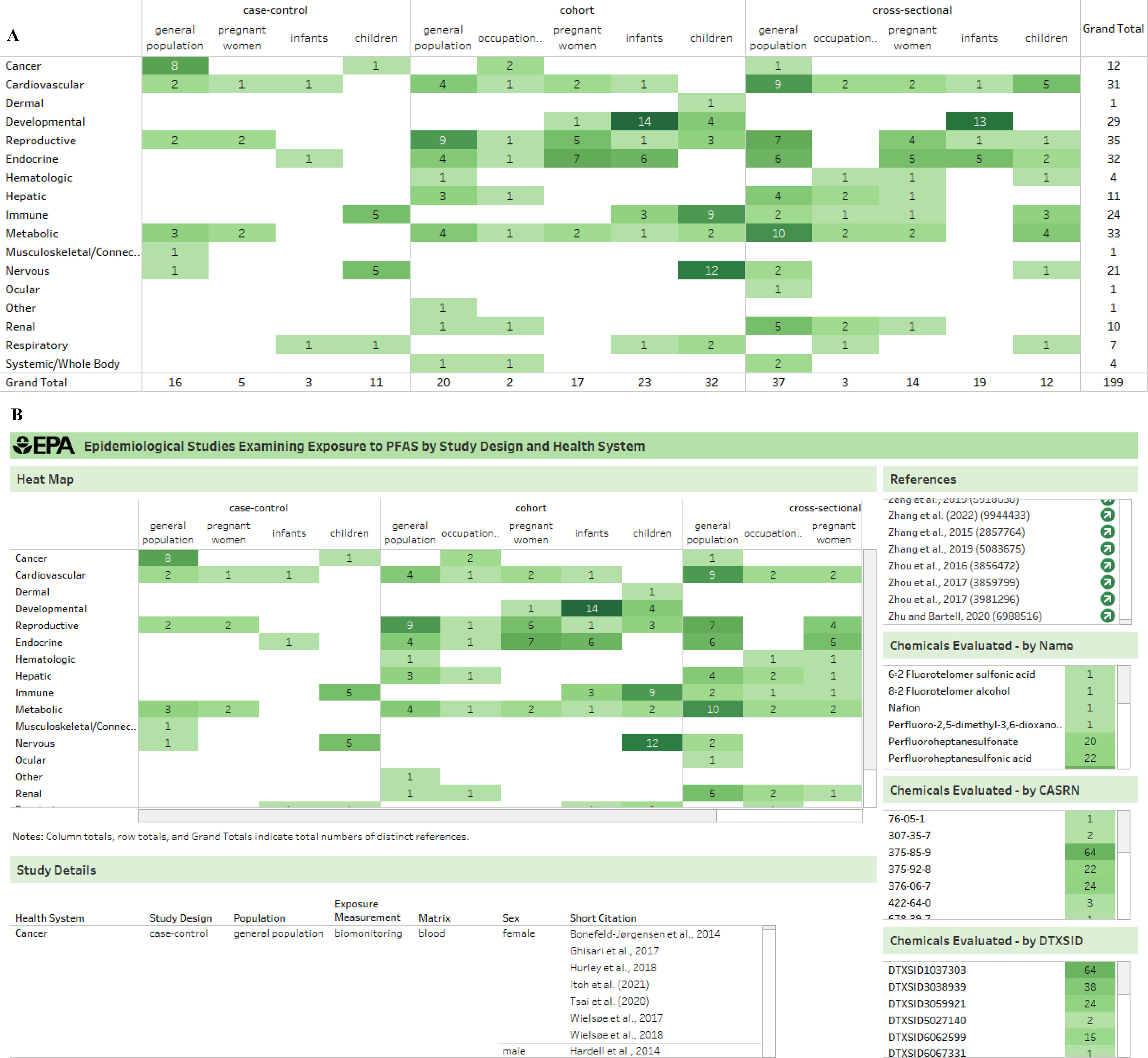
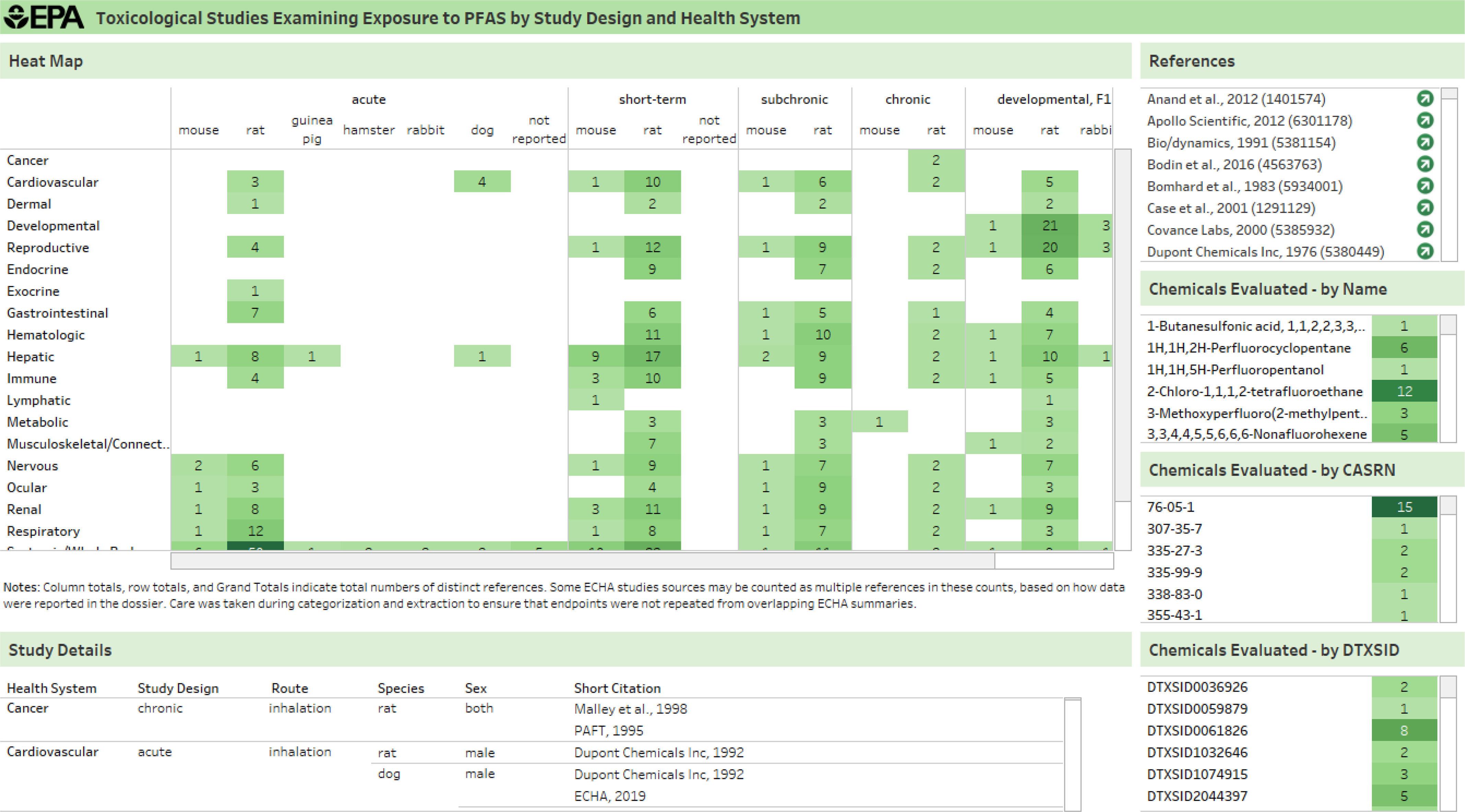
More than 40,000 studies were identified from scientific databases. Screening processes identified 44 animal and 148 epidemiology studies from the peer-reviewed literature and 95 animal and 50 epidemiology studies from gray literature that met PECO criteria. Epidemiological evidence (available for 15 PFAS) mostly assessed the reproductive, endocrine, developmental, metabolic, cardiovascular, and immune systems. Animal evidence (available for 40 PFAS) commonly assessed effects in the reproductive, developmental, urinary, immunological, and hepatic systems. Overall, 45 PFAS had evidence across animal and epidemiology data streams.
Many of the PFAS were data poor. Epidemiological and animal evidence were lacking for most of the PFAS included in our search. By disseminating this information, we hope to facilitate additional assessment work by providing the initial scoping literature survey and identifying key research needs. Future research on data-poor PFAS will help support a more complete understanding of the potential health effects from PFAS exposures. https://doi.org/10.1289/EHP10343.
全氟和多氟烷基物质(PFAS)是一大类广泛应用于消费品和工业过程的合成(人造)化学品。市面上有成千上万种不同的 PFAS。2019 年,美国环境保护署(U.S. EPA)制定了《全氟和多氟烷基物质(PFAS)行动计划》,概述了一项多方案国家研究计划,以应对 PFAS 的挑战。该战略的一个组成部分包括使用系统证据图(SEM)方法来描述数百种 PFAS 的证据基础,这些 PFAS 是 2019 年由美国环境保护署的计算毒理学和暴露中心(CCTE)优先考虑进行毒性和毒代动力学检测的。
使用 SEM 方法总结一组 PFAS 的现有流行病学和动物生物测定证据,这些 PFAS 是 2019 年美国环境保护署的计算毒理学和暴露中心(CCTE)为毒性和毒代动力学检测优先考虑的。
使用系统评价方法,通过手动审查和机器学习软件来识别和筛选文献。人群、暴露、比较和结局(PECO)标准保持广泛,以确定可以为人类危害识别提供信息的哺乳动物动物生物测定和流行病学研究。还跟踪了各种补充内容,包括关于模型系统的信息;仅在人类中进行暴露测量的研究;以及吸收、分布、代谢和排泄(ADME)。符合 PECO 标准的动物生物测定和流行病学研究,在研究设计和健康系统方面进行了总结。由于具有暴露持续时间的动物生物测定研究(或生殖/发育研究设计)对 CCTE 分析最有用,因此对这些研究进行了研究评估和详细的数据提取。所有数据提取都可在线获取,以交互方式呈现,并可下载元数据。
从科学数据库中确定了超过 40000 项研究。筛选过程从同行评议文献中确定了 44 项动物研究和 148 项流行病学研究,从灰色文献中确定了 95 项动物研究和 50 项流行病学研究,这些研究符合 PECO 标准。流行病学证据(可用于 15 种 PFAS)主要评估了生殖、内分泌、发育、代谢、心血管和免疫系统。动物证据(可用于 40 种 PFAS)通常评估生殖、发育、泌尿、免疫和肝脏系统的影响。总体而言,45 种 PFAS 在动物和流行病学数据中都有证据。
许多 PFAS 的数据都很少。我们搜索的大多数 PFAS 都缺乏流行病学和动物证据。通过传播这些信息,我们希望通过提供初步的文献调查范围并确定关键的研究需求,促进更多的评估工作。对数据匮乏的 PFAS 的进一步研究将有助于更全面地了解 PFAS 暴露的潜在健康影响。