Department of Biomedical Engineering, Johns Hopkins University School of Medicine, Baltimore, MD, United States.
Sidney Kimmel Comprehensive Cancer Center, Johns Hopkins University School of Medicine, Baltimore, MD, United States.
Front Immunol. 2022 May 13;13:892250. doi: 10.3389/fimmu.2022.892250. eCollection 2022.
Concomitant inhibition of vascular endothelial growth factor (VEGF) and programmed cell death protein 1 (PD-1) or its ligand PD-L1 is a standard of care for patients with advanced hepatocellular carcinoma (HCC), but only a minority of patients respond, and responses are usually transient. Understanding the effects of therapies on the tumor microenvironment (TME) can provide insights into mechanisms of therapeutic resistance.
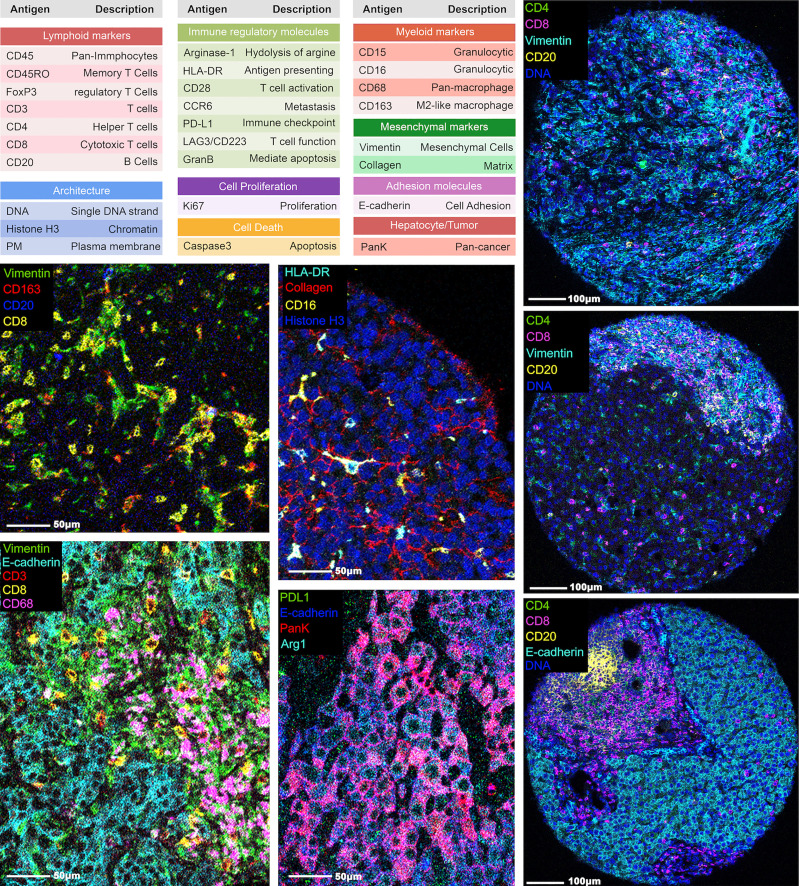
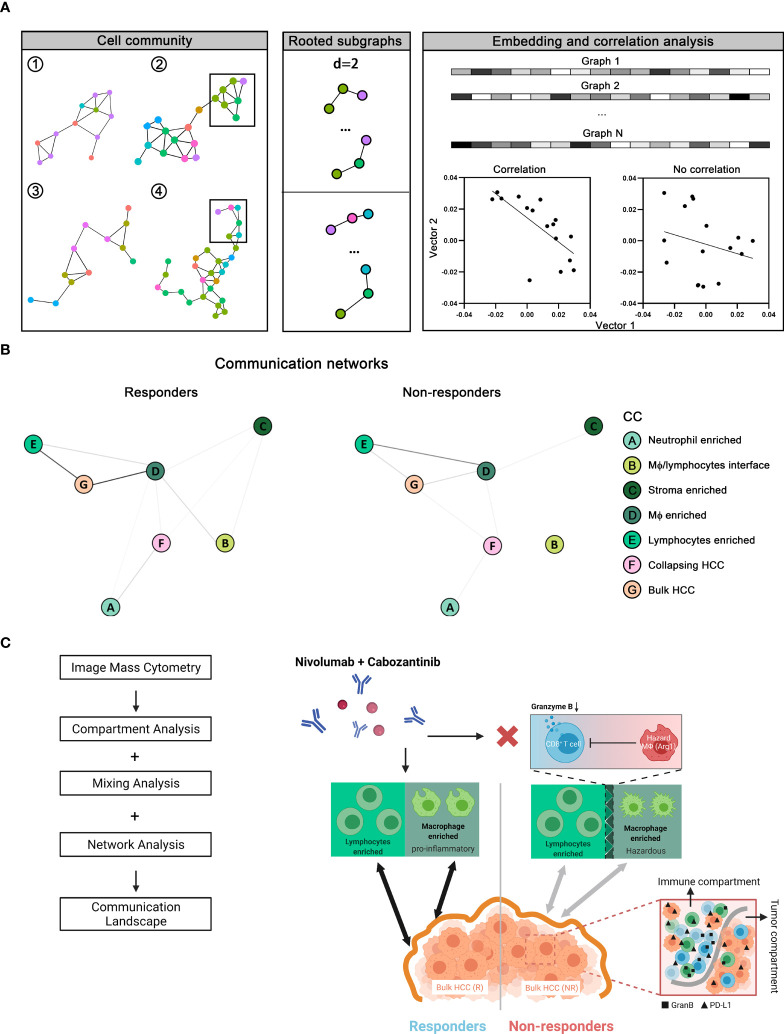
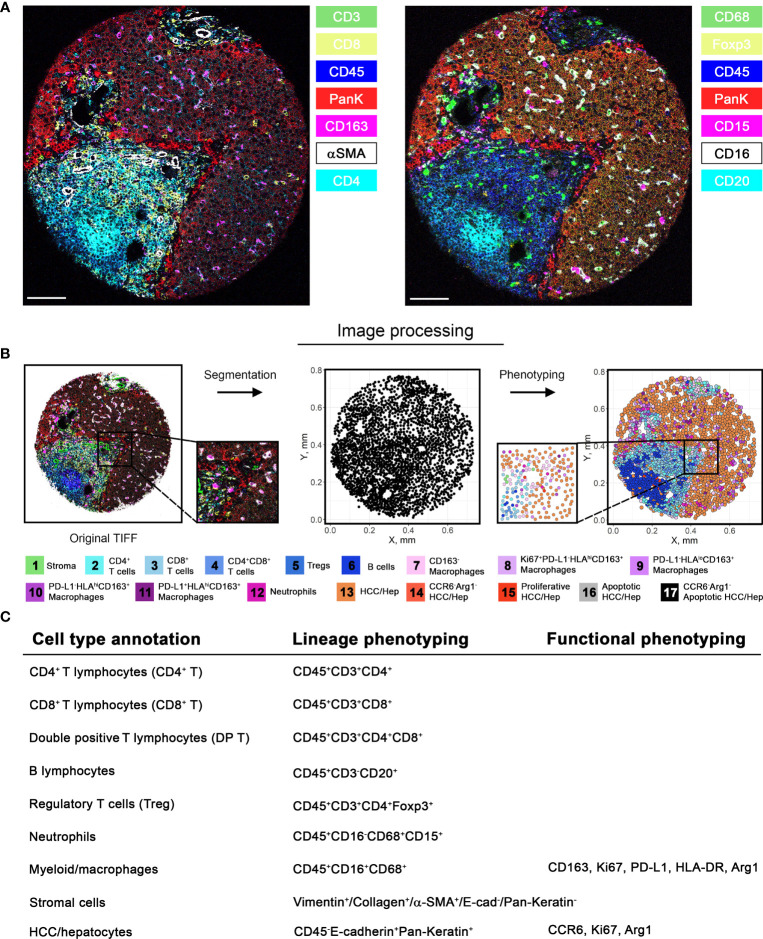
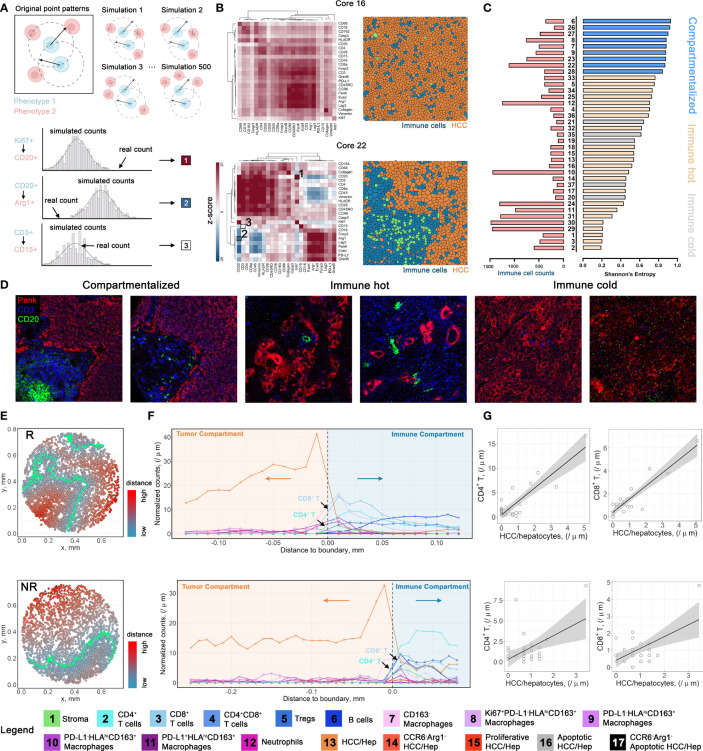
14 patients with HCC were treated with the combination of cabozantinib and nivolumab through the Johns Hopkins Sidney Kimmel Comprehensive Cancer Center. Among them, 12 patients (5 responders + 7 non-responders) underwent successful margin negative resection and are subjects to tissue microarray (TMA) construction containing 37 representative tumor region cores. Using the TMAs, we performed imaging mass cytometry (IMC) with a panel of 27-cell lineage and functional markers. All multiplexed images were then segmented to generate a single-cell dataset that enables (1) tumor-immune compartment analysis and (2) cell community analysis based on graph-embedding methodology. Results from these hierarchies are merged into response-associated biological process patterns.
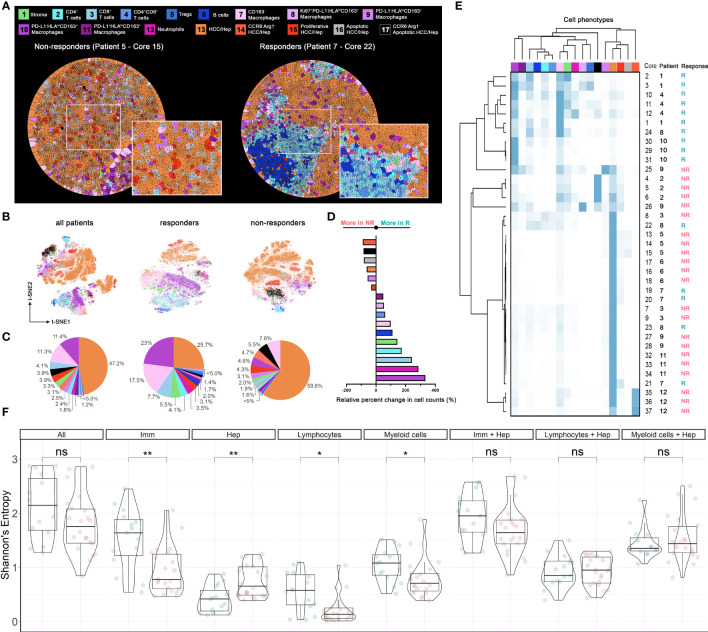
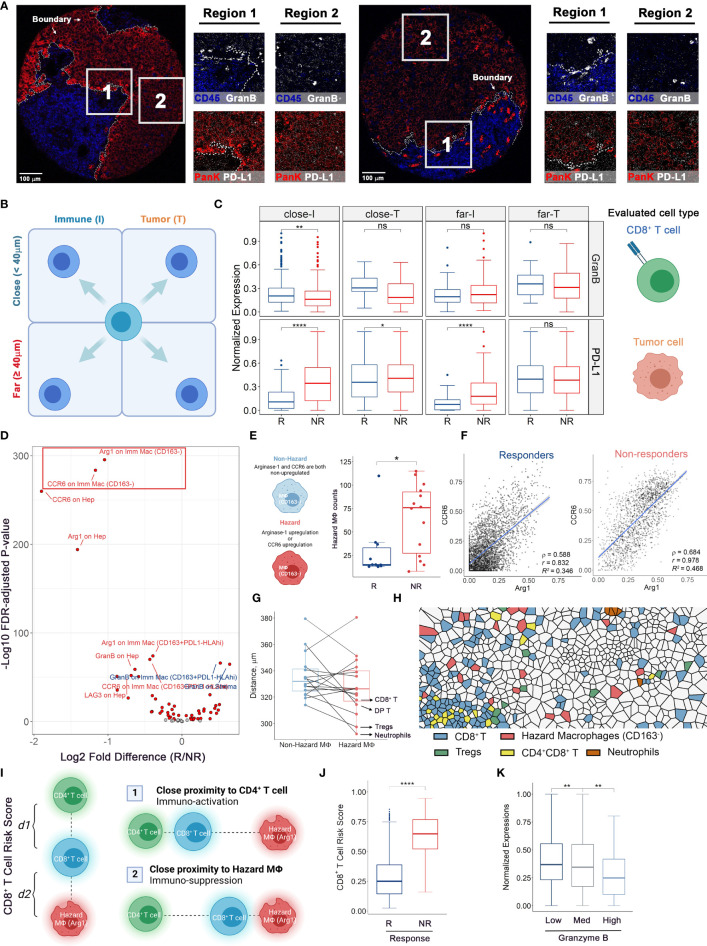
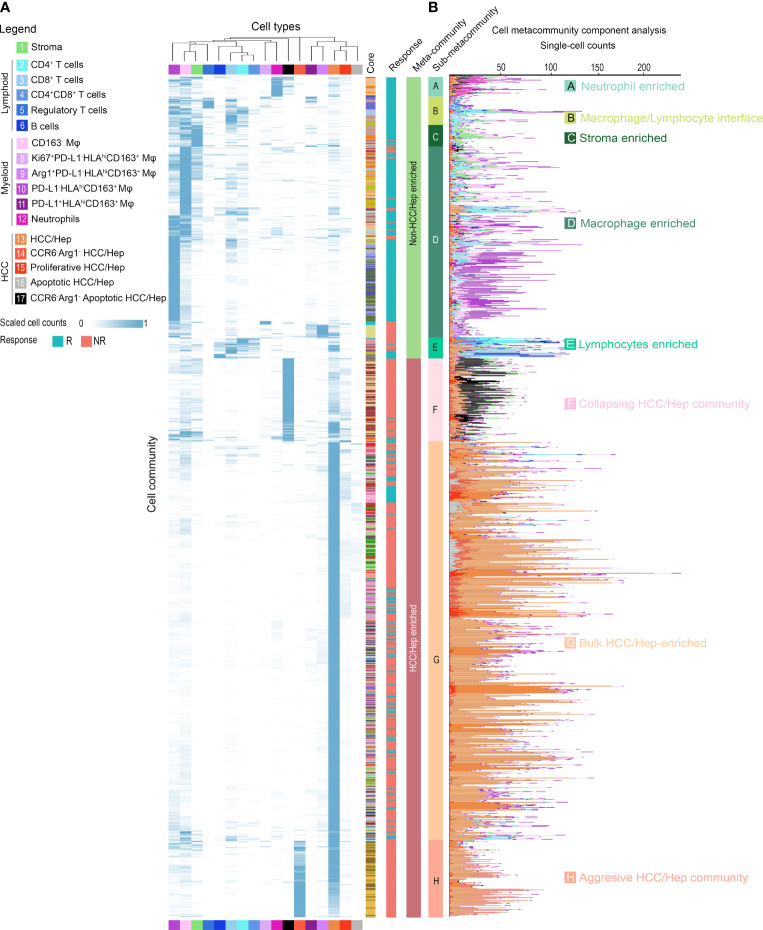
Image processing on 37 multiplexed-images discriminated 59,453 cells and was then clustered into 17 cell types. Compartment analysis showed that at immune-tumor boundaries from NR, PD-L1 level on tumor cells is significantly higher than remote regions; however, Granzyme B expression shows the opposite pattern. We also identify that the close proximity of CD8 T cells to arginase 1 (Arg1) macrophages, rather than CD4 T cells, is a salient feature of the TME in non-responders. Furthermore, cell community analysis extracted 8 types of cell-cell interaction networks termed cellular communities (CCs). We observed that in non-responders, macrophage-enriched CC (MCC) and lymphocyte-enriched CC (LCC) strongly communicate with tumor CC, whereas in responders, such communications were undermined by the engagement between MCC and LCC.
These results demonstrate the feasibility of a novel application of multiplexed image analysis that is broadly applicable to quantitative analysis of pathology specimens in immuno-oncology and provides further evidence that CD163Arg1 macrophages may be a therapeutic target in HCC. The results also provide critical information for the development of mechanistic quantitative systems pharmacology models aimed at predicting outcomes of clinical trials.
联合抑制血管内皮生长因子(VEGF)和程序性细胞死亡蛋白 1(PD-1)或其配体 PD-L1 是晚期肝细胞癌(HCC)患者的标准治疗方法,但只有少数患者有反应,且反应通常是短暂的。了解治疗对肿瘤微环境(TME)的影响可以深入了解治疗耐药的机制。
约翰霍普金斯金梅尔综合癌症中心的 14 名 HCC 患者接受了卡博替尼和纳武利尤单抗联合治疗。其中,12 名患者(5 名应答者+7 名无应答者)成功进行了边缘阴性切除术,并进行了组织微阵列(TMA)构建,其中包含 37 个代表性肿瘤区域核心。使用 TMA,我们使用 27 个细胞谱系和功能标志物进行了成像质谱细胞术(IMC)。然后对所有多重化图像进行分割,生成一个单细胞数据集,该数据集能够(1)进行肿瘤免疫区室分析和(2)基于图嵌入方法进行细胞群落分析。这些层次的结果合并为与反应相关的生物学过程模式。
对 37 个多重化图像的图像处理区分了 59453 个细胞,然后聚类为 17 种细胞类型。区室分析表明,在 NR 的免疫-肿瘤边界处,肿瘤细胞上的 PD-L1 水平明显高于远程区域;然而,颗粒酶 B 的表达则呈现相反的模式。我们还发现,CD8 T 细胞与精氨酸酶 1(Arg1)巨噬细胞的接近程度而不是 CD4 T 细胞的接近程度,是无应答者 TME 的一个显著特征。此外,细胞群落分析提取了 8 种细胞-细胞相互作用网络,称为细胞群落(CC)。我们观察到,在无应答者中,富含巨噬细胞的 CC(MCC)和富含淋巴细胞的 CC(LCC)与肿瘤 CC 强烈通讯,而在应答者中,MCC 和 LCC 之间的相互作用被破坏。
这些结果证明了一种新的多重化图像分析的应用的可行性,该应用广泛适用于免疫肿瘤学中病理标本的定量分析,并进一步证明 CD163Arg1 巨噬细胞可能是 HCC 的治疗靶点。这些结果还为开发旨在预测临床试验结果的机制定量系统药理学模型提供了关键信息。