• 文献检索
  • 文档翻译
  • 深度研究
  • 学术资讯
  • Suppr Zotero 插件Zotero 插件
  • 邀请有礼
  • 套餐&价格
  • 历史记录
应用&插件
Suppr Zotero 插件Zotero 插件浏览器插件Mac 客户端Windows 客户端微信小程序
定价
高级版会员购买积分包购买API积分包
服务
文献检索文档翻译深度研究API 文档MCP 服务
关于我们
关于 Suppr公司介绍联系我们用户协议隐私条款
关注我们

Suppr 超能文献

核心技术专利:CN118964589B侵权必究
粤ICP备2023148730 号-1Suppr @ 2026

文献检索

告别复杂PubMed语法,用中文像聊天一样搜索,搜遍4000万医学文献。AI智能推荐,让科研检索更轻松。

立即免费搜索

文件翻译

保留排版,准确专业,支持PDF/Word/PPT等文件格式,支持 12+语言互译。

免费翻译文档

深度研究

AI帮你快速写综述,25分钟生成高质量综述,智能提取关键信息,辅助科研写作。

立即免费体验

可穿戴手环预测老年人的抑郁情绪。

Depressed Mood Prediction of Elderly People with a Wearable Band.

机构信息

Department of Computer Engineering, Chungnam National University, Daejeon 34134, Korea.

出版信息

Sensors (Basel). 2022 May 31;22(11):4174. doi: 10.3390/s22114174.

DOI:10.3390/s22114174
PMID:35684797
原文链接:https://pmc.ncbi.nlm.nih.gov/articles/PMC9185362/
Abstract

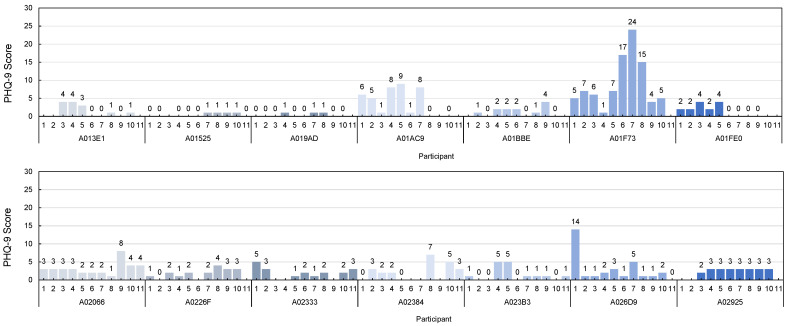
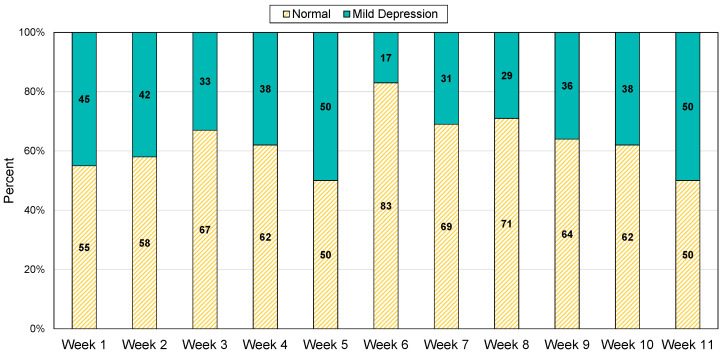
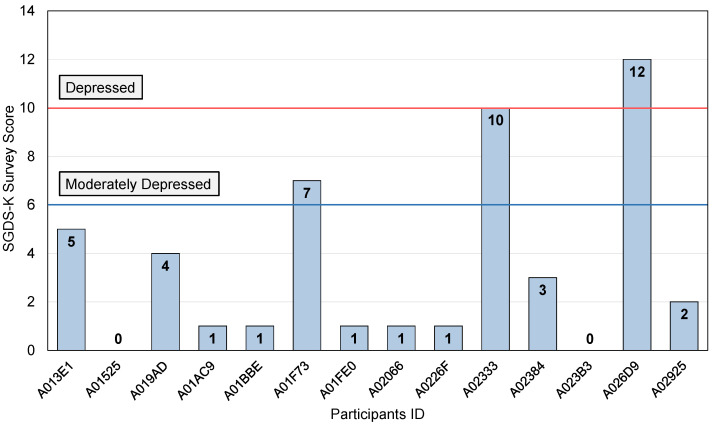
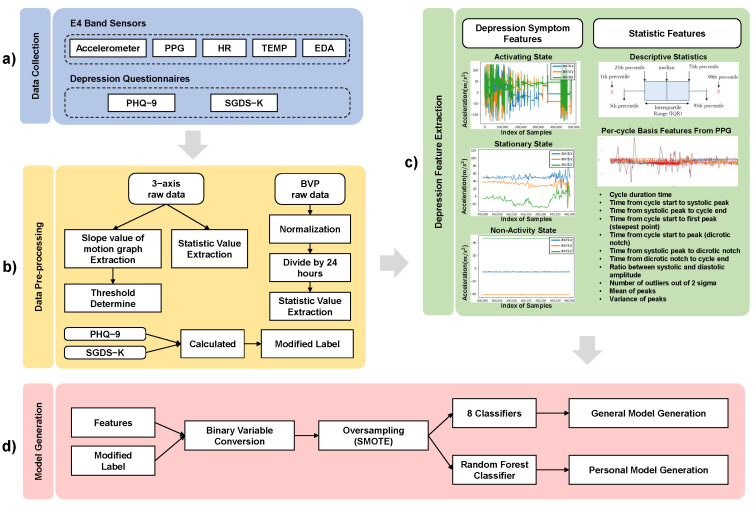
Depression in the elderly is an important social issue considering the population aging of the world. In particular, elderly living alone who has narrowed social relationship due to bereavement and retirement are more prone to be depressed. Long-term depressed mood can be a precursor to eventual depression as a disease. Our goal is how to predict the depressed mood of single household elderly from unobtrusive monitoring of their daily life. We have selected a wearable band with multiple sensors for monitoring elderly people. Depression questionnaire has been surveyed periodically to be used as the labels. Instead of working with depression patients, we recruited 14 single household elderly people from a nearby community. The wearable band provided daily activity and biometric data for 71 days. From the data, we generate a depressed mood prediction model. Multiple features from the collected sensor data are exploited for model generation. One general model is generated to be used as the baseline for the initial model deployment. Personal models are also generated for model refinement. The general model has a high recall of 80% in an MLP model. Individual models achieved an average recall of 82.7%. In this study, we have demonstrated that we can generate depressed mood prediction models with data collected from real daily living. Our work has shown the feasibility of using a wearable band as an unobtrusive depression monitoring sensor even for elderly people.

摘要

老年人抑郁是一个重要的社会问题,尤其是那些因丧偶和退休而社交关系缩小的独居老年人更容易抑郁。长期的抑郁情绪可能是最终发展为抑郁症的前兆。我们的目标是如何通过对老年人日常生活的非侵入性监测来预测独居老年人的抑郁情绪。我们选择了一款带有多个传感器的可穿戴手环来监测老年人。定期进行抑郁问卷调查,作为标签。我们没有与抑郁症患者合作,而是从附近社区招募了 14 名独居老年人。可穿戴手环提供了 71 天的日常活动和生物特征数据。我们从数据中生成了一个抑郁情绪预测模型。从收集的传感器数据中利用多种特征来生成模型。生成一个通用模型作为初始模型部署的基线。还为模型细化生成了个人模型。通用模型在 MLP 模型中的召回率高达 80%。个体模型的平均召回率达到 82.7%。在这项研究中,我们证明了我们可以使用可穿戴带收集的真实日常生活数据来生成抑郁情绪预测模型。我们的工作表明,即使是老年人,使用可穿戴带作为非侵入性抑郁监测传感器也是可行的。
https://cdn.ncbi.nlm.nih.gov/pmc/blobs/5ffa/9185362/da88ebe6862e/sensors-22-04174-g004.jpg
https://cdn.ncbi.nlm.nih.gov/pmc/blobs/5ffa/9185362/463f7fd0617c/sensors-22-04174-g001.jpg
https://cdn.ncbi.nlm.nih.gov/pmc/blobs/5ffa/9185362/2279b9874b2e/sensors-22-04174-g002.jpg
https://cdn.ncbi.nlm.nih.gov/pmc/blobs/5ffa/9185362/9d9c30e8c952/sensors-22-04174-g003.jpg
https://cdn.ncbi.nlm.nih.gov/pmc/blobs/5ffa/9185362/da88ebe6862e/sensors-22-04174-g004.jpg
https://cdn.ncbi.nlm.nih.gov/pmc/blobs/5ffa/9185362/463f7fd0617c/sensors-22-04174-g001.jpg
https://cdn.ncbi.nlm.nih.gov/pmc/blobs/5ffa/9185362/2279b9874b2e/sensors-22-04174-g002.jpg
https://cdn.ncbi.nlm.nih.gov/pmc/blobs/5ffa/9185362/9d9c30e8c952/sensors-22-04174-g003.jpg
https://cdn.ncbi.nlm.nih.gov/pmc/blobs/5ffa/9185362/da88ebe6862e/sensors-22-04174-g004.jpg

相似文献

1
Depressed Mood Prediction of Elderly People with a Wearable Band.可穿戴手环预测老年人的抑郁情绪。
Sensors (Basel). 2022 May 31;22(11):4174. doi: 10.3390/s22114174.
2
Depression Prediction by Using Ecological Momentary Assessment, Actiwatch Data, and Machine Learning: Observational Study on Older Adults Living Alone.使用生态瞬时评估、Actiwatch 数据和机器学习预测抑郁:独居老年人的观察性研究。
JMIR Mhealth Uhealth. 2019 Oct 16;7(10):e14149. doi: 10.2196/14149.
3
Utilizing daily mood diaries and wearable sensor data to predict depression and suicidal ideation among medical interns.利用日常情绪日记和可穿戴传感器数据预测实习医生的抑郁和自杀意念。
J Affect Disord. 2022 Sep 15;313:1-7. doi: 10.1016/j.jad.2022.06.064. Epub 2022 Jun 25.
4
Letter to the Editor: CONVERGENCES AND DIVERGENCES IN THE ICD-11 VS. DSM-5 CLASSIFICATION OF MOOD DISORDERS.给编辑的信:《ICD-11 与 DSM-5 心境障碍分类的趋同与分歧》
Turk Psikiyatri Derg. 2021;32(4):293-295. doi: 10.5080/u26899.
5
Characterizing Longitudinal Patterns in Cognition, Mood, And Activity in Depression With 6-Week High-Frequency Wearable Assessment: Observational Study.用 6 周高频可穿戴评估来描述抑郁症患者认知、情绪和活动的纵向变化模式:观察性研究。
JMIR Ment Health. 2024 May 31;11:e46895. doi: 10.2196/46895.
6
Passive Sensing of Prediction of Moment-To-Moment Depressed Mood among Undergraduates with Clinical Levels of Depression Sample Using Smartphones.使用智能手机对具有临床抑郁水平样本的大学生进行逐时抑郁情绪预测的被动感知。
Sensors (Basel). 2020 Jun 24;20(12):3572. doi: 10.3390/s20123572.
7
Depressed mood and the incidence of Alzheimer's disease in the elderly living in the community.社区老年人的抑郁情绪与阿尔茨海默病的发病率
Arch Gen Psychiatry. 1996 Feb;53(2):175-82. doi: 10.1001/archpsyc.1996.01830020093011.
8
STDD: Short-Term Depression Detection with Passive Sensing.STDD:基于被动感知的短期抑郁检测。
Sensors (Basel). 2020 Mar 4;20(5):1396. doi: 10.3390/s20051396.
9
The relationship between pain intensity and severity and depression in older people: exploratory study.老年人疼痛强度和严重程度与抑郁之间的关系:探索性研究。
BMC Fam Pract. 2009 Jul 28;10:54. doi: 10.1186/1471-2296-10-54.
10
Developing prediction algorithms for late-life depression using wearable devices: a cohort study protocol.使用可穿戴设备开发晚年抑郁症预测算法:一项队列研究方案
BMJ Open. 2024 Jun 13;14(6):e073290. doi: 10.1136/bmjopen-2023-073290.

引用本文的文献

1
Mapping the global research landscape and trends of older people living alone: a bibliometric analysis.绘制全球独居老年人的研究格局与趋势:一项文献计量分析。
Front Aging. 2025 Jul 3;6:1524673. doi: 10.3389/fragi.2025.1524673. eCollection 2025.
2
Wearable Technologies for Health Promotion and Disease Prevention in Older Adults: Systematic Scoping Review and Evidence Map.用于促进老年人健康和预防疾病的可穿戴技术:系统综述与证据图谱
J Med Internet Res. 2025 Jun 24;27:e69077. doi: 10.2196/69077.
3
Development and Feasibility Study of HOPE Model for Prediction of Depression Among Older Adults Using Wi-Fi-based Motion Sensor Data: Machine Learning Study.

本文引用的文献

1
Digital Biomarkers for Depression Screening With Wearable Devices: Cross-sectional Study With Machine Learning Modeling.基于可穿戴设备的抑郁筛查数字生物标志物:机器学习建模的横断面研究。
JMIR Mhealth Uhealth. 2021 Oct 25;9(10):e24872. doi: 10.2196/24872.
2
Predicting Symptoms of Depression and Anxiety Using Smartphone and Wearable Data.利用智能手机和可穿戴设备数据预测抑郁和焦虑症状
Front Psychiatry. 2021 Jan 28;12:625247. doi: 10.3389/fpsyt.2021.625247. eCollection 2021.
3
Monitoring Changes in Depression Severity Using Wearable and Mobile Sensors.
基于Wi-Fi的运动传感器数据预测老年人抑郁症的HOPE模型的开发与可行性研究:机器学习研究
JMIR Aging. 2025 Mar 3;8:e67715. doi: 10.2196/67715.
4
Digital biomarkers for non-motor symptoms in Parkinson's disease: the state of the art.帕金森病非运动症状的数字生物标志物:现状
NPJ Digit Med. 2024 Jul 11;7(1):186. doi: 10.1038/s41746-024-01144-2.
5
Depressive symptom screening in elderly by passive sensing data of smartphones or smartwatches: A systematic review.利用智能手机或智能手表的被动感应数据对老年人进行抑郁症状筛查:系统评价。
PLoS One. 2024 Jun 27;19(6):e0304845. doi: 10.1371/journal.pone.0304845. eCollection 2024.
6
Predicting daily cognition and lifestyle behaviors for older adults using smart home data and ecological momentary assessment.利用智能家居数据和生态瞬时评估预测老年人的日常认知和生活方式行为。
Clin Neuropsychol. 2024 Mar 19:1-25. doi: 10.1080/13854046.2024.2330143.
7
Machine Learning for Multimodal Mental Health Detection: A Systematic Review of Passive Sensing Approaches.机器学习在多模态心理健康检测中的应用:被动感知方法的系统评价。
Sensors (Basel). 2024 Jan 6;24(2):348. doi: 10.3390/s24020348.
8
Towards Personalised Mood Prediction and Explanation for Depression from Biophysical Data.从生物物理数据中预测和解释抑郁症的个性化情绪。
Sensors (Basel). 2023 Dec 27;24(1):164. doi: 10.3390/s24010164.
9
Ensemble Approach to Combining Episode Prediction Models Using Sequential Circadian Rhythm Sensor Data from Mental Health Patients.基于精神健康患者的连续生物钟传感器数据的组合预测模型的集成方法。
Sensors (Basel). 2023 Oct 18;23(20):8544. doi: 10.3390/s23208544.
10
Systematic review and meta-analysis of performance of wearable artificial intelligence in detecting and predicting depression.可穿戴人工智能在检测和预测抑郁症方面性能的系统评价与荟萃分析
NPJ Digit Med. 2023 May 5;6(1):84. doi: 10.1038/s41746-023-00828-5.
使用可穿戴和移动传感器监测抑郁严重程度的变化
Front Psychiatry. 2020 Dec 18;11:584711. doi: 10.3389/fpsyt.2020.584711. eCollection 2020.
4
Influence of the Acoustic Environment in Hospital Wards on Patient Physiological and Psychological Indices.医院病房声学环境对患者生理和心理指标的影响。
Front Psychol. 2020 Jul 21;11:1600. doi: 10.3389/fpsyg.2020.01600. eCollection 2020.
5
Reflective and Reflexive Stress Responses of Older Adults to Three Gaming Experiences In Relation to Their Cognitive Abilities: Mixed Methods Crossover Study.老年人对三种与认知能力相关的游戏体验的反思性和反射性应激反应:混合方法交叉研究
JMIR Ment Health. 2020 Mar 26;7(3):e12388. doi: 10.2196/12388.
6
Evaluating depression with multimodal wristband-type wearable device: screening and assessing patient severity utilizing machine-learning.使用多模式腕带式可穿戴设备评估抑郁症:利用机器学习进行筛查和评估患者严重程度。
Heliyon. 2020 Feb 4;6(2):e03274. doi: 10.1016/j.heliyon.2020.e03274. eCollection 2020 Feb.
7
Depression Prediction by Using Ecological Momentary Assessment, Actiwatch Data, and Machine Learning: Observational Study on Older Adults Living Alone.使用生态瞬时评估、Actiwatch 数据和机器学习预测抑郁:独居老年人的观察性研究。
JMIR Mhealth Uhealth. 2019 Oct 16;7(10):e14149. doi: 10.2196/14149.
8
Older adults' willingness to share their personal and health information when adopting healthcare technology and services.老年人在采用医疗保健技术和服务时愿意分享其个人和健康信息。
Int J Med Inform. 2019 Jun;126:86-94. doi: 10.1016/j.ijmedinf.2019.03.010. Epub 2019 Mar 14.
9
Heart rate variability monitoring for emotion and disorders of emotion.心率变异性监测与情绪及情绪障碍
Physiol Meas. 2019 Jul 1;40(6):064004. doi: 10.1088/1361-6579/ab1887.
10
Older women's perceptions of wearable and smart home activity sensors.老年女性对可穿戴和智能家居活动传感器的看法。
Inform Health Soc Care. 2020 Jan;45(1):96-109. doi: 10.1080/17538157.2019.1582054. Epub 2019 Mar 28.