Tang Hao, Niu Jiaqi, Jin Han, Lin Shujing, Cui Daxiang
Institute of Nano Biomedicine and Engineering, Shanghai Engineering Research Center for Intelligent Diagnosis and Treatment Instrument, Department of Instrument Science and Engineering, School of Electronic Information and Electrical Engineering, Shanghai Jiao Tong University, 800 Dongchuan RD, Shanghai, 200240 China.
National Engineering Research Center for Nanotechnology, Shanghai Jiao Tong University, 28 Jiangchuan Easternroad, Shanghai, 200241 China.
Microsyst Nanoeng. 2022 Jun 6;8:62. doi: 10.1038/s41378-022-00386-y. eCollection 2022.
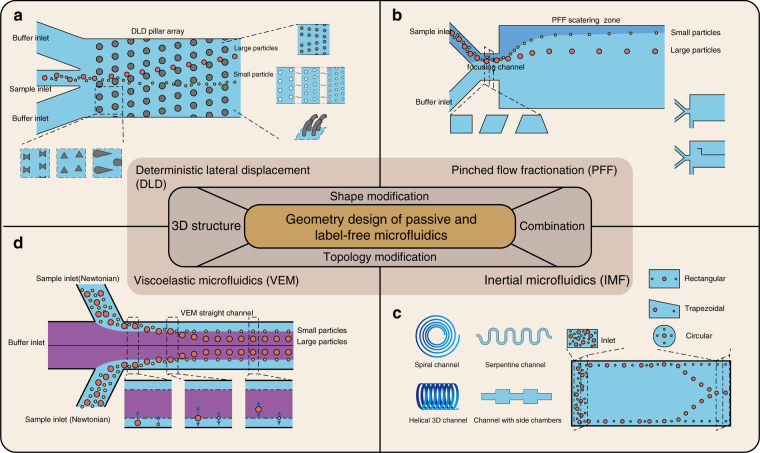
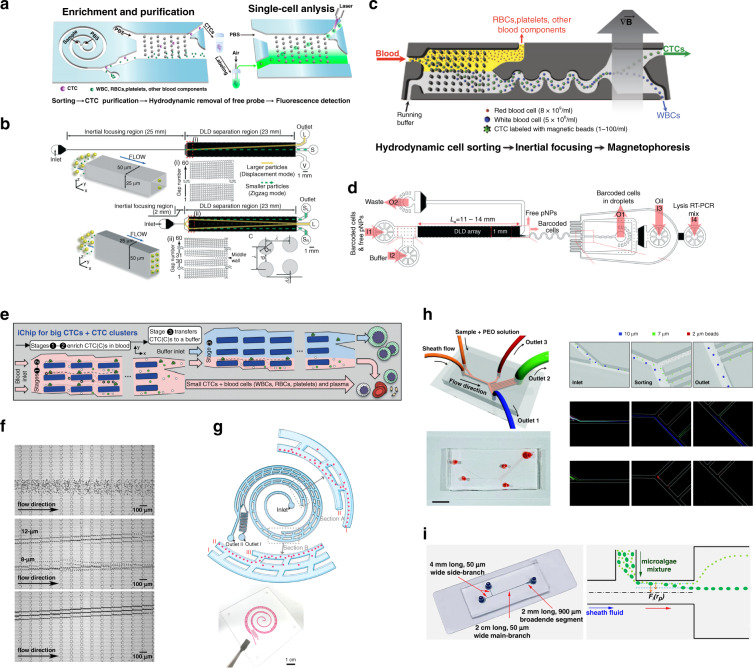
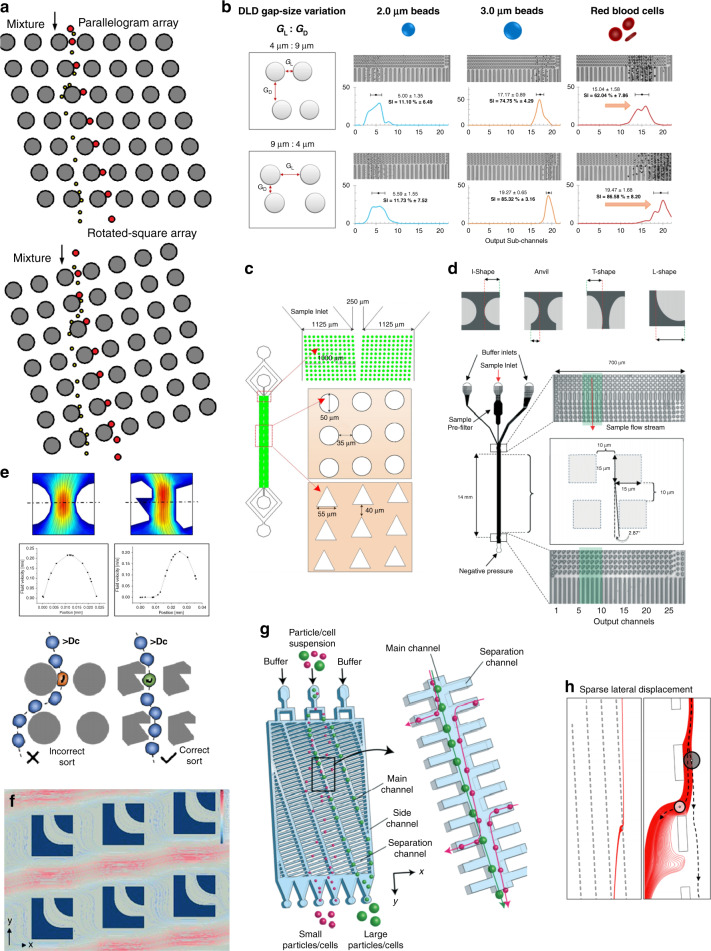
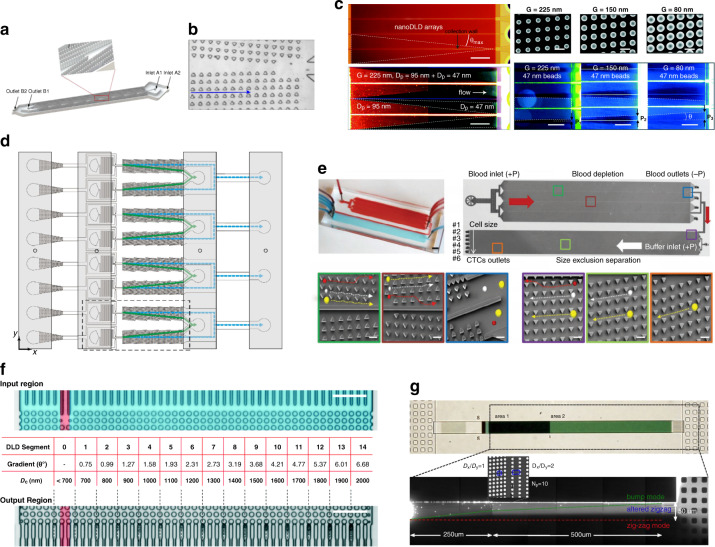
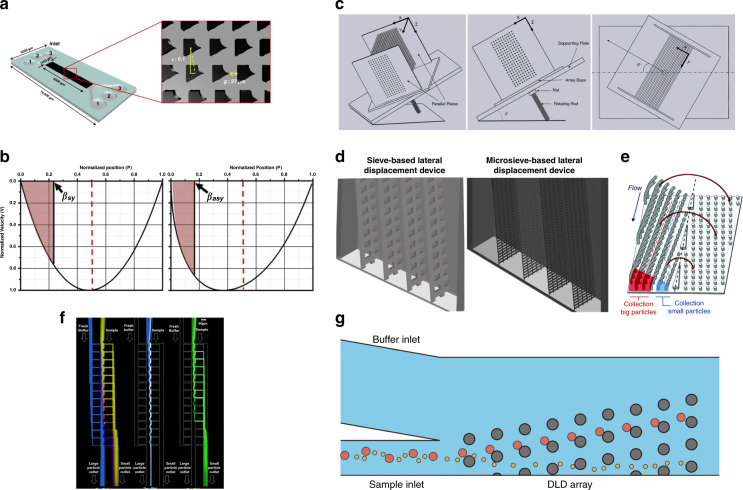
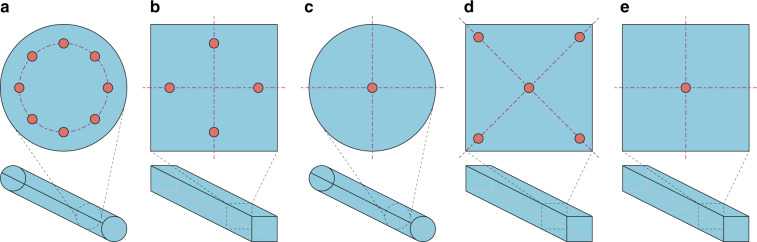
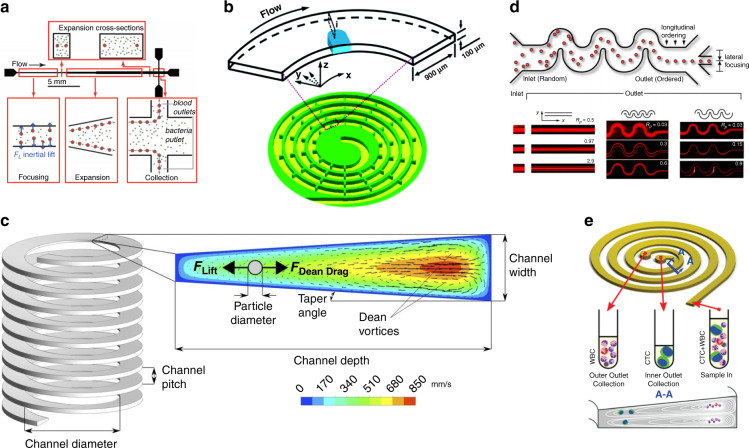
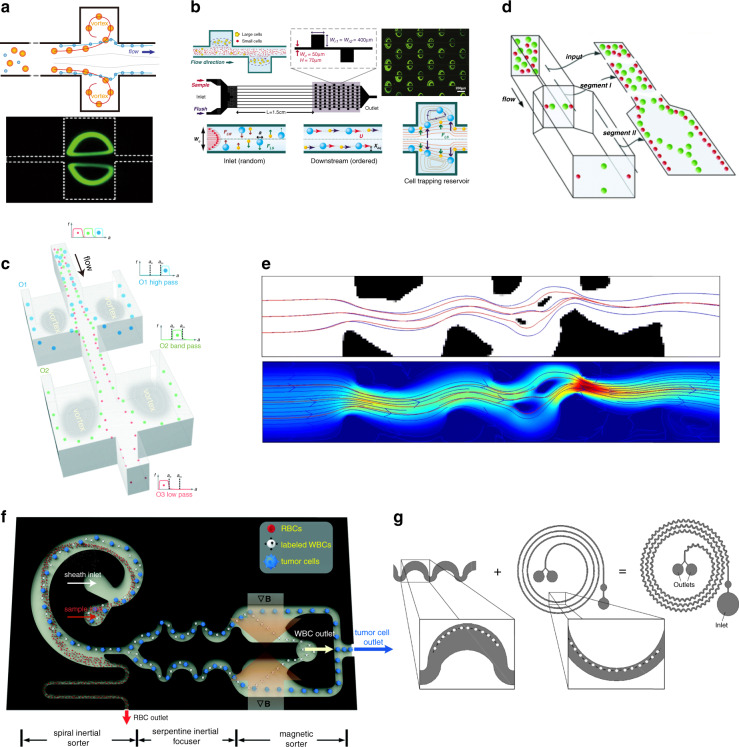
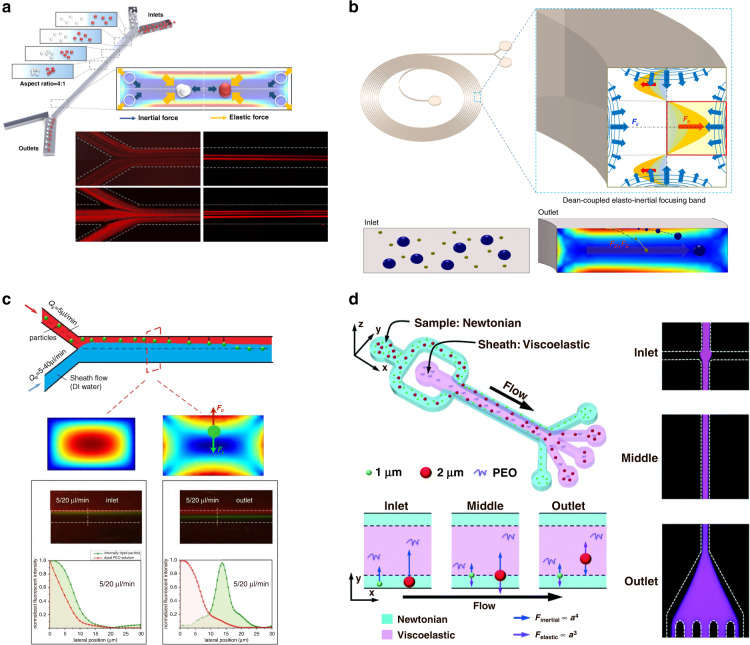
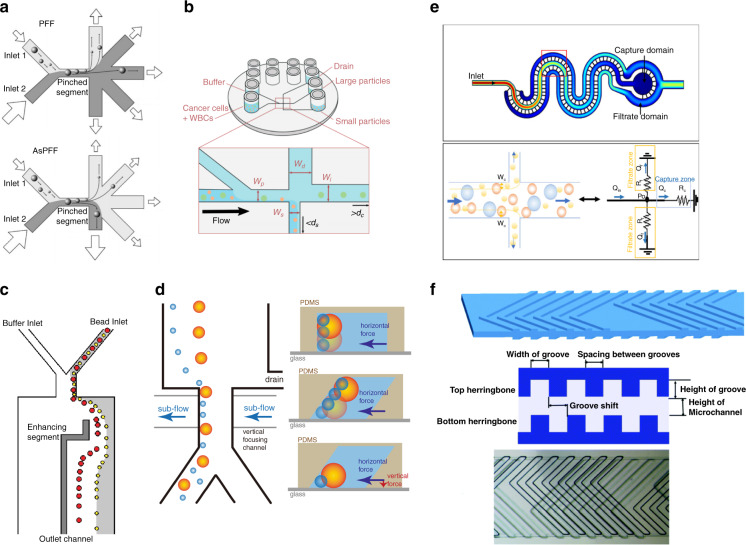
Passive and label-free microfluidic devices have no complex external accessories or detection-interfering label particles. These devices are now widely used in medical and bioresearch applications, including cell focusing and cell separation. Geometric structure plays the most essential role when designing a passive and label-free microfluidic chip. An exquisitely designed geometric structure can change particle trajectories and improve chip performance. However, the geometric design principles of passive and label-free microfluidics have not been comprehensively acknowledged. Here, we review the geometric innovations of several microfluidic schemes, including deterministic lateral displacement (DLD), inertial microfluidics (IMF), and viscoelastic microfluidics (VEM), and summarize the most creative innovations and design principles of passive and label-free microfluidics. We aim to provide a guideline for researchers who have an interest in geometric innovations of passive label-free microfluidics.
无源且无标记的微流控装置没有复杂的外部附件或干扰检测的标记颗粒。这些装置目前广泛应用于医学和生物研究领域,包括细胞聚焦和细胞分离。在设计无源且无标记的微流控芯片时,几何结构起着最为关键的作用。精心设计的几何结构可以改变粒子轨迹并提高芯片性能。然而,无源且无标记微流控的几何设计原理尚未得到全面认可。在此,我们回顾了几种微流控方案的几何创新,包括确定性侧向位移(DLD)、惯性微流控(IMF)和粘弹性微流控(VEM),并总结了无源且无标记微流控最具创新性的成果和设计原则。我们旨在为对无源无标记微流控的几何创新感兴趣的研究人员提供指导。