School of Sport, Exercise, and Nutrition, Massey University, Auckland, New Zealand.
School of Health Sciences, Massey University, Auckland, New Zealand.
Eur J Nutr. 2022 Dec;61(8):3835-3855. doi: 10.1007/s00394-022-02943-7. Epub 2022 Jul 13.
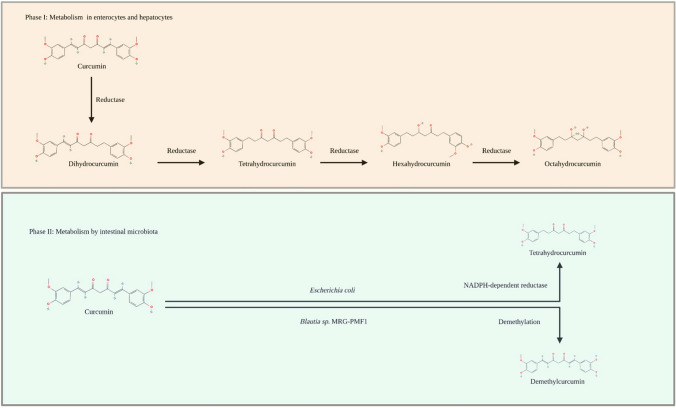
Curcumin, a natural polyphenol extracted from turmeric, is a potent antioxidant and anti-inflammatory agent. In the past few decades, curcumin's ability to impact chronic inflammatory conditions such as metabolic syndrome, arthritis, and cancer has been widely researched, along with growing interest in understanding its role in exercise-induced muscle damage (EIMD). EIMD impacts individuals differently depending on the type (resistance exercise, high-intensity interval training, and running), intensity, and duration of the exercise. Exercise disrupts the muscles' ultrastructure, raises inflammatory cytokine levels, and can cause swelling in the affected limb, a reduction in range of motion (ROM), and a reduction in muscular force-producing capacity. This review focuses on the metabolism, pharmacokinetics of various brands of curcumin supplements, and the effect of curcumin supplementation on EIMD regarding muscle soreness, activity of creatine kinase (CK), and production of inflammatory markers. Curcumin supplementation in the dose range of 90-5000 mg/day can decrease the subjective perception of muscle pain intensity, increase antioxidant capacity, and reduce CK activity, which reduces muscle damage when consumed close to exercise. Consumption of curcumin also improves muscle performance and has an anti-inflammatory effect, downregulating the production of pro-inflammatory cytokines, including TNF-α, IL-6, and IL-8. Curcumin may also improve oxidative capacity without hampering training adaptations in untrained and recreationally active individuals. The optimal curcumin dose to ameliorate EIMD is challenging to assess as its effect depends on the curcumin concentration in the supplement and its bioavailability.
姜黄素是一种从姜黄中提取的天然多酚,具有很强的抗氧化和抗炎作用。在过去的几十年中,姜黄素对代谢综合征、关节炎和癌症等慢性炎症性疾病的影响作用得到了广泛的研究,同时人们也越来越关注它在运动引起的肌肉损伤(EIMD)中的作用。EIMD 对个体的影响因运动类型(抗阻运动、高强度间歇训练和跑步)、强度和持续时间而异。运动破坏肌肉的超微结构,提高炎症细胞因子水平,并导致受影响肢体肿胀、运动范围(ROM)减小和肌肉产生力量的能力下降。本综述重点讨论了各种品牌的姜黄素补充剂的代谢、药代动力学以及姜黄素补充剂对 EIMD 中肌肉酸痛、肌酸激酶(CK)活性和炎症标志物产生的影响。姜黄素补充剂的剂量范围为 90-5000mg/天,可以降低肌肉疼痛强度的主观感知,增加抗氧化能力,降低 CK 活性,从而在接近运动时减少肌肉损伤。姜黄素的摄入还可以改善肌肉性能并具有抗炎作用,下调包括 TNF-α、IL-6 和 IL-8 在内的促炎细胞因子的产生。姜黄素还可以改善氧化能力,而不会妨碍未经训练和休闲活动个体的训练适应。改善 EIMD 的最佳姜黄素剂量难以评估,因为其效果取决于补充剂中姜黄素的浓度及其生物利用度。