Nahiduzzaman Md, Islam Md Rabiul, Hassan Rakibul
Department of Electrical & Computer Engineering, Rajshahi University of Engineering & Technology, Rajshahi 6204, Bangladesh.
Department of Computer Science & Engineering, Rajshahi University of Engineering & Technology, Rajshahi 6204, Bangladesh.
Expert Syst Appl. 2023 Jan;211:118576. doi: 10.1016/j.eswa.2022.118576. Epub 2022 Aug 27.
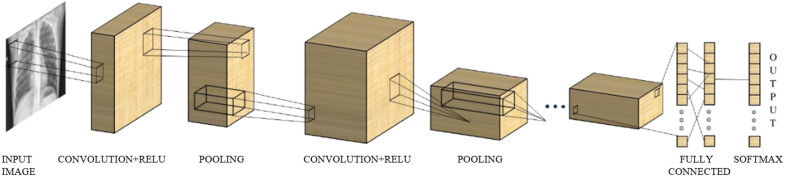
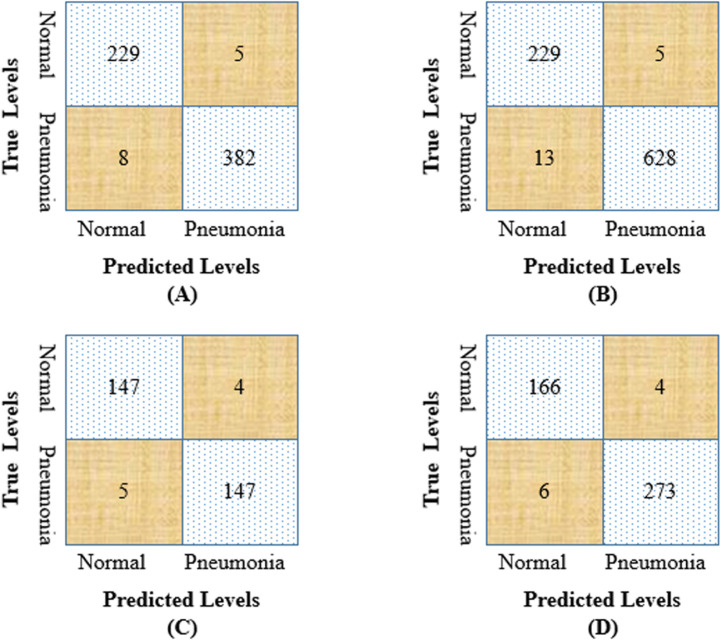
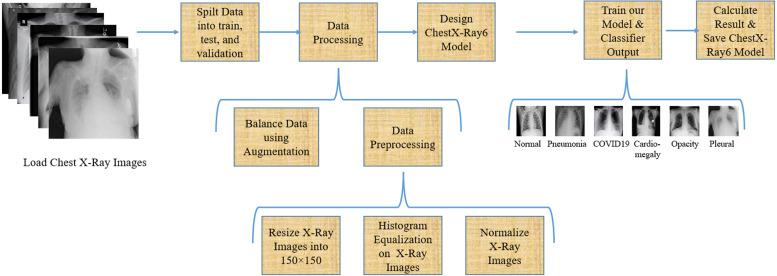
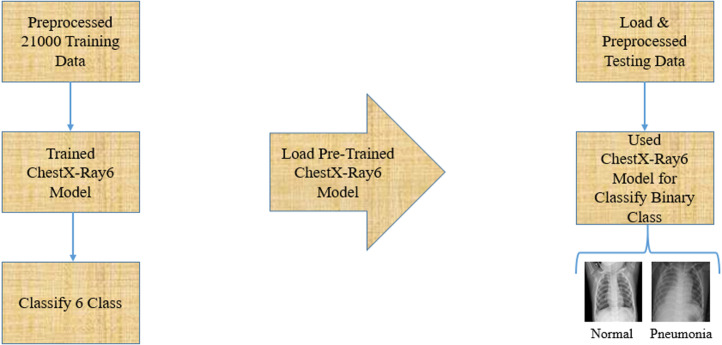
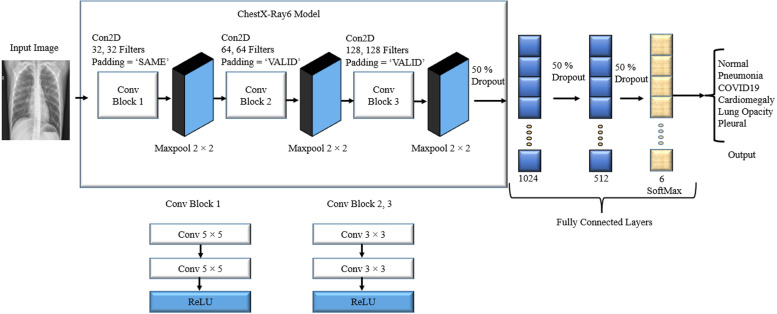
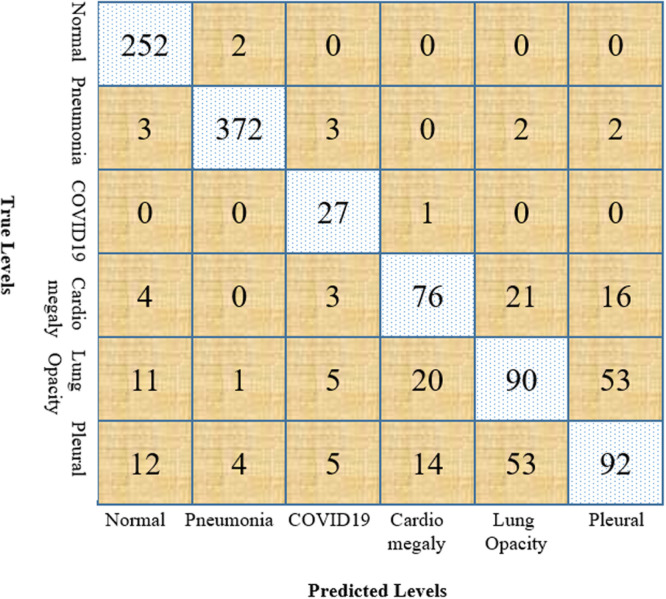
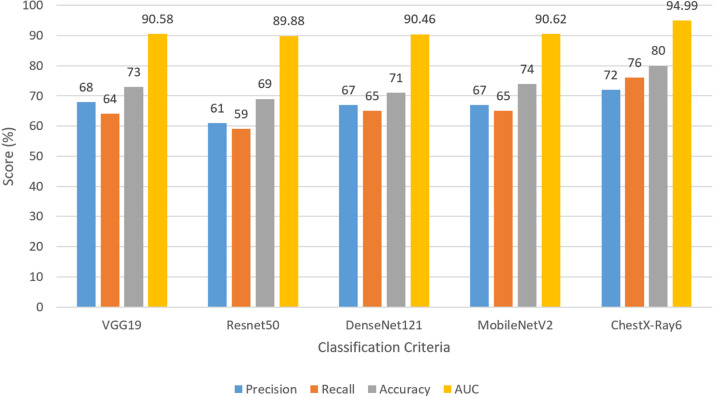
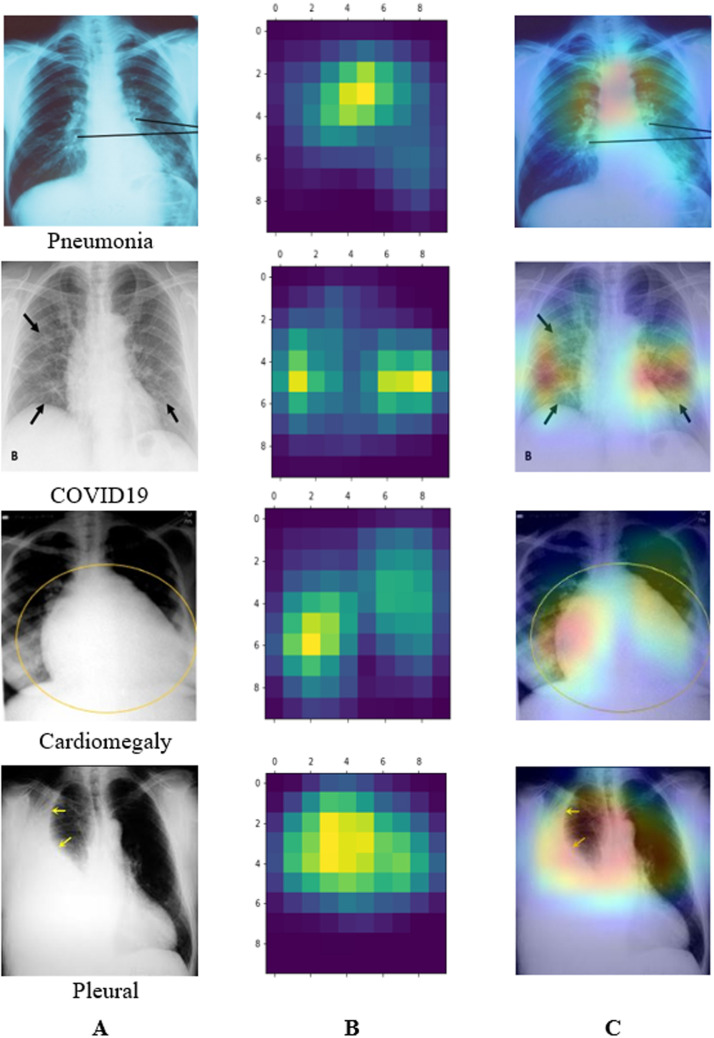
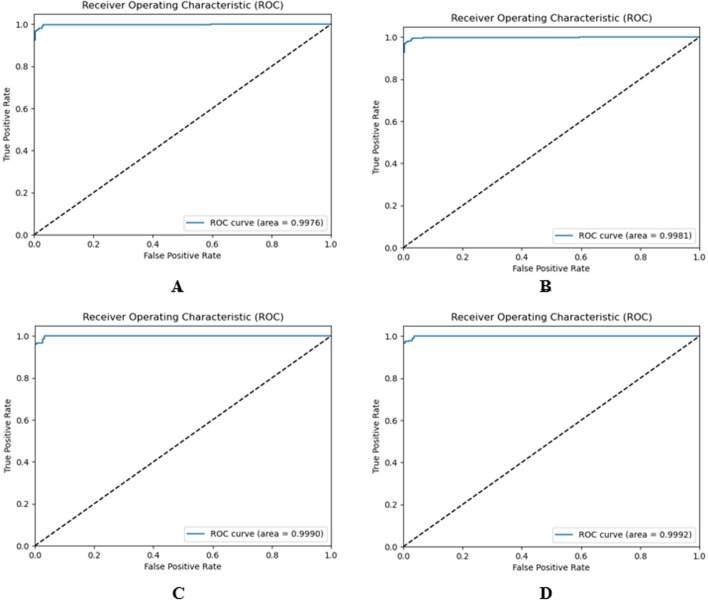
In the last few decades, several epidemic diseases have been introduced. In some cases, doctors and medical physicians are facing difficulties in identifying these diseases correctly. A machine can perform some of these identification tasks more accurately than a human if it is trained correctly. With time, the number of medical data is increasing. A machine can analyze this medical data and extract knowledge from this data, which can help doctors and medical physicians. This study proposed a lightweight convolutional neural network (CNN) named ChestX-ray6 that automatically detects pneumonia, COVID19, cardiomegaly, lung opacity, and pleural from digital chest x-ray images. Here multiple databases have been combined, containing 9,514 chest x-ray images of normal and other five diseases. The lightweight ChestX-ray6 model achieved an accuracy of 80% for the detection of six diseases. The ChestX-ray6 model has been saved and used for binary classification of normal and pneumonia patients to reveal the model's generalization power. The pre-trained ChestX-ray6 model has achieved an accuracy and recall of 97.94% and 98% for binary classification, which outweighs the state-of-the-art (SOTA) models.
在过去几十年里,出现了几种流行病。在某些情况下,医生和医学专家在正确识别这些疾病方面面临困难。如果机器得到正确训练,它在执行某些识别任务时可以比人类更准确。随着时间的推移,医学数据的数量在增加。机器可以分析这些医学数据并从数据中提取知识,这对医生和医学专家会有所帮助。本研究提出了一种名为ChestX-ray6的轻量级卷积神经网络(CNN),它可以从数字化胸部X光图像中自动检测肺炎、新冠肺炎、心脏肥大、肺部混浊和胸腔积液。这里合并了多个数据库,包含9514张正常及其他五种疾病的胸部X光图像。轻量级的ChestX-ray6模型在检测六种疾病时准确率达到了80%。ChestX-ray6模型已被保存,并用于正常人和肺炎患者的二元分类,以揭示该模型的泛化能力。预训练的ChestX-ray6模型在二元分类中准确率和召回率分别达到了97.94%和98%,超过了当前的最优(SOTA)模型。