Afzal Shadma, Yadav Alok Kumar, Poonia Anuj Kumar, Choure Kamlesh, Yadav Ajar Nath, Pandey Ashutosh
Department of Biotechnology, Motilal Nehru national Institute of Technology Allahabad, Prayagraj, UP India.
University Institute of Biotechnology , Chandigarh University, Chandigarh, Punjab India.
Biologia (Bratisl). 2023;78(2):291-305. doi: 10.1007/s11756-022-01207-3. Epub 2022 Sep 20.
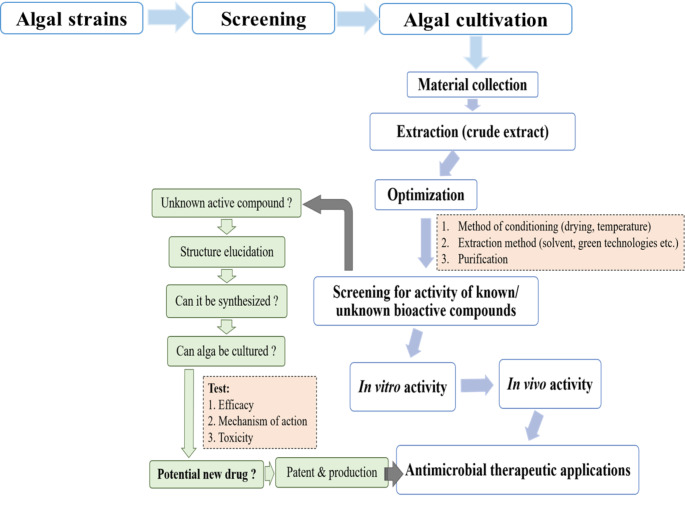
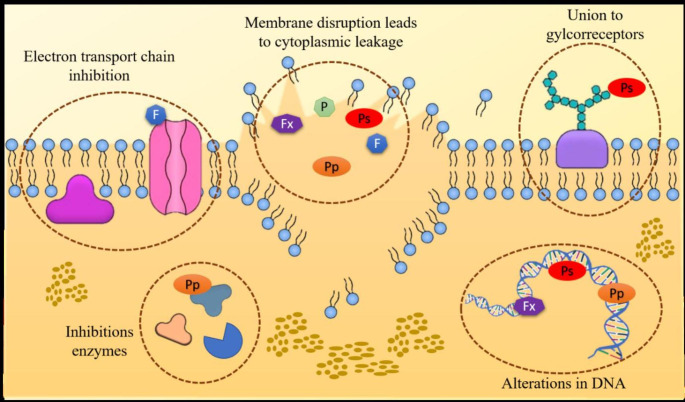
In the last few decades, attention on new natural antimicrobial compounds has arisen due to a change in consumer preferences and the increase in the number of resistant microorganisms. Algae are defined as photosynthetic organisms that demonstrate a wide range of adaptability to adverse environmental conditions like temperature extremes, photo-oxidation, high or low salinity, and osmotic stress. Algae are primarily known to produce large amounts of secondary metabolite against various kinds of pathogenic microbes. Among these algae, micro and microalgae of river, lake, and algae of oceanic origin have been reported to have antimicrobial activity against the bacteria and fungi of pathogenic nature. Various polar and non- polar extracts of micro- and macro algae have been used for the suppression of these pathogenic fungi. Apart from these, certain algal derivatives have also been isolated from these having antibacterial and antifungal potential. Among the bioactive molecules of algae, polysaccharides, sulphated polysaccharides, phyco-cyanobilins polyphenols, lectins, proteins lutein, vitamin E, B and K, peptides, polyunsaturated fatty acids and pigments can be highlighted. In the present review, we will discuss the biological activity of these derived compounds as antifungal/ antibacterial agents and their most promising applications. A brief outline is also given for the prospects of these isolated phytochemicals and using algae as therapeutic in the dietary form. We have also tried to answer whether alga-derived metabolites can serve as potential therapeutics for the treatment of SARS-CoV-2 like viral infections too.
在过去几十年中,由于消费者偏好的改变以及耐药微生物数量的增加,人们开始关注新型天然抗菌化合物。藻类被定义为光合生物,它们对极端温度、光氧化、高盐或低盐度以及渗透胁迫等不利环境条件具有广泛的适应性。藻类主要以产生大量针对各种致病微生物的次生代谢产物而闻名。在这些藻类中,据报道河流和湖泊中的微藻以及海洋来源的藻类对致病性细菌和真菌具有抗菌活性。微藻和大型藻类的各种极性和非极性提取物已被用于抑制这些致病真菌。除此之外,还从这些藻类中分离出了具有抗菌和抗真菌潜力的某些藻类衍生物。在藻类的生物活性分子中,多糖、硫酸化多糖、藻蓝胆素、多酚、凝集素、蛋白质、叶黄素、维生素E、B和K、肽、多不饱和脂肪酸和色素值得关注。在本综述中,我们将讨论这些衍生化合物作为抗真菌/抗菌剂的生物活性及其最有前景的应用。还简要概述了这些分离出的植物化学物质的前景以及将藻类用作饮食形式的治疗剂的情况。我们还试图回答藻类衍生的代谢产物是否也可以作为治疗SARS-CoV-2等病毒感染的潜在疗法。