Sun Guogui, Li Jiong, Zhou Wei, Hoyle Rosalie G, Zhao Yue
School of Public Health, North China University of Science and Technology Affiliated People's Hospital, North China University of Science and Technology, Tangshan, China.
Department of Medicinal Chemistry, Virginia Commonwealth University, Richmond, VA, United States.
Front Cell Dev Biol. 2022 Oct 19;10:1014030. doi: 10.3389/fcell.2022.1014030. eCollection 2022.
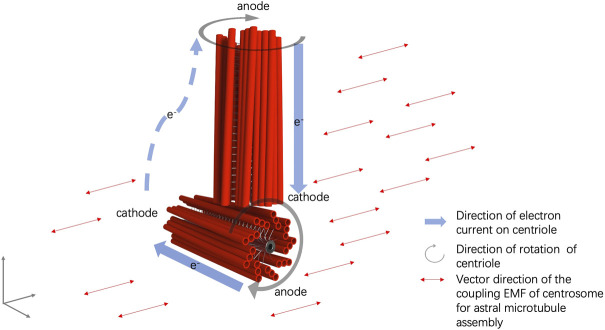
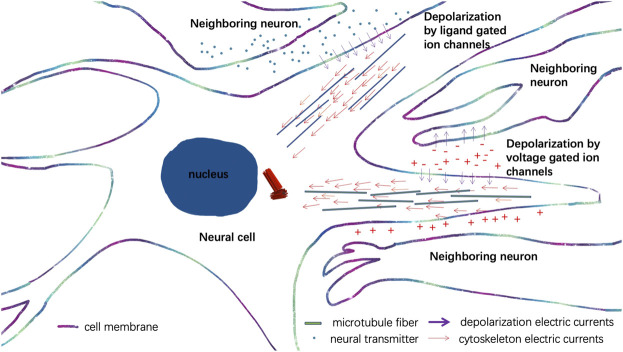
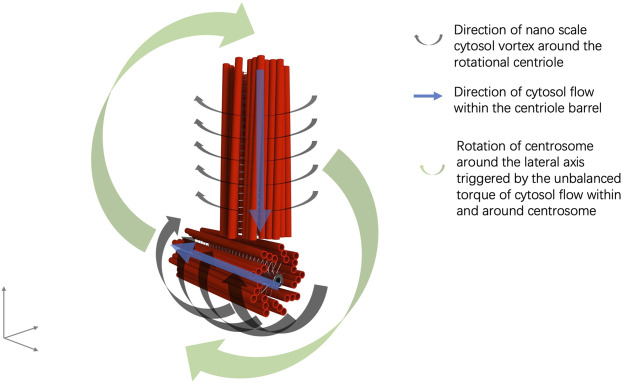
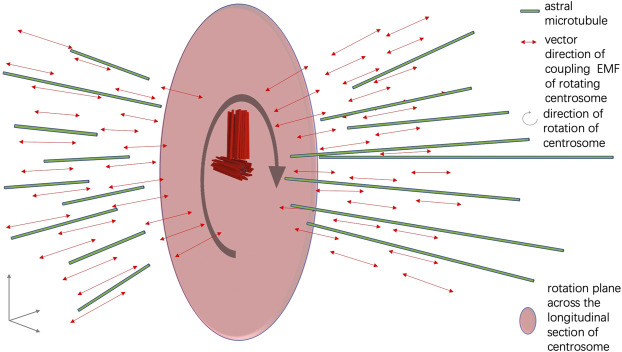
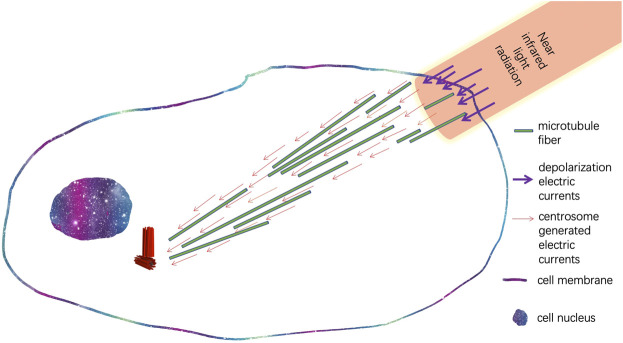
Emerging evidence indicates that the cellular electromagnetic field regulates the fundamental physics of cell biology. The electromagnetic oscillations and synchronization of biomolecules triggered by the internal and external pulses serve as the physical basis of the cellular electromagnetic field. Recent studies have indicated that centrosomes, a small organelle in eukaryotic cells that organize spindle microtubules during mitosis, also function as a nano-electronic generator in cells. Additionally, cellular electromagnetic fields are defined by cell types and correlated to the epigenetic status of the cell. These interactions between tissue-specific electromagnetic fields and chromatin fibers of progenitor cells regulate cell differentiation and organ sizes. The same mechanism is implicated in the regulation of tissue homeostasis and morphological adaptation in evolution. Intercellular electromagnetic interactions also regulate the migratory behaviors of cells and the morphogenesis programs of neural circuits. The process is closely linked with centrosome function and intercellular communication of the electromagnetic fields of microtubule filaments. Clearly, more and more evidence has shown the importance of cellular electromagnetic fields in regulatory processes. Furthermore, a detailed understanding of the physical nature of the inter- and intracellular electromagnetic interactions will better our understanding of fundamental biological questions and a wide range of biological processes.
新出现的证据表明,细胞电磁场调节细胞生物学的基本物理学。由内部和外部脉冲触发的生物分子的电磁振荡和同步化是细胞电磁场的物理基础。最近的研究表明,中心体是真核细胞中的一种小细胞器,在有丝分裂期间组织纺锤体微管,它在细胞中也起着纳米电子发生器的作用。此外,细胞电磁场由细胞类型定义,并与细胞的表观遗传状态相关。组织特异性电磁场与祖细胞染色质纤维之间的这些相互作用调节细胞分化和器官大小。同样的机制也参与了进化过程中组织稳态和形态适应的调节。细胞间电磁相互作用还调节细胞的迁移行为和神经回路的形态发生程序。这个过程与中心体功能以及微管丝电磁场的细胞间通讯密切相关。显然,越来越多的证据表明细胞电磁场在调节过程中的重要性。此外,对细胞间和细胞内电磁相互作用的物理性质的详细了解将有助于我们更好地理解基本生物学问题和广泛的生物过程。