• 文献检索
  • 文档翻译
  • 深度研究
  • 学术资讯
  • Suppr Zotero 插件Zotero 插件
  • 邀请有礼
  • 套餐&价格
  • 历史记录
应用&插件
Suppr Zotero 插件Zotero 插件浏览器插件Mac 客户端Windows 客户端微信小程序
定价
高级版会员购买积分包购买API积分包
服务
文献检索文档翻译深度研究API 文档MCP 服务
关于我们
关于 Suppr公司介绍联系我们用户协议隐私条款
关注我们

Suppr 超能文献

核心技术专利:CN118964589B侵权必究
粤ICP备2023148730 号-1Suppr @ 2026

文献检索

告别复杂PubMed语法,用中文像聊天一样搜索,搜遍4000万医学文献。AI智能推荐,让科研检索更轻松。

立即免费搜索

文件翻译

保留排版,准确专业,支持PDF/Word/PPT等文件格式,支持 12+语言互译。

免费翻译文档

深度研究

AI帮你快速写综述,25分钟生成高质量综述,智能提取关键信息,辅助科研写作。

立即免费体验

中国吉林省 COVID-19 传播的三个阶段的流行病学聚集特征。

Epidemiological clustered characteristics of coronavirus disease 2019 (COVID-19) in three phases of transmission in Jilin Province, China.

机构信息

School of Public Health, Xi'an Jiaotong University Health Science Center, Xi'an Shaanxi, 710061, China.

Jilin Provincial Center for Disease Control and Prevention, Changchun, 130062, Jilin Province, People's Republic of China.

出版信息

PLoS One. 2023 Jan 19;18(1):e0279879. doi: 10.1371/journal.pone.0279879. eCollection 2023.

DOI:10.1371/journal.pone.0279879
PMID:36656818
原文链接:https://pmc.ncbi.nlm.nih.gov/articles/PMC9851530/
Abstract

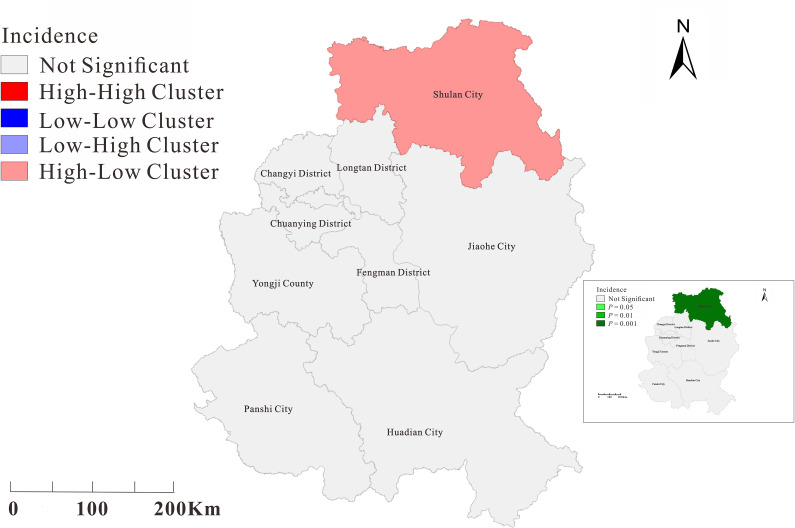
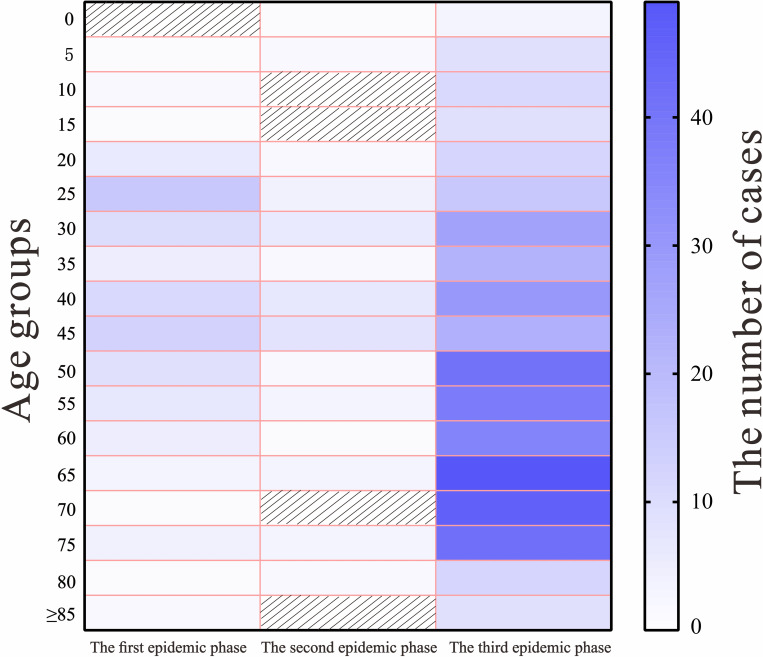
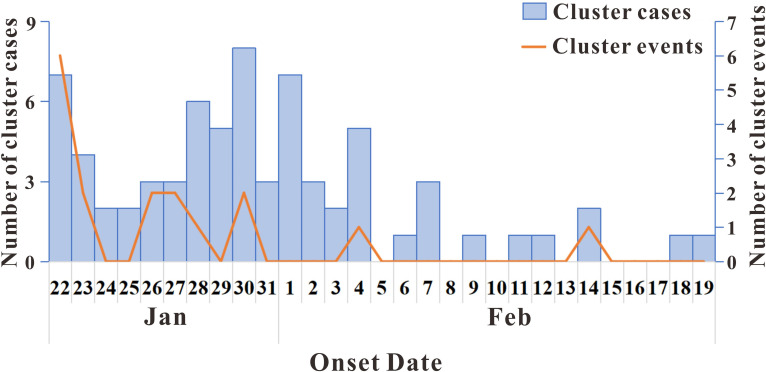
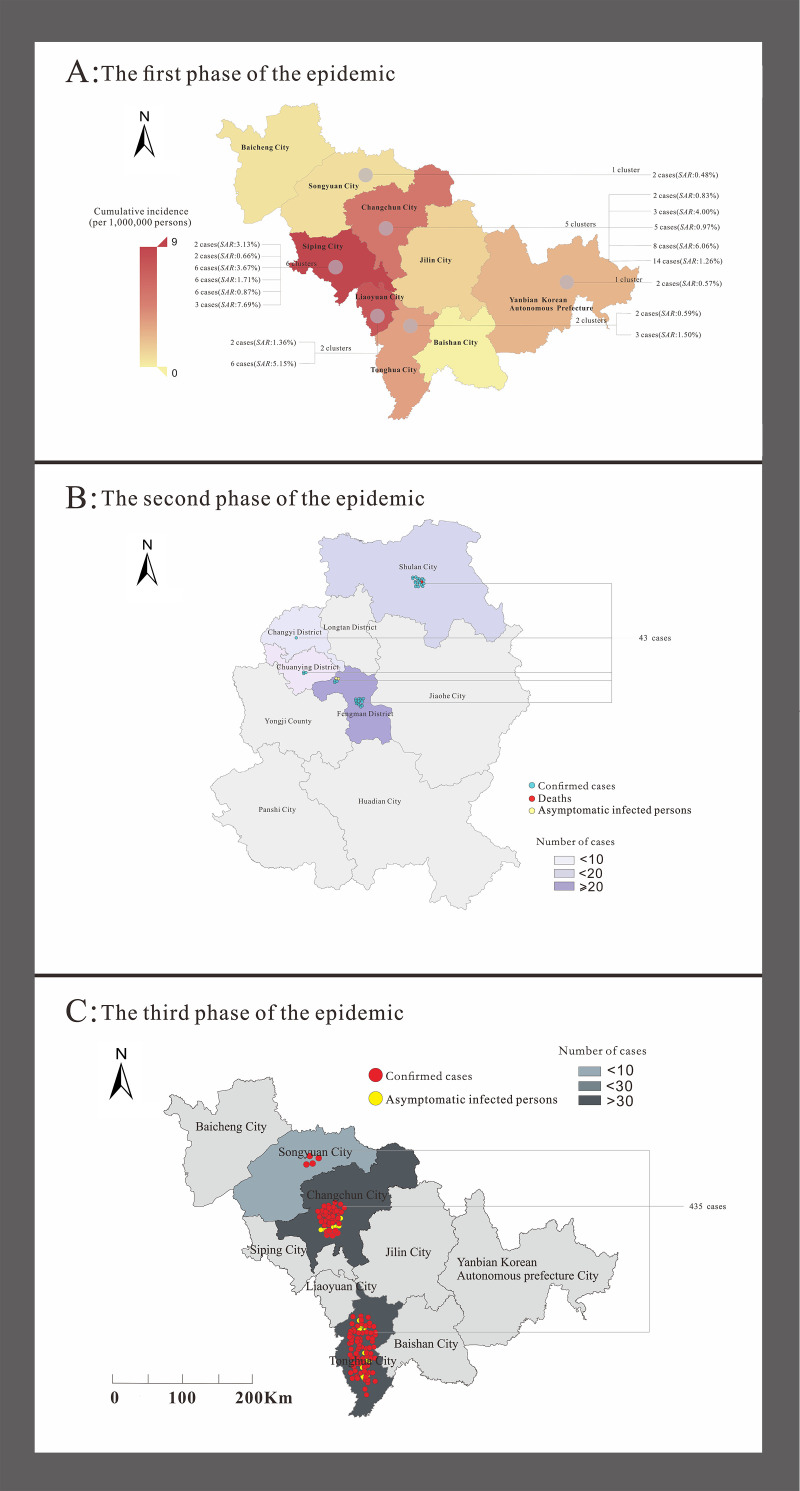
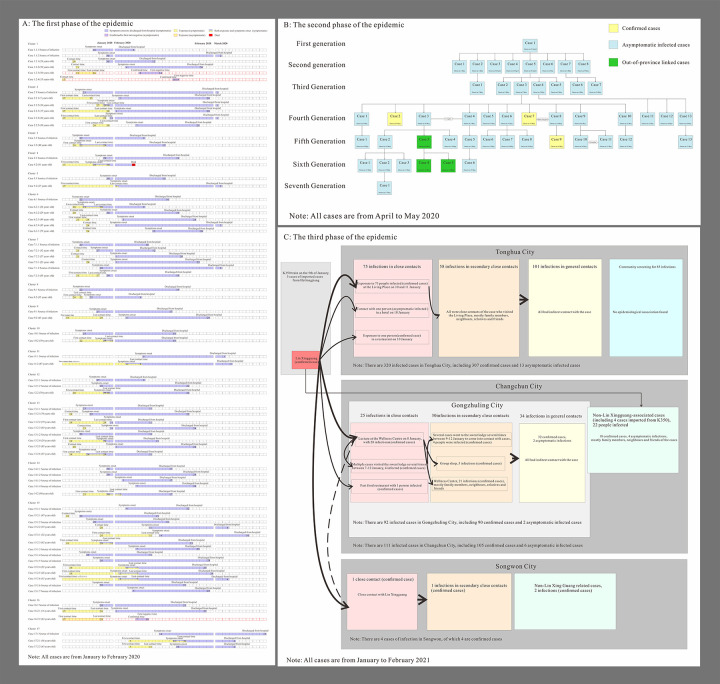
The current epidemiological status of the new coronary pneumonia epidemic in China is being explored to prevent and control the localized dissemination of aggregated outbreaks. This study analyzed the characteristics of new outbreaks of coronavirus disease 2019 (COVID-19) at three stages of aggregated outbreaks in Jilin Province, China, to provide a reference for the prevention and control of aggregated outbreaks. Case information were collected from all patients in Jilin Province from January 12, 2020 to the present. The epidemic was divided into three stages according to the time of onset. The first stage comprised 97 cases reported from January 12, 2020 to February 19, 2020, during which 17 aggregated outbreaks occurred. The second comprised 43 cases reported from April 25, 2020 and May 23, 2020, involving one aggregated outbreak. The third comprised 435 cases reported on January 10, 2021 and February 9, 2021, involving one aggregated outbreak. The relationship between aggregated and non-aggregated cases in the first phase of the outbreak and the difference between imported and local cases during the aggregated outbreak were assess using statistical analysis, and the differences in the baseline information between the three phases were analyzed. The incubation periods of the three phases were 10 days, 8 days, and 5 days. The number of aggregated epidemic events in Jilin Province tended to increase and then decrease over time. The clustered events in Jilin Province were divided into four categories: household contact (14 times, 51 cases); household contact and public places (one time, three cases); household contact, public places, and gatherings (one time, six cases); and household contact, public places, gatherings, and work (three times, 495 cases). Clustered events occurred mainly between January 22, 2020, and February 4, 2020. Among all cases in the first phase of the outbreak, the method of detection and the time from diagnosis to discharge were longer in aggregated cases than in non-aggregated cases, and that the source of infection and renewal cases were more frequent and more likely to be detected in the outpatient clinics during aggregated outbreaks than the imported cases. The second phase of the epidemic showed significant spatial variability (Moran's I<0, P<0.05). The third stage of the epidemic occurred in a higher proportion of individuals aged 50-90 years and within a shorter incubation period compared with the first two stages. The current focus of prevention and control of the COVID-19 epidemic in Jilin Province is to strictly implement the restrictions on gatherings and to perform timely screening and isolation of close contacts of infectious sources while strengthening the supervision of the inflow of people from outside the region. Simultaneously, more targeted prevention and control measures can be implemented for different age groups and occupations.

摘要

目前,中国正在探索新的冠状肺炎疫情的流行病学现状,以预防和控制局部聚集性疫情的传播。本研究分析了中国吉林省聚集性疫情三个阶段 2019 年冠状病毒病(COVID-19)新暴发的特征,为聚集性疫情的防控提供参考。从 2020 年 1 月 12 日至目前,从吉林省所有患者中收集病例信息。根据发病时间,将疫情分为三个阶段。第一阶段包括 2020 年 1 月 12 日至 2 月 19 日报告的 97 例,期间发生了 17 起聚集性疫情。第二阶段包括 2020 年 4 月 25 日和 5 月 23 日报告的 43 例,涉及一起聚集性疫情。第三阶段包括 2021 年 1 月 10 日和 2 月 9 日报告的 435 例,涉及一起聚集性疫情。采用统计学分析方法,评估了第一阶段暴发中聚集性病例与非聚集性病例之间的关系以及聚集性暴发期间输入性病例与本地病例之间的差异,并分析了三个阶段之间的基线信息差异。三个阶段的潜伏期分别为 10 天、8 天和 5 天。吉林省聚集性疫情事件数量呈先增后减趋势。吉林省的聚集性事件分为四类:家庭接触(14 次,51 例);家庭接触和公共场所(1 次,3 例);家庭接触、公共场所和聚会(1 次,6 例);家庭接触、公共场所、聚会和工作(3 次,495 例)。聚集事件主要发生在 2020 年 1 月 22 日至 2 月 4 日之间。在暴发第一阶段的所有病例中,聚集性病例的检测方法和从诊断到出院的时间长于非聚集性病例,而聚集性暴发期间门诊的感染源和更新病例更为频繁,更容易被发现。第二阶段的疫情显示出显著的空间变异性(Moran's I<0,P<0.05)。与前两个阶段相比,第三阶段的疫情发生在年龄在 50-90 岁之间的个体中所占比例更高,潜伏期更短。目前,吉林省 COVID-19 疫情防控的重点是严格执行聚集限制,及时筛查和隔离感染源的密切接触者,同时加强对境外输入人员的监管。同时,可以针对不同年龄组和职业实施更有针对性的防控措施。
https://cdn.ncbi.nlm.nih.gov/pmc/blobs/76a5/9851530/0f68f5bae726/pone.0279879.g005.jpg
https://cdn.ncbi.nlm.nih.gov/pmc/blobs/76a5/9851530/d043455e6fab/pone.0279879.g001.jpg
https://cdn.ncbi.nlm.nih.gov/pmc/blobs/76a5/9851530/6c7c5dd3a395/pone.0279879.g002.jpg
https://cdn.ncbi.nlm.nih.gov/pmc/blobs/76a5/9851530/fb1d647ce906/pone.0279879.g003.jpg
https://cdn.ncbi.nlm.nih.gov/pmc/blobs/76a5/9851530/2975f9575322/pone.0279879.g004.jpg
https://cdn.ncbi.nlm.nih.gov/pmc/blobs/76a5/9851530/0f68f5bae726/pone.0279879.g005.jpg
https://cdn.ncbi.nlm.nih.gov/pmc/blobs/76a5/9851530/d043455e6fab/pone.0279879.g001.jpg
https://cdn.ncbi.nlm.nih.gov/pmc/blobs/76a5/9851530/6c7c5dd3a395/pone.0279879.g002.jpg
https://cdn.ncbi.nlm.nih.gov/pmc/blobs/76a5/9851530/fb1d647ce906/pone.0279879.g003.jpg
https://cdn.ncbi.nlm.nih.gov/pmc/blobs/76a5/9851530/2975f9575322/pone.0279879.g004.jpg
https://cdn.ncbi.nlm.nih.gov/pmc/blobs/76a5/9851530/0f68f5bae726/pone.0279879.g005.jpg

相似文献

1
Epidemiological clustered characteristics of coronavirus disease 2019 (COVID-19) in three phases of transmission in Jilin Province, China.中国吉林省 COVID-19 传播的三个阶段的流行病学聚集特征。
PLoS One. 2023 Jan 19;18(1):e0279879. doi: 10.1371/journal.pone.0279879. eCollection 2023.
2
Evaluating the effectiveness of measures to control the novel coronavirus disease 2019 in Jilin Province, China.评估中国吉林省控制 2019 年新型冠状病毒病措施的有效性。
BMC Infect Dis. 2021 Mar 6;21(1):245. doi: 10.1186/s12879-021-05936-9.
3
[Epidemiological characteristics of three local epidemics of COVID-19 in Guangzhou].[广州新冠肺炎三次本土疫情的流行病学特征]
Zhonghua Liu Xing Bing Xue Za Zhi. 2021 Dec 10;42(12):2088-2095. doi: 10.3760/cma.j.cn112338-20210728-00592.
4
COVID-19 epidemic phases and morbidity in different areas of Chinese mainland, 2020.2020 年中国内地不同地区的 COVID-19 疫情阶段和发病情况。
Front Public Health. 2023 Apr 6;11:1151038. doi: 10.3389/fpubh.2023.1151038. eCollection 2023.
5
[Epidemiological characteristics of novel coronavirus pneumonia in Shijiazhuang, China].[中国石家庄新型冠状病毒肺炎的流行病学特征]
Zhonghua Jie He He Hu Xi Za Zhi. 2021 Nov 12;44(11):961-965. doi: 10.3760/cma.j.cn112147-20210330-00212.
6
Epidemiological characteristics and transmission dynamics of the outbreak caused by the SARS-CoV-2 Omicron variant in Shanghai, China: a descriptive study.中国上海新型冠状病毒奥密克戎变异株引发疫情的流行病学特征及传播动力学:一项描述性研究
medRxiv. 2022 Jun 18:2022.06.11.22276273. doi: 10.1101/2022.06.11.22276273.
7
Epidemiological Characteristics and Incubation Period of 7015 Confirmed Cases With Coronavirus Disease 2019 Outside Hubei Province in China.中国湖北省外 7015 例新型冠状病毒病确诊病例的流行病学特征和潜伏期。
J Infect Dis. 2020 Jun 16;222(1):26-33. doi: 10.1093/infdis/jiaa211.
8
Characteristics of COVID-2019 in areas epidemic from imported cases.从输入性病例流行地区看 2019 年冠状病毒病的特征。
Int J Public Health. 2020 Jul;65(6):741-746. doi: 10.1007/s00038-020-01434-y. Epub 2020 Jul 21.
9
Transmission dynamics and successful control measures of SARS-CoV-2 in the mega-size city of Guangzhou, China.中国特大型城市广州的 SARS-CoV-2 传播动力学和成功控制措施。
Medicine (Baltimore). 2021 Dec 3;100(48):e27846. doi: 10.1097/MD.0000000000027846.
10
Epidemiological Investigation and Prevention Control Analysis of the Longitudinal Distribution of COVID-19 in Henan Province, China.中国河南省 COVID-19 纵向分布的流行病学调查及防控分析。
mSphere. 2020 Oct 7;5(5):e00867-20. doi: 10.1128/mSphere.00867-20.

引用本文的文献

1
Epidemiological Analysis of the COVID-19 Clusters in the Early Stages of the Epidemic in Shanghai, China: Pandemic-to-Epidemic Response Shift.中国上海疫情早期新冠疫情聚集性病例的流行病学分析:从大流行应对到疫情应对的转变
Trop Med Infect Dis. 2025 Jun 17;10(6):170. doi: 10.3390/tropicalmed10060170.
2
Assessing changes in incubation period, serial interval, and generation time of SARS-CoV-2 variants of concern: a systematic review and meta-analysis.评估关注的 SARS-CoV-2 变异株的潜伏期、序列间隔和代时变化:系统评价和荟萃分析。
BMC Med. 2023 Sep 29;21(1):374. doi: 10.1186/s12916-023-03070-8.

本文引用的文献

1
Modeling the complete spatiotemporal spread of the COVID-19 epidemic in mainland China.模拟新冠疫情在中国内地的完整时空传播情况。
Int J Infect Dis. 2021 Sep;110:247-257. doi: 10.1016/j.ijid.2021.04.021. Epub 2021 Apr 20.
2
Recent Developments on Therapeutic and Diagnostic Approaches for COVID-19.新冠病毒治疗和诊断方法的最新进展。
AAPS J. 2021 Jan 5;23(1):14. doi: 10.1208/s12248-020-00532-2.
3
Current state of vaccine development and targeted therapies for COVID-19: impact of basic science discoveries.新冠病毒疫苗研发和靶向治疗的现状:基础科学发现的影响。
Cardiovasc Pathol. 2021 Jan-Feb;50:107278. doi: 10.1016/j.carpath.2020.107278. Epub 2020 Sep 2.
4
Natural History of Asymptomatic SARS-CoV-2 Infection.无症状SARS-CoV-2感染的自然史。
N Engl J Med. 2020 Aug 27;383(9):885-886. doi: 10.1056/NEJMc2013020. Epub 2020 Jun 12.
5
Asymptomatic cases with SARS-CoV-2 infection.无症状的 SARS-CoV-2 感染病例。
J Med Virol. 2020 Sep;92(9):1401-1403. doi: 10.1002/jmv.25990. Epub 2020 May 22.
6
Epidemiological Characteristics on the Clustering Nature of COVID-19 in Qingdao City, 2020: A Descriptive Analysis.2020 年青岛市 COVID-19 聚集性疫情的流行病学特征:描述性分析。
Disaster Med Public Health Prep. 2020 Oct;14(5):643-647. doi: 10.1017/dmp.2020.59. Epub 2020 Mar 31.
7
Transmission of COVID-19 in the terminal stages of the incubation period: A familial cluster.潜伏期末期的 COVID-19 传播:一个家族性聚集。
Int J Infect Dis. 2020 Jul;96:452-453. doi: 10.1016/j.ijid.2020.03.027. Epub 2020 Mar 16.
8
Investigation of three clusters of COVID-19 in Singapore: implications for surveillance and response measures.新加坡三起 COVID-19 聚集性疫情调查:对监测和应对措施的启示。
Lancet. 2020 Mar 28;395(10229):1039-1046. doi: 10.1016/S0140-6736(20)30528-6. Epub 2020 Mar 17.
9
The cancellation of mass gatherings (MGs)? Decision making in the time of COVID-19.取消大型集会(MGs)?COVID-19 时期的决策。
Travel Med Infect Dis. 2020 Mar-Apr;34:101631. doi: 10.1016/j.tmaid.2020.101631. Epub 2020 Mar 14.
10
[Epidemiological analysis on a family cluster of COVID-19].新型冠状病毒肺炎家庭聚集性的流行病学分析
Zhonghua Liu Xing Bing Xue Za Zhi. 2020 Apr 10;41(4):494-497. doi: 10.3760/cma.j.cn112338-20200221-00147.