Laboratorio de Investigación Biomédica en Productos Naturales, Carrera de Medicina, UNAM, FES-Iztacala, Avenida de los Barrios Número 1, Tlalnepantla 54090, Estado de México, Mexico.
Laboratorio de Génetica Toxicológica, Instituto Politécnico Nacional, Escuela Nacional de Ciencias Biológicas, Av. Wilfrido Massieu, Ciudad de México 07738, Mexico.
Int J Mol Sci. 2023 Jul 23;24(14):11831. doi: 10.3390/ijms241411831.
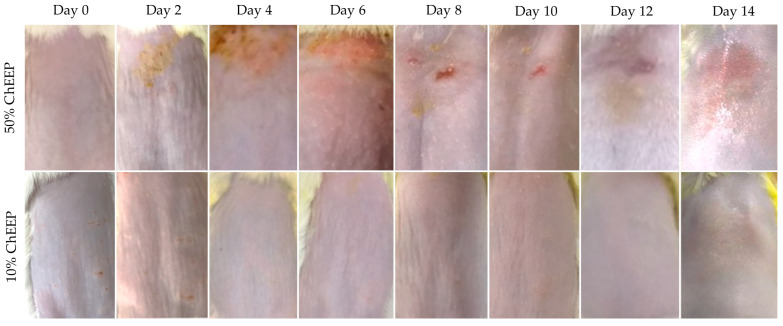
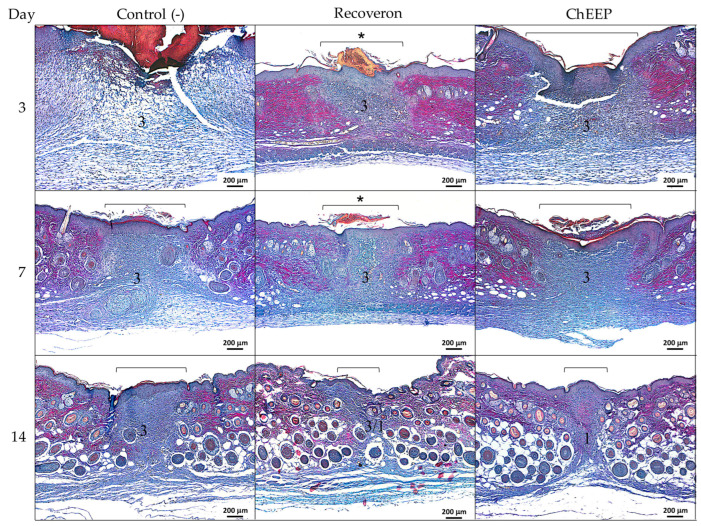
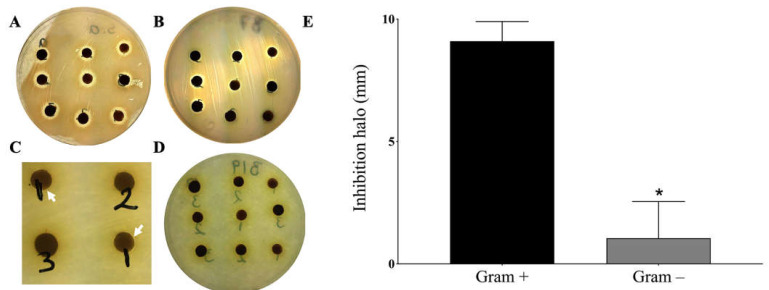
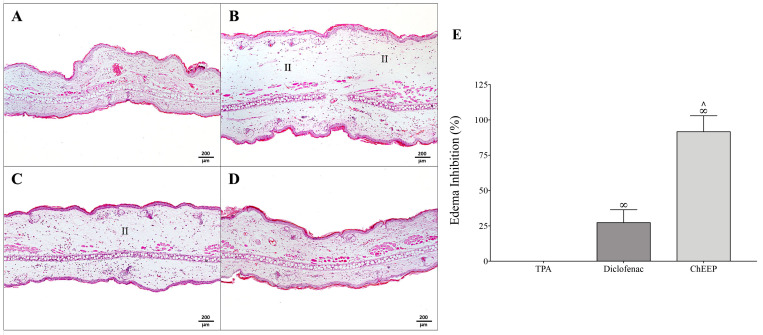
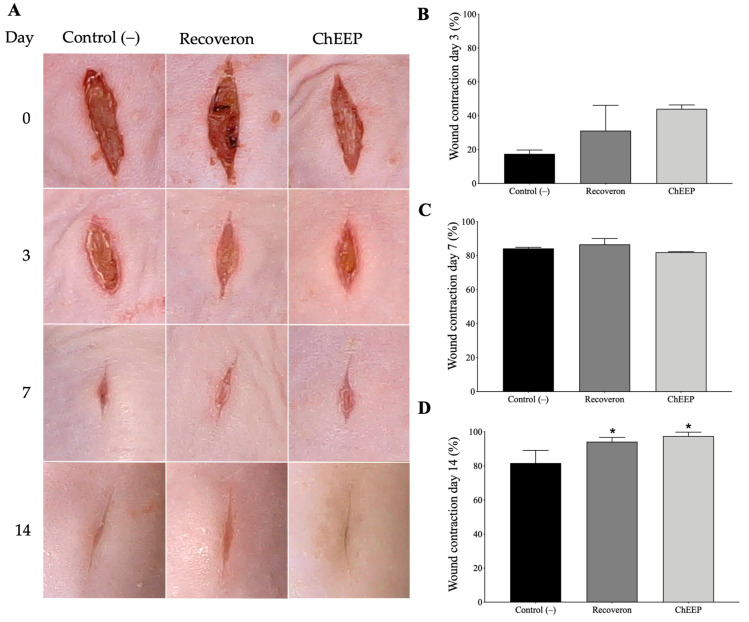
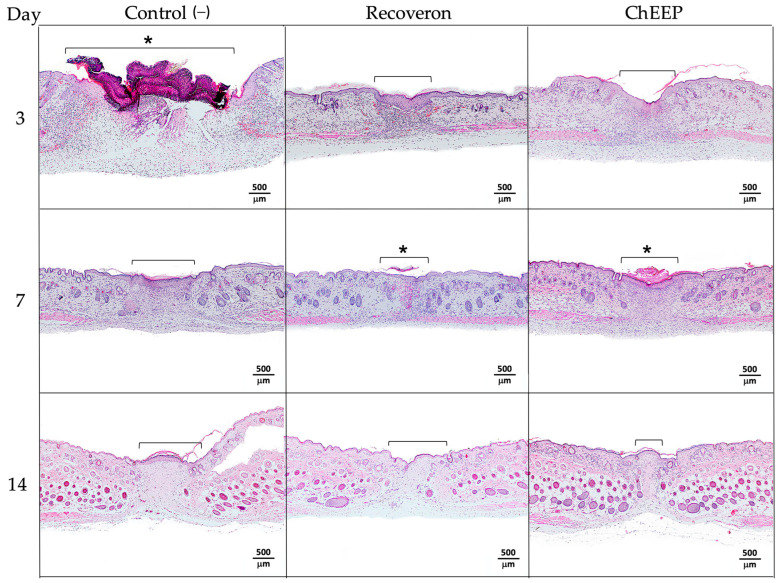
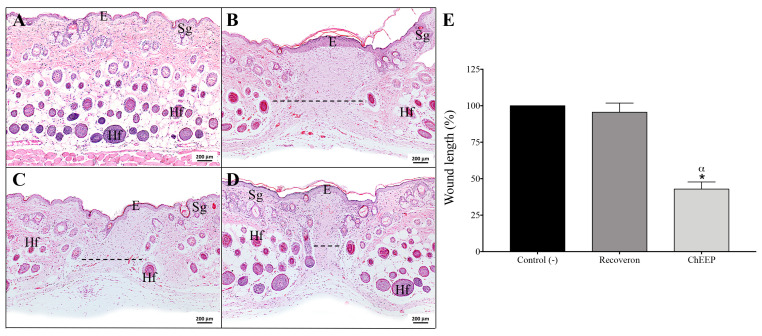
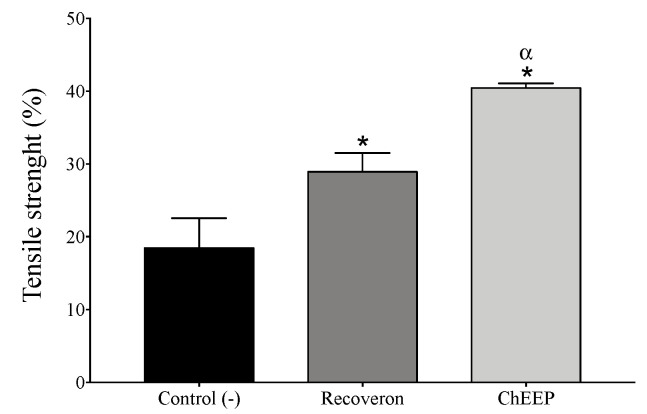
Skin wound healing is a complex biochemical process of tissue repair and remodeling in response to injury. Currently, the drugs used to improve the healing process are inaccessible to the population, are costly, and have side effects, making the search for new treatment alternatives necessary. Propolis is a natural product produced by bees that is widely recognized and used in folk medicine for its multiple biomedical activities. However, therapeutic information regarding Mexican propolis is limited. This study aimed to evaluate the wound-healing effect of the Chihuahua ethanolic extract of propolis (ChEEP). Macroscopic and histological analyses were performed using a mouse wound-healing model. The topic acute toxicity assay showed that propolis at 10% w/v had no toxic effects. ChEEP has antibacterial activity against the Gram-positive bacteria and . Moreover, it exhibited good anti-inflammatory activity evaluated through mouse ear edema induced by 12-O-tetradeca-noylphorbol-13-acetate (TPA). A full-thickness incision lesion was created in mice and treated topically with 10% ChEEP. At Day 14 post-treatment, it was observed that propolis increased wound contraction and reduced healing time and wound length; furthermore, propolis increased the tensile strength of the wound, as determined with the tensiometric method, and promoted the formation of type I collagen at the site of injury, as evaluated with Herovici stain. These findings suggest that the topical administration of ChEEP can improve skin wound healing, probably due to the synergistic effect of its components, mainly polyphenols, in different steps of the wound-healing process. It should be noted this is the first time that the wound-healing activity of a Mexican propolis has been evaluated.
皮肤伤口愈合是一种复杂的组织修复和重塑的生化过程,是对损伤的反应。目前,用于改善愈合过程的药物对民众来说无法获得,且价格昂贵,还具有副作用,因此有必要寻找新的治疗方法。蜂胶是蜜蜂产生的一种天然产物,因其具有多种生物医学活性,在民间医学中被广泛认可和使用。然而,关于墨西哥蜂胶的治疗信息有限。本研究旨在评估奇瓦瓦州蜂胶的乙醇提取物(ChEEP)的伤口愈合作用。使用小鼠伤口愈合模型进行了宏观和组织学分析。急性毒性试验表明,蜂胶在 10%w/v 时没有毒性作用。ChEEP 对革兰氏阳性菌 和 具有抗菌活性。此外,它还表现出良好的抗炎活性,通过 12-O-十四酰佛波醇-13-乙酸酯(TPA)诱导的小鼠耳水肿评估。在小鼠上创建全层切口损伤,并局部用 10%ChEEP 治疗。在治疗后第 14 天,观察到蜂胶增加了伤口收缩,减少了愈合时间和伤口长度;此外,蜂胶通过张力测定法增加了伤口的拉伸强度,并通过 Herovici 染色促进了损伤部位 I 型胶原的形成。这些发现表明,ChEEP 的局部给药可以改善皮肤伤口愈合,可能是由于其成分(主要是多酚)在伤口愈合过程的不同步骤中协同作用的结果。值得注意的是,这是首次评估墨西哥蜂胶的伤口愈合活性。