School of Electronic Information Engineering, Taiyuan University of Science and Technology, Taiyuan, Shanxi, People's Republic of China.
College of Engineering, Fujian Jiangxia University, Fuzhou, Fujian, People's Republic of China.
Sci Rep. 2023 Sep 29;13(1):16397. doi: 10.1038/s41598-023-43543-7.
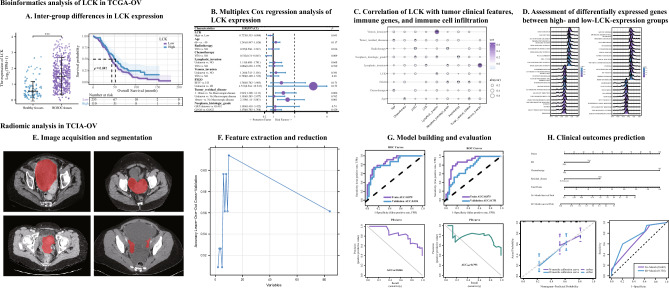
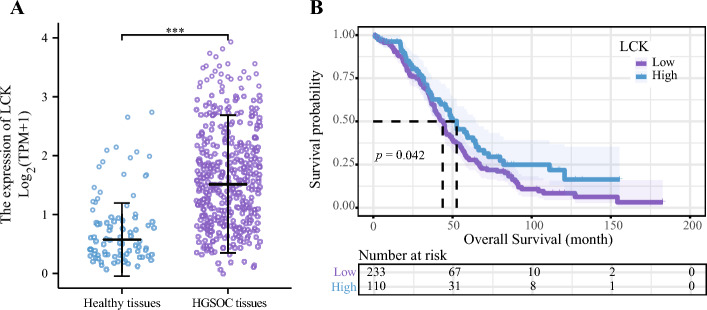
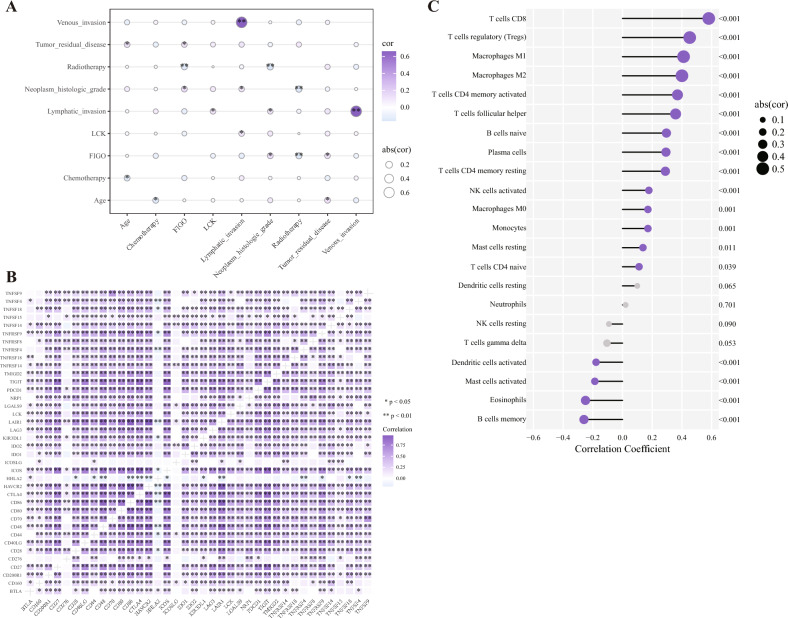
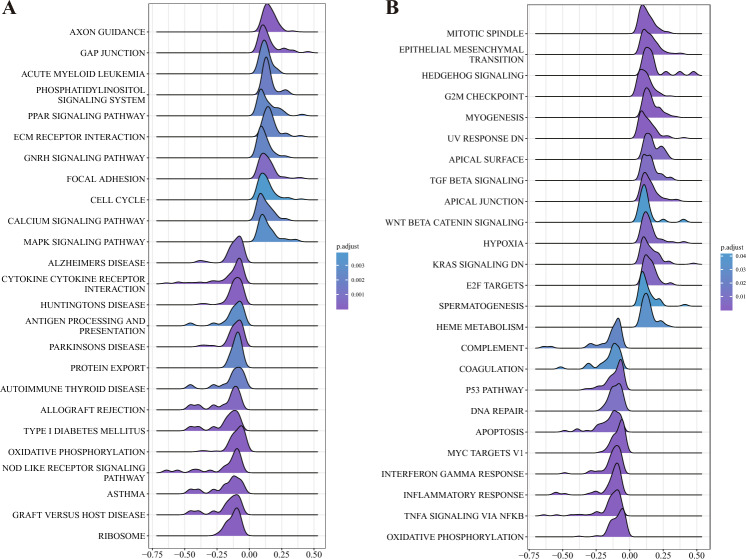
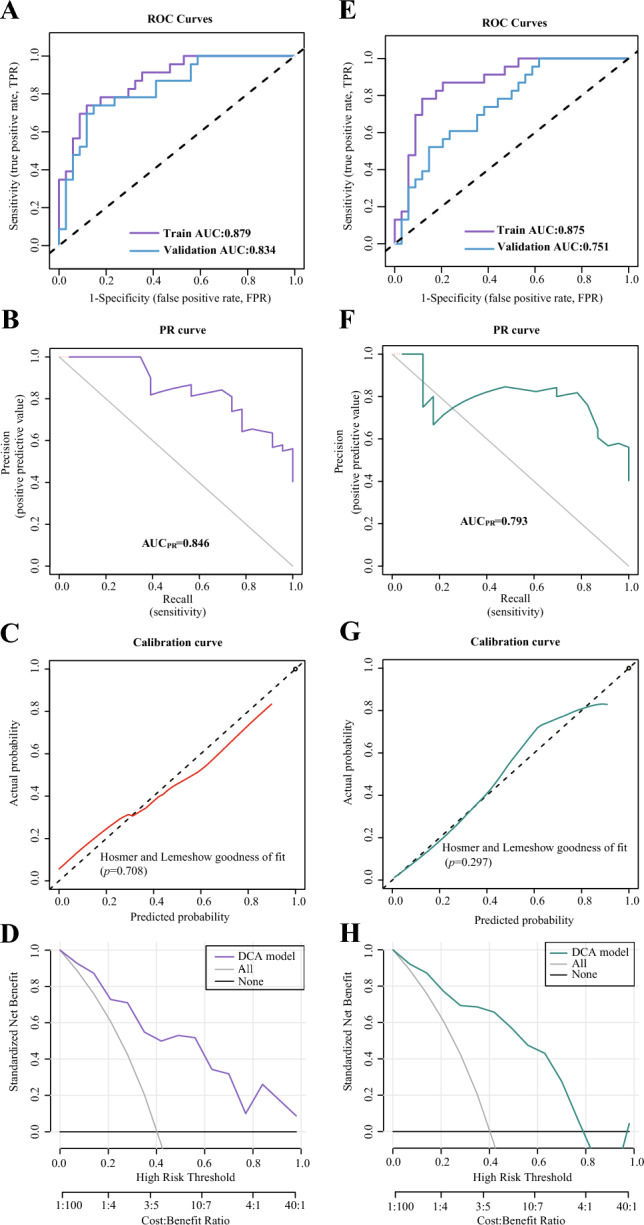
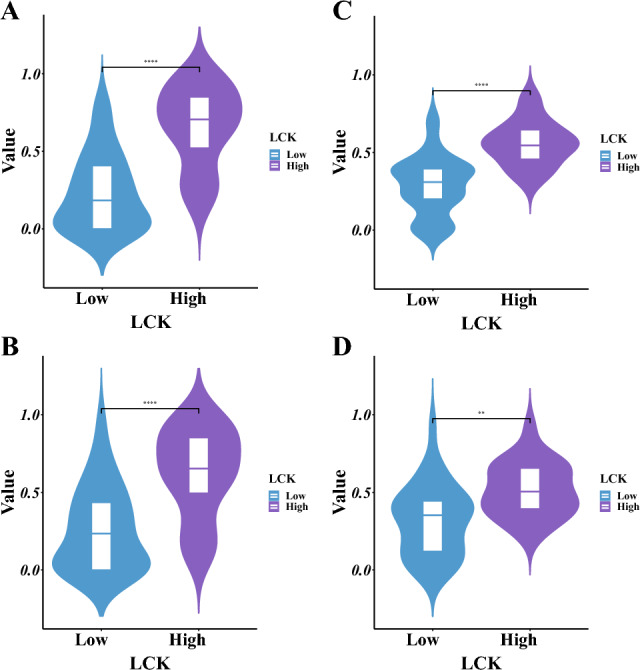
We developed and validated a multimodal radiomic machine learning approach to noninvasively predict the expression of lymphocyte cell-specific protein-tyrosine kinase (LCK) expression and clinical prognosis of patients with high-grade serous ovarian cancer (HGSOC). We analyzed gene enrichment using 343 HGSOC cases extracted from The Cancer Genome Atlas. The corresponding biomedical computed tomography images accessed from The Cancer Imaging Archive were used to construct the radiomic signature (Radscore). A radiomic nomogram was built by combining the Radscore and clinical and genetic information based on multimodal analysis. We compared the model performances and clinical practicability via area under the curve (AUC), Kaplan-Meier survival, and decision curve analyses. LCK mRNA expression was associated with the prognosis of HGSOC patients, serving as a significant prognostic marker of the immune response and immune cells infiltration. Six radiomic characteristics were chosen to predict the expression of LCK and overall survival (OS) in HGSOC patients. The logistic regression (LR) radiomic model exhibited slightly better predictive abilities than the support vector machine model, as assessed by comparing combined results. The performance of the LR radiomic model for predicting the level of LCK expression with five-fold cross-validation achieved AUCs of 0.879 and 0.834, respectively, in the training and validation sets. Decision curve analysis at 60 months demonstrated the high clinical utility of our model within thresholds of 0.25 and 0.7. The radiomic nomograms were robust and displayed effective calibration. Abnormally high expression of LCK in HGSOC patients is significantly correlated with the tumor immune microenvironment and can be used as an essential indicator for predicting the prognosis of HGSOC. The multimodal radiomic machine learning approach can capture the heterogeneity of HGSOC, noninvasively predict the expression of LCK, and replace LCK for predictive analysis, providing a new idea for predicting the clinical prognosis of HGSOC and formulating a personalized treatment plan.
我们开发并验证了一种多模态放射组学机器学习方法,以无创方式预测高级别浆液性卵巢癌(HGSOC)患者淋巴细胞特异性蛋白酪氨酸激酶(LCK)表达和临床预后。我们使用从癌症基因组图谱(TCGA)中提取的 343 个 HGSOC 病例进行基因富集分析。从癌症成像档案库(TCIA)中获取相应的生物医学计算机断层扫描图像用于构建放射组学特征(Radscore)。通过多模态分析,基于 Radscore 以及临床和遗传信息构建放射组学列线图。我们通过曲线下面积(AUC)、Kaplan-Meier 生存分析和决策曲线分析来比较模型性能和临床实用性。LCK mRNA 表达与 HGSOC 患者的预后相关,是免疫反应和免疫细胞浸润的重要预后标志物。选择了六个放射组学特征来预测 HGSOC 患者的 LCK 表达和总生存期(OS)。逻辑回归(LR)放射组学模型在预测 LCK 表达水平和 OS 方面的预测能力略优于支持向量机模型,这是通过比较综合结果得出的。LR 放射组学模型在五重交叉验证中预测 LCK 表达水平的性能,在训练集和验证集的 AUC 分别为 0.879 和 0.834。在 60 个月时的决策曲线分析表明,在 0.25 和 0.7 的阈值内,我们的模型具有较高的临床实用性。放射组学列线图稳健且显示出有效的校准。HGSOC 患者中 LCK 的异常高表达与肿瘤免疫微环境显著相关,可作为预测 HGSOC 预后的重要指标。多模态放射组学机器学习方法可以捕获 HGSOC 的异质性,无创预测 LCK 的表达,并替代 LCK 进行预测分析,为预测 HGSOC 的临床预后和制定个性化治疗方案提供了新的思路。