Yussof Izzati, Ab Muin Nur Fa'izah, Mohd Masnizah, Hatah Ernieda, Mohd Tahir Nor Asyikin, Mohamed Shah Noraida
Centre for Quality Management of Medicines, Faculty of Pharmacy, Universiti Kebangsaan Malaysia, Kuala Lumpur, Malaysia.
Oncology and Radiotherapy Department, Hospital Canselor Tuanku Muhriz, Cheras, Malaysia.
Digit Health. 2023 Oct 6;9:20552076231205742. doi: 10.1177/20552076231205742. eCollection 2023 Jan-Dec.
To determine the prevalence and types of misinformation on Twitter related to breast cancer prevention and treatment; and compare the differences between the misinformation in English and Malay tweets.
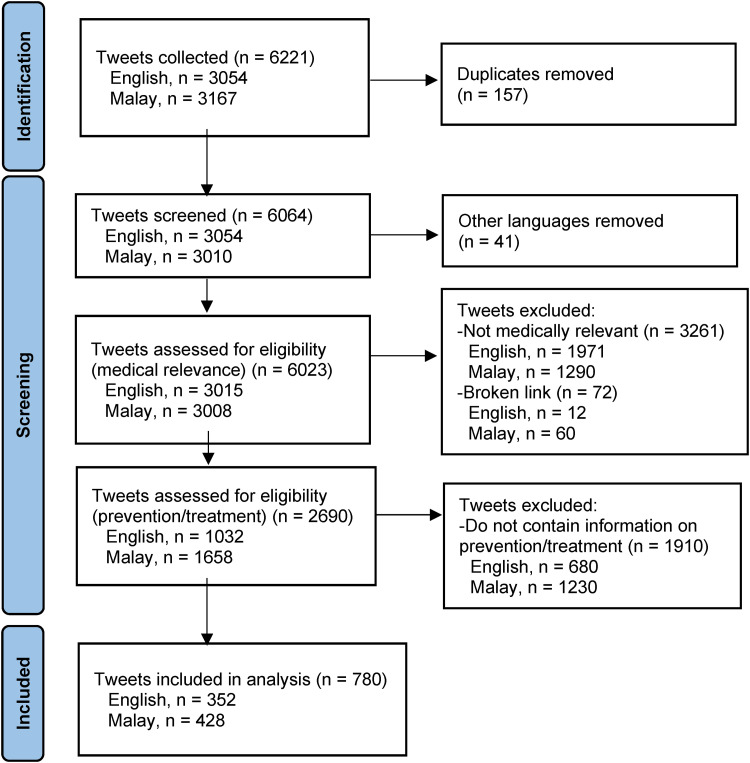
A total of 6221 tweets related to breast cancer posted between 2018 and 2022 were collected. An oncologist and two pharmacists coded the tweets to differentiate between true information and misinformation, and to analyse the misinformation content. Binary logistic regression was conducted to identify determinants of misinformation.
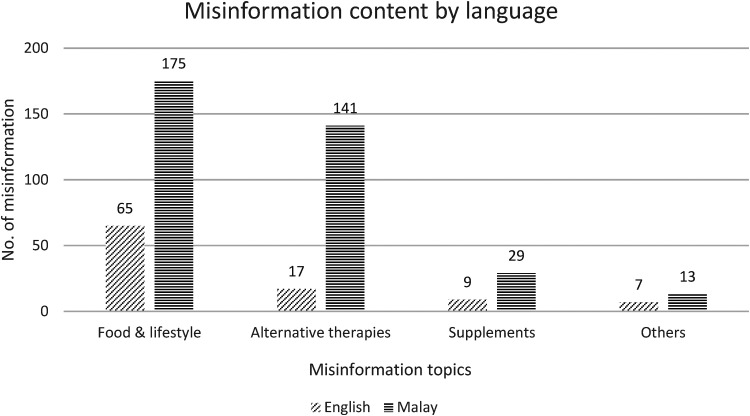
There were 780 tweets related to breast cancer prevention and treatment, and 456 (58.5%) contain misinformation, with significantly more misinformation in Malay compared to English tweets (OR = 6.18, 95% CI: 3.45-11.07, < 0.001). Other determinants of misinformation were tweets posted by product sellers and posted before the COVID-19 pandemic. Less misinformation was associated with tweets utilising official/peer-reviewed sources of information compared to tweets without external sources and those that utilised less reliable information sources. The top three most common content of misinformation were food and lifestyle, alternative medicine and supplements, comprising exaggerated claims of anti-cancer properties of traditional and natural-based products.
Misinformation on breast cancer prevention and treatment is prevalent on social media, with significantly more misinformation in Malay compared to English tweets. Our results highlighted that patients need to be educated on digital health literacy, with emphasis on utilising reliable sources of information and being cautious of any promotional materials that may contain misleading information. More studies need to be conducted in other languages to address the disparity in misinformation.
确定推特上与乳腺癌预防和治疗相关的错误信息的流行程度和类型;并比较英文和马来文推文错误信息之间的差异。
收集了2018年至2022年间发布的6221条与乳腺癌相关的推文。一名肿瘤学家和两名药剂师对推文进行编码,以区分真实信息和错误信息,并分析错误信息内容。进行二元逻辑回归以确定错误信息的决定因素。
有780条与乳腺癌预防和治疗相关的推文,其中456条(58.5%)包含错误信息,与英文推文相比,马来文推文中的错误信息明显更多(OR = 6.18,95% CI:3.45 - 11.07,P < 0.001)。错误信息的其他决定因素是产品卖家发布的推文以及在新冠疫情大流行之前发布的推文。与没有外部来源以及使用不太可靠信息来源的推文相比,使用官方/同行评审信息来源的推文错误信息较少。错误信息最常见的三大内容是饮食和生活方式、替代医学和补充剂,包括对传统和天然产品抗癌特性的夸大宣称。
社交媒体上关于乳腺癌预防和治疗的错误信息很普遍,与英文推文相比,马来文推文中的错误信息明显更多。我们 的结果强调,需要对患者进行数字健康素养教育,重点是利用可靠的信息来源,并对任何可能包含误导性信息的宣传材料保持谨慎。需要用其他语言进行更多研究,以解决错误信息方面的差异。