Department of Animal Production, Faculty of Agriculture, Zagazig University, Zagazig, 44511, Egypt.
Biol Trace Elem Res. 2024 Aug;202(8):3639-3652. doi: 10.1007/s12011-023-03953-0. Epub 2023 Nov 15.
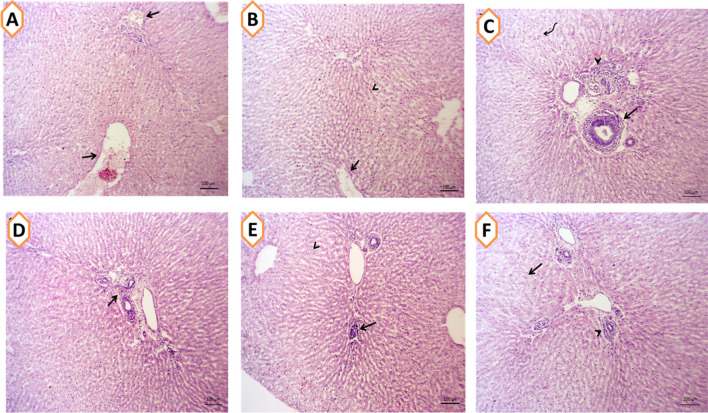
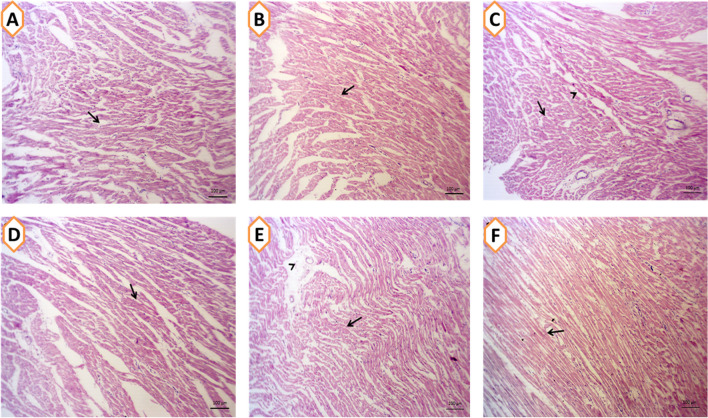
Heat stress (HS) is one of the most significant environmental factors that result in fluctuations and shrinkage in rabbit growth, health, and overall productivity. This study aims to investigate the effects of dietary mineral nanoparticles (selenium or zinc) and/or Spirulina platensis (SP) independently and in combination on stressed growing rabbits. A total of 180 weaned growing New Zealand White rabbits were included in this study and randomly divided into six dietary treatments. Rabbits received a basal diet (control group; CON group) or fortified with SP (1 g/kg diet), selenium nanoparticles (SeNPs, 50 mg/kg diet), zinc nanoparticles (ZnNPs, 100 mg/kg diet), and a mixture of SP and SeNPs (SPSeNPs) or SP and ZnNPs (SPZnNPs) groups for 8 weeks during summer conditions. The obtained results demonstrated a significant increase in the final body weight and weight gain (p < 0.05). Additionally, the feed conversion ratio was improved during the periods from 6 to 14 weeks in the treated rabbits compared to those in the CON group. Dietary supplements considerably improved (p < 0.05) the blood hematology (WBCs, Hb, RBCs, and Hct) and some carcass traits (liver weights and edible giblets). All dietary supplements significantly decreased serum levels of total glycerides (p < 0.0001), AST (p = 0.0113), ALT (p = 0.0013), creatinine (p = 0.0009), and uric acid (p = 0.0035) compared to the CON group. All treated groups (except ZnNPs) had lower values of total bilirubin and indirect bilirubin in a dose-dependent way when compared to the CON group. The values of IgA, IgG, and superoxide dismutase were significantly improved (p < 0.05) in all treated rabbits compared to the CON group. Compared with the CON group, the levels of T3 (p < 0.05) were significantly increased in all treated growing rabbits (except for the ZnNP group), while the serum cortisol, interferon-gamma (IFN-γ), malondialdehyde, and protein carbonyl were significantly decreased in the treated groups (p < 0.05). Dietary supplements sustained the changes in hepatic, renal, and cardiac impairments induced by HS in growing rabbits. Adding SP (1 g/kg diet) or SeNPs (50 mg/kg diet) in the diet, either individually or in combination, improved growth performance, blood picture, and immunity-antioxidant responses in stressed rabbits. Overall, these feed additives (SP, SeNPs, or their mixture) can be applied as an effective nutritional tool to reduce negative impacts of summer stress conditions, thereby maintaining the health status and improving the heat tolerance in growing rabbits.
热应激(HS)是导致兔子生长、健康和整体生产力波动和下降的最重要环境因素之一。本研究旨在探讨日粮矿物质纳米颗粒(硒或锌)和/或螺旋藻(SP)单独和联合使用对处于应激状态的生长兔的影响。本研究共纳入 180 只断奶生长新西兰白兔,随机分为六组日粮处理。兔子接受基础日粮(对照组;CON 组)或添加 SP(1 g/kg 日粮)、硒纳米颗粒(SeNPs,50 mg/kg 日粮)、锌纳米颗粒(ZnNPs,100 mg/kg 日粮)、SP 和 SeNPs(SPSeNPs)或 SP 和 ZnNPs(SPZnNPs)的日粮,在夏季条件下饲养 8 周。结果表明,与 CON 组相比,末重和增重显著增加(p < 0.05)。此外,在处理组中,从第 6 周到第 14 周的饲料转化率得到改善。日粮补充剂显著提高了血液血液学参数(白细胞、血红蛋白、红细胞和 Hct)和一些胴体性状(肝脏重量和可食用内脏)(p < 0.05)。所有日粮补充剂均显著降低了血清总甘油三酯(p < 0.0001)、AST(p = 0.0113)、ALT(p = 0.0013)、肌酐(p = 0.0009)和尿酸(p = 0.0035)水平与 CON 组相比。与 CON 组相比,除 ZnNPs 组外,所有处理组(p < 0.05)的总胆红素和间接胆红素值均呈剂量依赖性降低。与 CON 组相比,所有处理组的 IgA、IgG 和超氧化物歧化酶均显著提高(p < 0.05)。与 CON 组相比,除 ZnNP 组外,所有处理生长兔的 T3 水平均显著升高(p < 0.05),而血清皮质醇、干扰素-γ(IFN-γ)、丙二醛和蛋白质羰基在处理组中显著降低(p < 0.05)。日粮补充剂维持了热应激对生长兔肝、肾和心脏损伤的影响。在日粮中添加 SP(1 g/kg 日粮)或 SeNPs(50 mg/kg 日粮),单独或联合使用,可改善应激兔的生长性能、血液状况和免疫抗氧化反应。总的来说,这些饲料添加剂(SP、SeNPs 或它们的混合物)可以作为一种有效的营养工具,以减轻夏季应激条件的负面影响,从而维持健康状况并提高生长兔的耐热性。