Nguyen Yvonne, Rudd Zhong Manis Josephine, Ronczkowski Nicole Marie, Bui Tommy, Oxenrider Allston, Jadeja Ravirajsinh N, Thounaojam Menaka C
Mercer University School of Medicine, Macon, GA, United States.
Departments of Cellular Biology and Anatomy, Augusta University, Augusta, GA, United States.
Front Med (Lausanne). 2024 May 10;11:1377186. doi: 10.3389/fmed.2024.1377186. eCollection 2024.
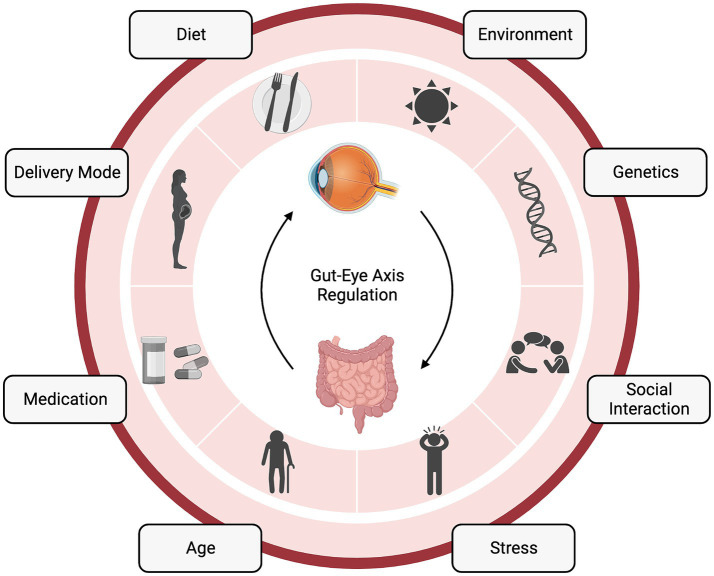
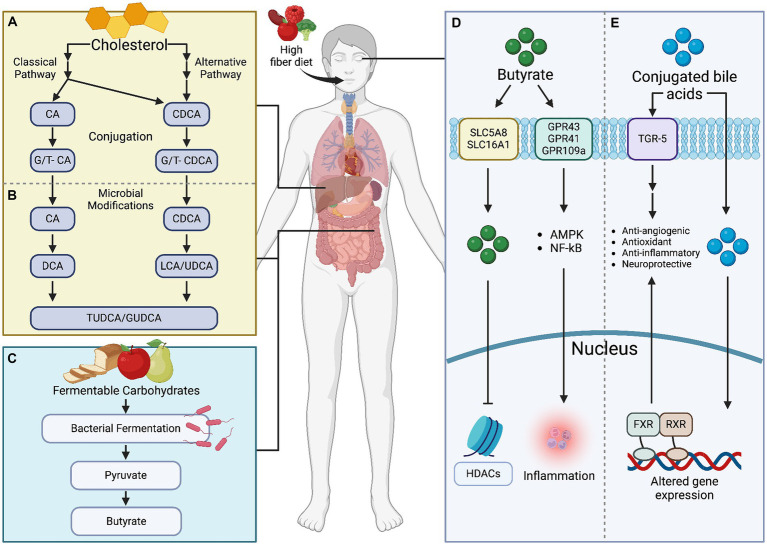
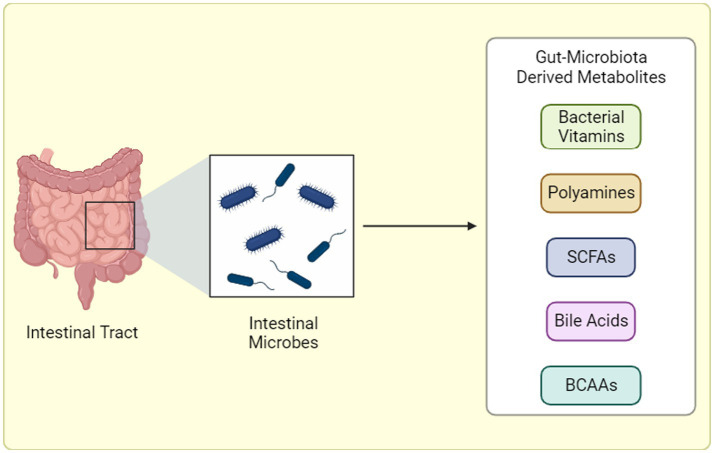
The intricate interplay between the gut microbiota and ocular health has surpassed conventional medical beliefs, fundamentally reshaping our understanding of organ interconnectivity. This review investigates into the intricate relationship between gut microbiota-derived metabolites and their consequential impact on ocular health and disease pathogenesis. By examining the role of specific metabolites, such as short-chain fatty acids (SCFAs) like butyrate and bile acids (BAs), herein we elucidate their significant contributions to ocular pathologies, thought-provoking the traditional belief of organ sterility, particularly in the field of ophthalmology. Highlighting the dynamic nature of the gut microbiota and its profound influence on ocular health, this review underlines the necessity of comprehending the complex workings of the gut-eye axis, an emerging field of science ready for further exploration and scrutiny. While acknowledging the therapeutic promise in manipulating the gut microbiome and its metabolites, the available literature advocates for a targeted, precise approach. Instead of broad interventions, it emphasizes the potential of exploiting specific microbiome-related metabolites as a focused strategy. This targeted approach compared to a precision tool rather than a broad-spectrum solution, aims to explore the therapeutic applications of microbiome-related metabolites in the context of various retinal diseases. By proposing a nuanced strategy targeted at specific microbial metabolites, this review suggests that addressing specific deficiencies or imbalances through microbiome-related metabolites might yield expedited and pronounced outcomes in systemic health, extending to the eye. This focused strategy holds the potential in bypassing the irregularity associated with manipulating microbes themselves, paving a more efficient pathway toward desired outcomes in optimizing gut health and its implications for retinal diseases.
肠道微生物群与眼部健康之间复杂的相互作用已超越了传统医学观念,从根本上重塑了我们对器官相互联系的理解。本综述探讨了肠道微生物群衍生代谢产物之间的复杂关系及其对眼部健康和疾病发病机制的相应影响。通过研究特定代谢产物的作用,如丁酸盐等短链脂肪酸(SCFAs)和胆汁酸(BAs),我们在此阐明了它们对眼部疾病的重大贡献,引发了对器官无菌传统观念的思考,尤其是在眼科领域。本综述强调了肠道微生物群的动态性质及其对眼部健康的深远影响,强调了理解肠-眼轴复杂作用的必要性,这是一个有待进一步探索和审视的新兴科学领域。在承认操纵肠道微生物群及其代谢产物具有治疗前景的同时,现有文献主张采用有针对性、精确的方法。它强调的不是广泛干预,而是利用特定微生物群相关代谢产物作为重点策略的潜力。与精确工具而非广谱解决方案相比,这种有针对性的方法旨在探索微生物群相关代谢产物在各种视网膜疾病中的治疗应用。通过提出针对特定微生物代谢产物的细致策略,本综述表明,通过微生物群相关代谢产物解决特定缺陷或失衡可能会在全身健康方面产生快速而显著的效果,包括眼部健康。这种重点策略有可能绕过与操纵微生物本身相关的不规则性,为优化肠道健康及其对视网膜疾病的影响实现预期结果铺平更有效的道路。