Graikou Konstantia, Kapeta Suzanne, Aligiannis Nektarios, Sotiroudis George, Chondrogianni Niki, Gonos Efstathios, Chinou Ioanna
University of Athens, School of Pharmacy, Division of Pharmacognosy and Chemistry of Natural Products, Zografou Campus, 15771, Athens, Greece.
Chem Cent J. 2011 Jun 23;5(1):33. doi: 10.1186/1752-153X-5-33.
Pollen is a bee-product known for its medical properties from ancient times. In our days is increasingly used as health food supplement and especially as a tonic primarily with appeal to the elderly to ameliorate the effects of ageing. In order to evaluate the chemical composition and the biological activity of Greek pollen which has never been studied before, one sample with identified botanical origin from sixteen different common plant taxa of Greece has been evaluated.
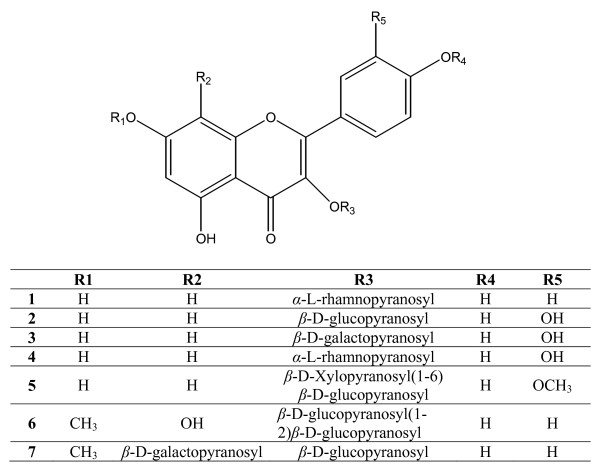
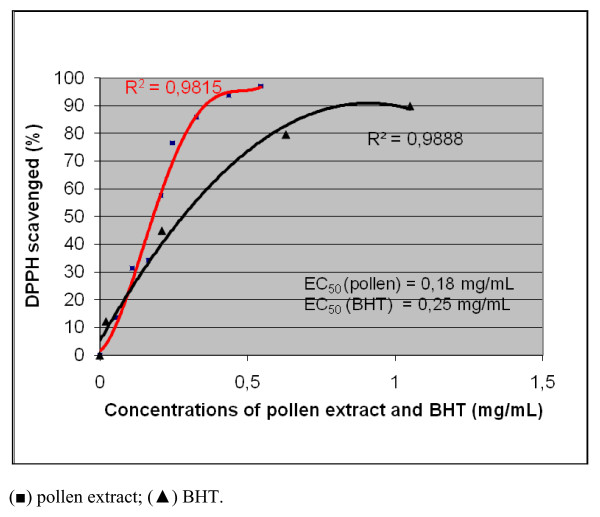
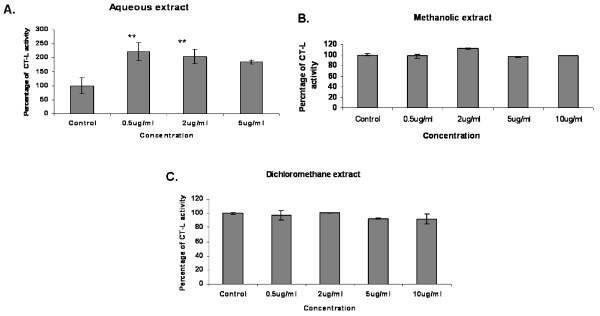
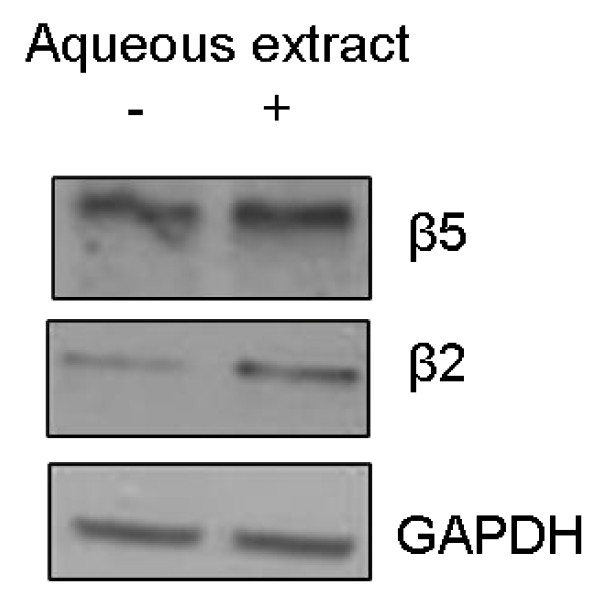
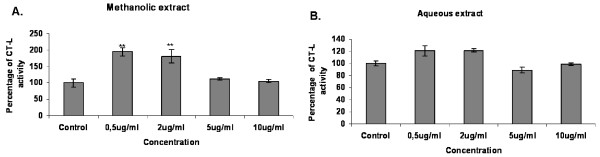
Three different extracts of the studied sample of Greek pollen, have been tested, in whether could induce proteasome activities in human fibroblasts. The water extract was found to induce a highly proteasome activity, showing interesting antioxidant properties. Due to this activity the aqueous extract was further subjected to chemical analysis and seven flavonoids have been isolated and identified by modern spectral means. From the methanolic extract, sugars, lipid acids, phenolic acids and their esters have been also identified, which mainly participate to the biosynthetic pathway of pollen phenolics. The total phenolics were estimated with the Folin-Ciocalteau reagent and the total antioxidant activity was determined by the DPPH method while the extracts and the isolated compounds were also tested for their antimicrobial activity by the dilution technique.
The Greek pollen is rich in flavonoids and phenolic acids which indicate the observed free radical scavenging activity, the effects of pollen on human fibroblasts and the interesting antimicrobial profile.
花粉是一种自古以来就因其药用特性而闻名的蜂产品。如今,它越来越多地被用作健康食品补充剂,尤其是作为滋补品,主要吸引老年人以改善衰老的影响。为了评估此前从未被研究过的希腊花粉的化学成分和生物活性,对一个来自希腊16种不同常见植物类群且已确定植物来源的样本进行了评估。
对所研究的希腊花粉样本的三种不同提取物进行了测试,看其是否能诱导人成纤维细胞中的蛋白酶体活性。发现水提取物能诱导高度的蛋白酶体活性,显示出有趣的抗氧化特性。由于这种活性,对水提取物进一步进行了化学分析,通过现代光谱手段分离并鉴定出了七种黄酮类化合物。从甲醇提取物中,还鉴定出了糖类、脂肪酸、酚酸及其酯类,它们主要参与花粉酚类物质的生物合成途径。用福林 - 西奥尔特试剂测定总酚含量,用DPPH法测定总抗氧化活性,同时通过稀释技术对提取物和分离出的化合物的抗菌活性进行了测试。
希腊花粉富含黄酮类化合物和酚酸,这表明其具有观察到的自由基清除活性、对人成纤维细胞的影响以及有趣的抗菌特性。