Program in Clinical Biochemistry and Molecular Medicine, Department of Clinical Chemistry, Faculty of Allied Health Sciences, Chulalongkorn University, Bangkok 10330, Thailand.
Molecules. 2013 Nov 11;18(11):13886-903. doi: 10.3390/molecules181113886.
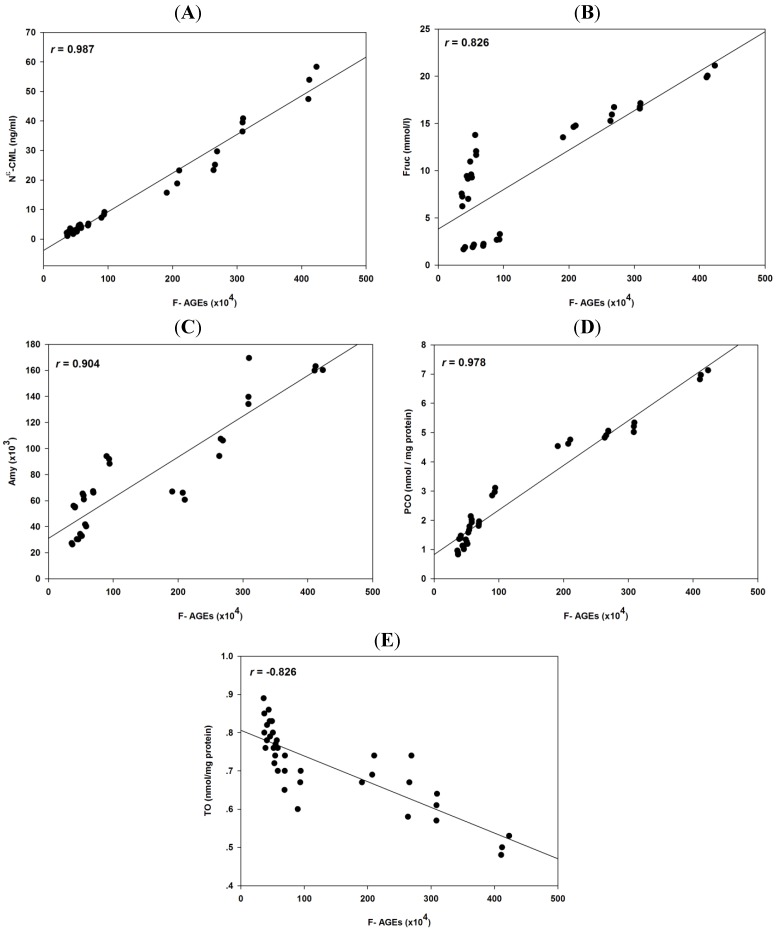
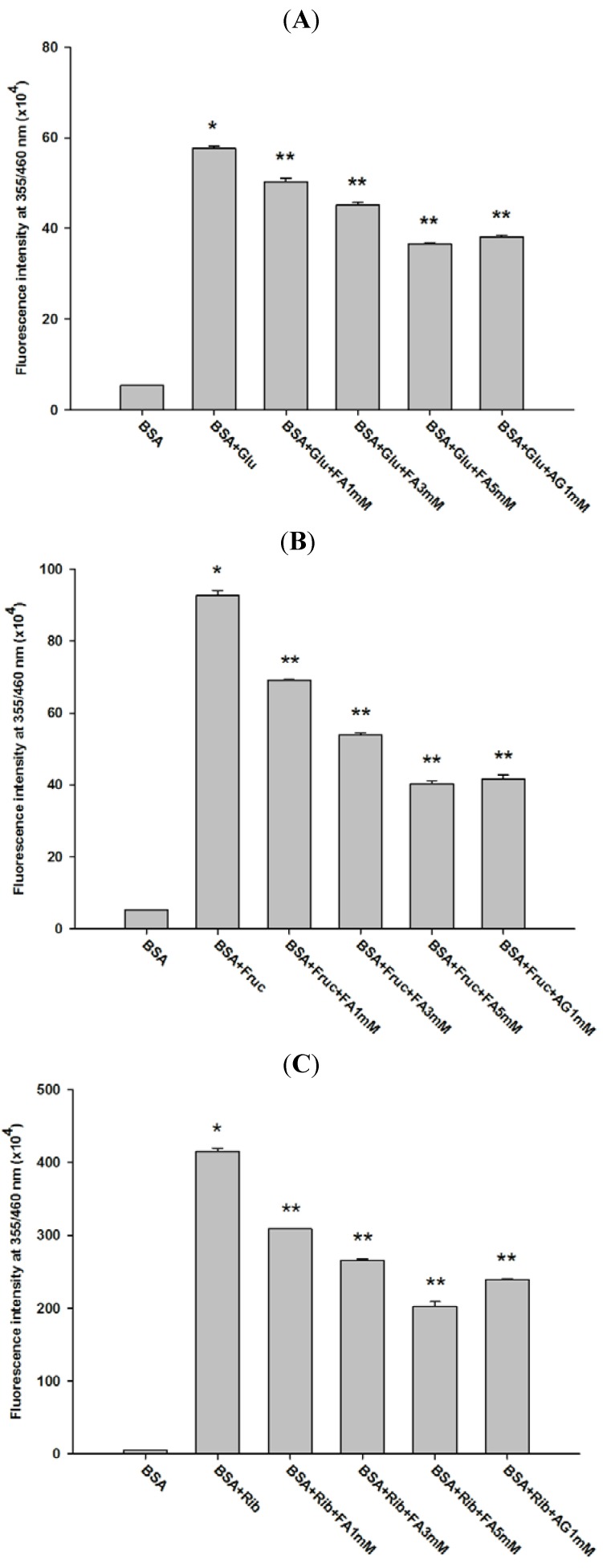
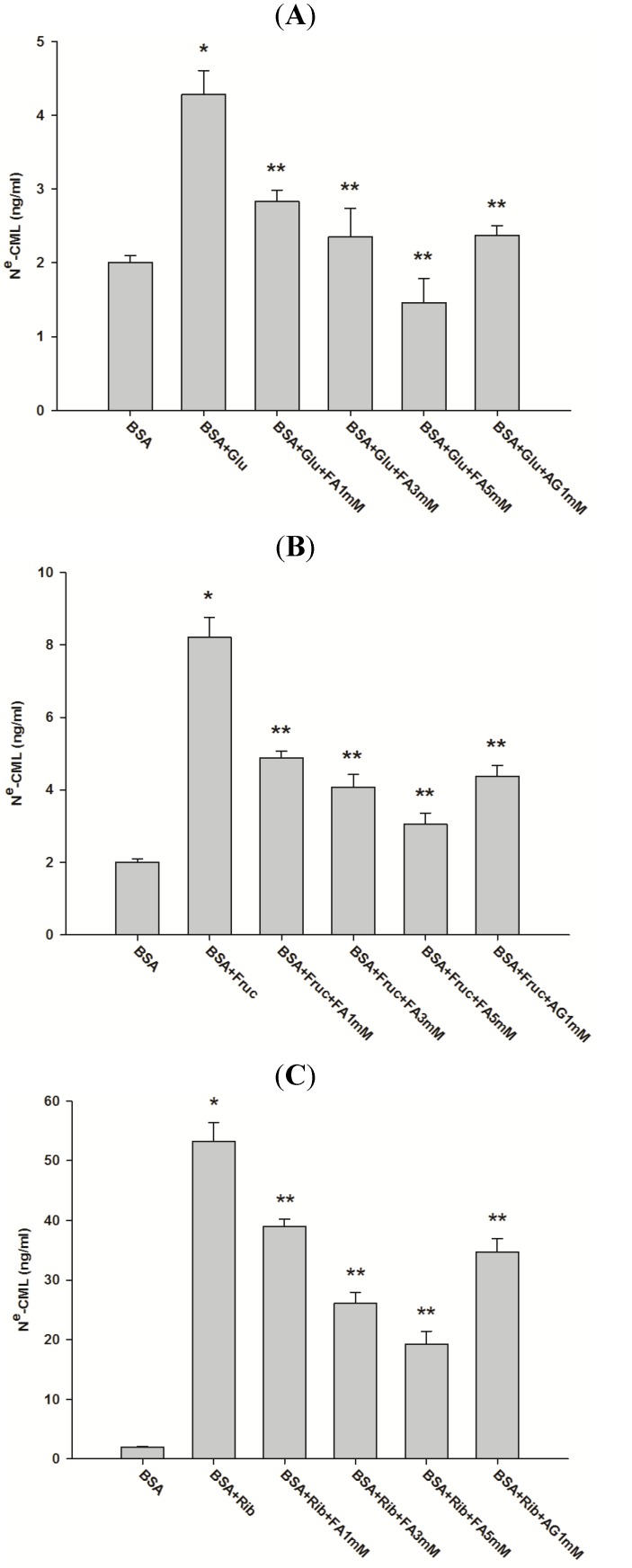
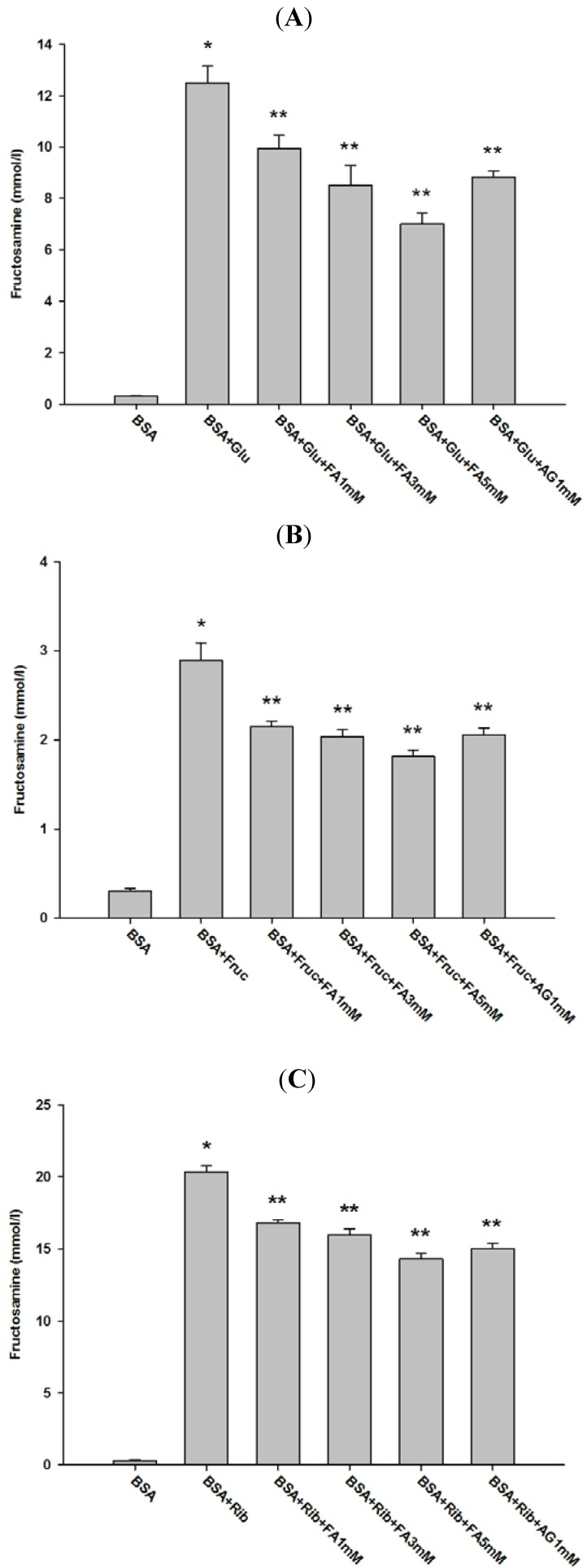
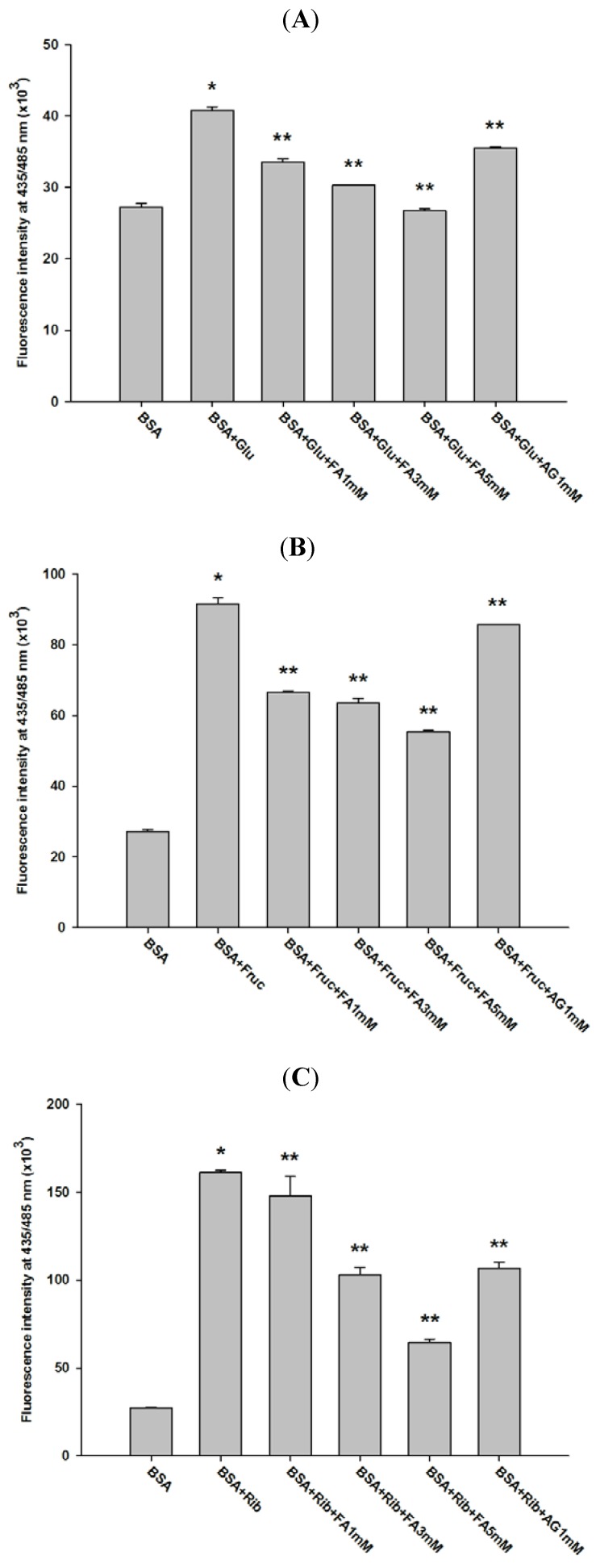
Three dietary monosaccharides, (glucose, fructose, and ribose), have different rates of protein glycation that accelerates the production of advanced glycation end-products (AGEs). The present work was conducted to investigate the effect of ferulic acid (FA) on the three monosaccharide-mediated protein glycations and oxidation of BSA. Comparing the percentage reduction, FA (1-5 mM) reduced the level of fluorescence AGEs (F-AGEs) and N(ε)-(carboxymethyl) lysine (N(ε)-CML) in glucose-glycated BSA (F-AGEs = 12.61%-36.49%; N(ε)-CML = 33.61%-66.51%), fructose-glycated BSA (F-AGEs = 25.28%-56.42%; N(ε)-CML = 40.21%-62.91%), and ribose-glycated BSA (F-AGEs = 25.63%-51.18%; N(ε)-CML = 26.64%-64.08%). In addition, the percentages of FA reduction of fructosamine (Frc) and amyloid cross β-structure (Amy) were Frc = 20.45%-43.81%; Amy = 17.84%-34.54% in glucose-glycated BSA, Frc = 25.17%-36.92%; Amy = 27.25%-39.51% in fructose-glycated BSA, and Frc = 17.34%-29.71%; Amy = 8.26%-59.92% in ribose-glycated BSA. FA also induced a reduction in protein carbonyl content (PC) and loss of protein thiol groups (TO) in glucose-glycated BSA (PC = 37.78%-56.03%; TO = 6.75%-13.41%), fructose-glycated BSA (PC = 36.72%-52.74%; TO = 6.18%-20.08%), and ribose-glycated BSA (PC = 25.58%-33.46%; TO = 20.50%-39.07%). Interestingly, the decrease in fluorescence AGEs by FA correlated with the level of N(ε)-CML, fructosamine, amyloid cross β-structure, and protein carbonyl content. Therefore, FA could potentially be used to inhibit protein glycation and oxidative damage caused by monosaccharides, suggesting that it might prevent AGEs-mediated pathologies during diabetic complications.
三种膳食单糖(葡萄糖、果糖和核糖)的蛋白质糖化速率不同,这会加速晚期糖基化终产物(AGEs)的产生。本研究旨在探讨阿魏酸(FA)对三种单糖介导的蛋白质糖化和 BSA 氧化的影响。通过比较百分比的降低,FA(1-5 mM)降低了葡萄糖糖化 BSA 中的荧光 AGEs(F-AGEs)和 N(ε)-(羧甲基)赖氨酸(N(ε)-CML)的水平(F-AGEs = 12.61%-36.49%;N(ε)-CML = 33.61%-66.51%),果糖糖化 BSA(F-AGEs = 25.28%-56.42%;N(ε)-CML = 40.21%-62.91%)和核糖糖化 BSA(F-AGEs = 25.63%-51.18%;N(ε)-CML = 26.64%-64.08%)。此外,FA 降低果糖胺(Frc)和淀粉样交叉 β 结构(Amy)的百分比分别为 Frc = 20.45%-43.81%;Amy = 17.84%-34.54%在葡萄糖糖化 BSA 中,Frc = 25.17%-36.92%;Amy = 27.25%-39.51%在果糖糖化 BSA 中,以及 Frc = 17.34%-29.71%;Amy = 8.26%-59.92%在核糖糖化 BSA 中。FA 还诱导葡萄糖糖化 BSA 中蛋白质羰基含量(PC)和蛋白质巯基损失(TO)的降低(PC = 37.78%-56.03%;TO = 6.75%-13.41%),果糖糖化 BSA(PC = 36.72%-52.74%;TO = 6.18%-20.08%)和核糖糖化 BSA(PC = 25.58%-33.46%;TO = 20.50%-39.07%)。有趣的是,FA 降低荧光 AGEs 与 N(ε)-CML、果糖胺、淀粉样交叉 β 结构和蛋白质羰基含量的水平相关。因此,FA 可能具有抑制单糖引起的蛋白质糖化和氧化损伤的潜力,提示其可能预防糖尿病并发症期间 AGEs 介导的病理。