Ge Liangpeng, Li Qingtao, Wang Meng, Ouyang Jun, Li Xiaojian, Xing Malcolm M Q
Chongqing Academy of Animal Sciences, Chongqing, People's Republic of China ; Key Laboratory of Pig Industry Sciences, Chongqing, People's Republic of China.
Department of Mechanical and Manufacturing Engineering, Department of Biochemistry and Medical Genetics, University of Manitoba, Winnipeg, Canada ; Manitoba Institute of Child Health, Winnipeg, Canada ; School of Basic Medical Science, Southern Medical University, Guangzhou, People's Republic of China.
Int J Nanomedicine. 2014 May 16;9:2399-407. doi: 10.2147/IJN.S55015. eCollection 2014.
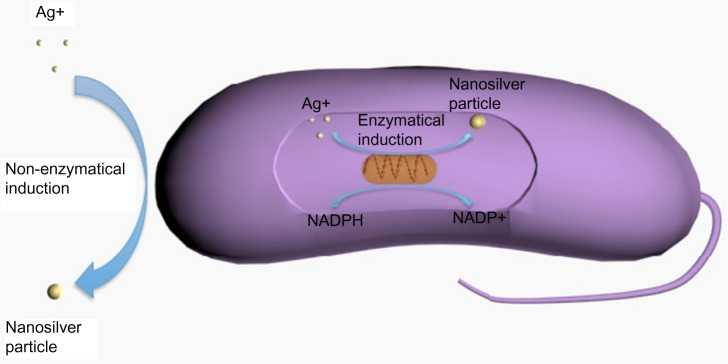
Nanosilver particles (NSPs), are among the most attractive nanomaterials, and have been widely used in a range of biomedical applications, including diagnosis, treatment, drug delivery, medical device coating, and for personal health care. With the increasing application of NSPs in medical contexts, it is becoming necessary for a better understanding of the mechanisms of NSPs' biological interactions and their potential toxicity. In this review, we first introduce the synthesis routes of NSPs, including physical, chemical, and biological or green synthesis. Then the unique physiochemical properties of NSPs, such as antibacterial, antifungal, antiviral, and anti-inflammatory activity, are discussed in detail. Further, some recent applications of NSPs in prevention, diagnosis, and treatment in medical fields are described. Finally, potential toxicology considerations of NSPs, both in vitro and in vivo, are also addressed.
纳米银颗粒(NSPs)是最具吸引力的纳米材料之一,已广泛应用于一系列生物医学应用中,包括诊断、治疗、药物递送、医疗设备涂层以及个人医疗保健。随着NSPs在医学领域的应用不断增加,更好地了解NSPs的生物相互作用机制及其潜在毒性变得越来越有必要。在本综述中,我们首先介绍NSPs的合成路线,包括物理、化学、生物或绿色合成。然后详细讨论了NSPs独特的物理化学性质,如抗菌、抗真菌、抗病毒和抗炎活性。此外,还描述了NSPs在医学领域预防、诊断和治疗方面的一些最新应用。最后,还讨论了NSPs在体外和体内的潜在毒理学考虑因素。