Dantés Héctor Gómez, Farfán-Ale José Arturo, Sarti Elsa
Instituto Nacional de Salud Pública, Cuernavaca, Morelos, México.
Hideyo Noguchi Institute, Mérida, Yucatán, México.
PLoS Negl Trop Dis. 2014 Nov 6;8(11):e3158. doi: 10.1371/journal.pntd.0003158. eCollection 2014.
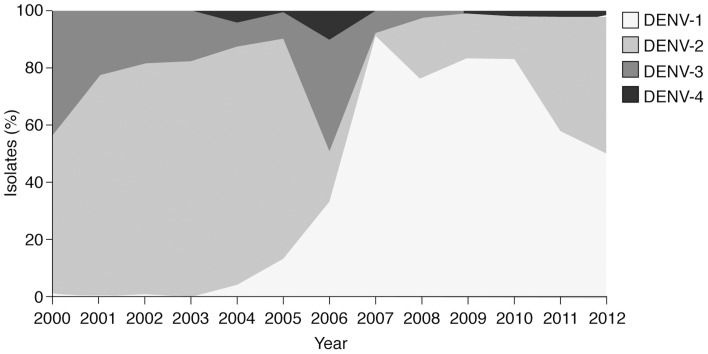
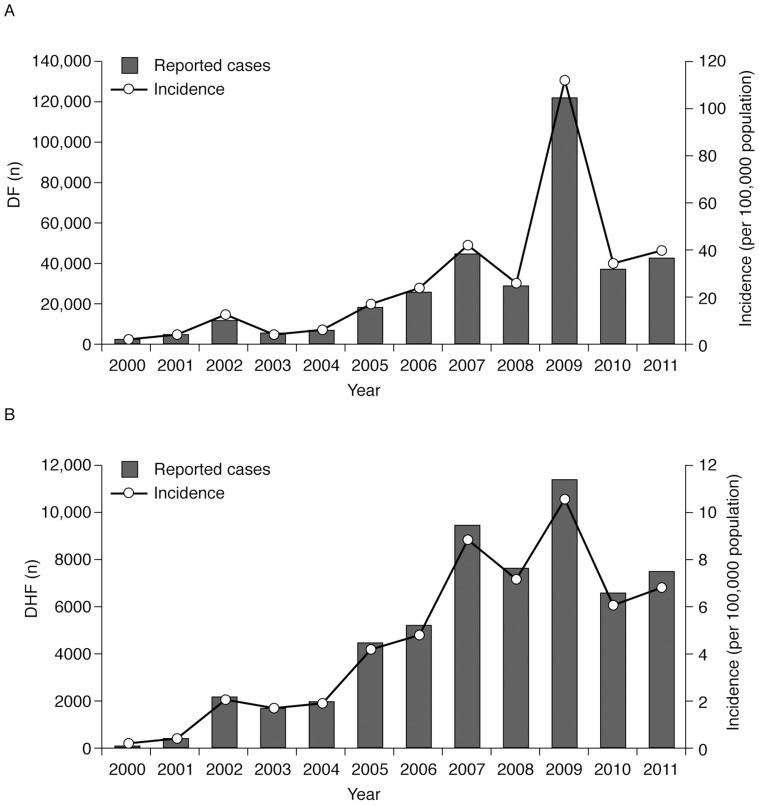
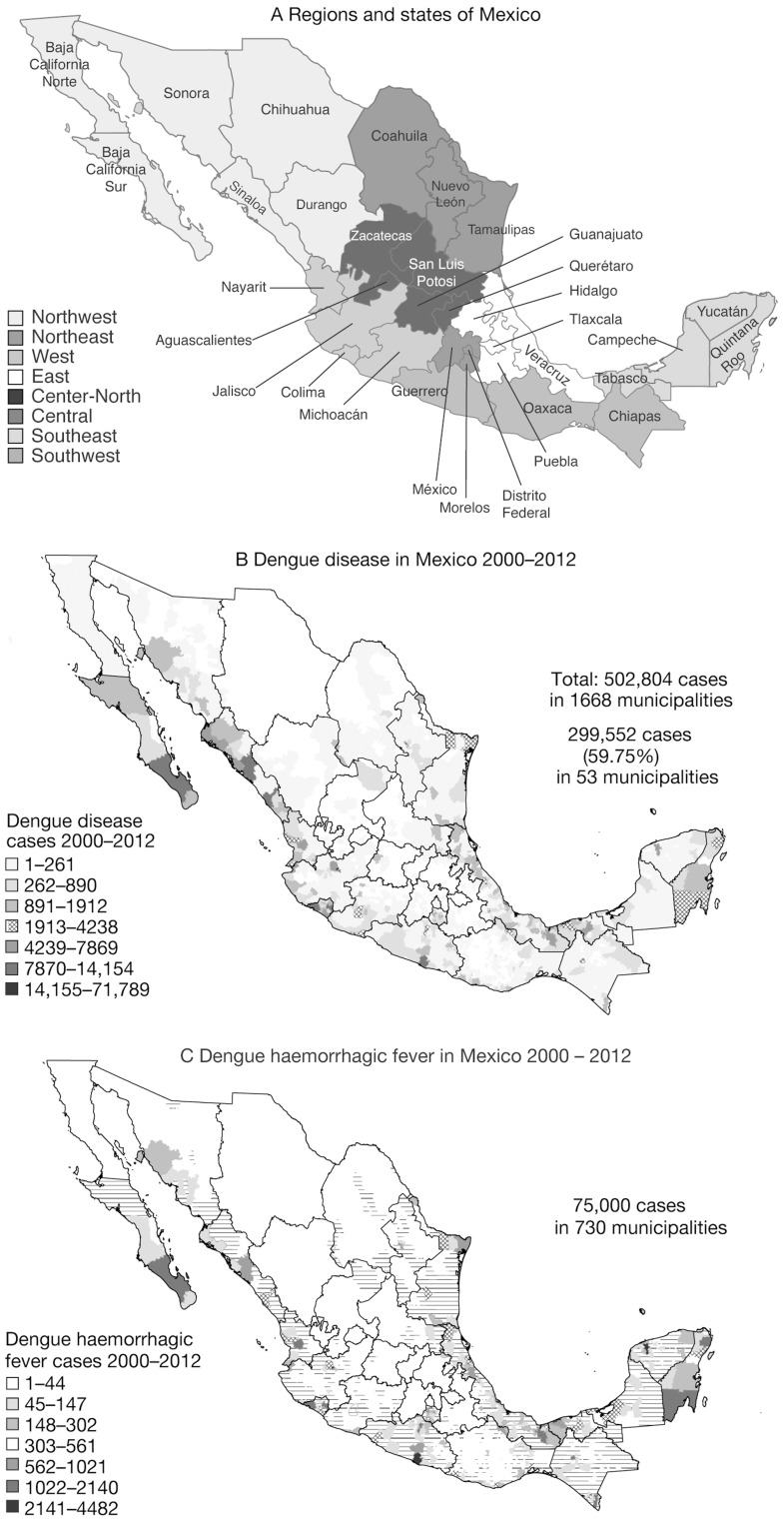
This systematic literature review describes the epidemiology of dengue disease in Mexico (2000-2011). The annual number of uncomplicated dengue cases reported increased from 1,714 in 2000 to 15,424 in 2011 (incidence rates of 1.72 and 14.12 per 100,000 population, respectively). Peaks were observed in 2002, 2007, and 2009. Coastal states were most affected by dengue disease. The age distribution pattern showed an increasing number of cases during childhood, a peak at 10-20 years, and a gradual decline during adulthood. All four dengue virus serotypes were detected. Although national surveillance is in place, there are knowledge gaps relating to asymptomatic cases, primary/secondary infections, and seroprevalence rates of infection in all age strata. Under-reporting of the clinical spectrum of the disease is also problematic. Dengue disease remains a serious public health problem in Mexico.
本系统文献综述描述了墨西哥登革热疾病的流行病学情况(2000 - 2011年)。报告的无并发症登革热病例年数从2000年的1714例增加到2011年的15424例(发病率分别为每10万人口1.72例和14.12例)。在2002年、2007年和2009年观察到发病高峰。沿海各州受登革热疾病影响最为严重。年龄分布模式显示儿童期病例数增加,10 - 20岁达到高峰,成年期逐渐下降。检测到了所有四种登革热病毒血清型。尽管有国家监测,但在无症状病例、原发性/继发性感染以及所有年龄层的感染血清流行率方面存在知识空白。该疾病临床谱的报告不足也是个问题。登革热疾病在墨西哥仍然是一个严重的公共卫生问题。