Sasso John P, Eves Neil D, Christensen Jesper F, Koelwyn Graeme J, Scott Jessica, Jones Lee W
Memorial Sloan Kettering Cancer Centre, New York, NY, USA.
Centre for Heart, Lung and Vascular Health, School of Health and Exercise Sciences, University of British Columbia Okanagan, Kelowna, British Columbia, Canada.
J Cachexia Sarcopenia Muscle. 2015 Jun;6(2):115-24. doi: 10.1002/jcsm.12042. Epub 2015 May 11.
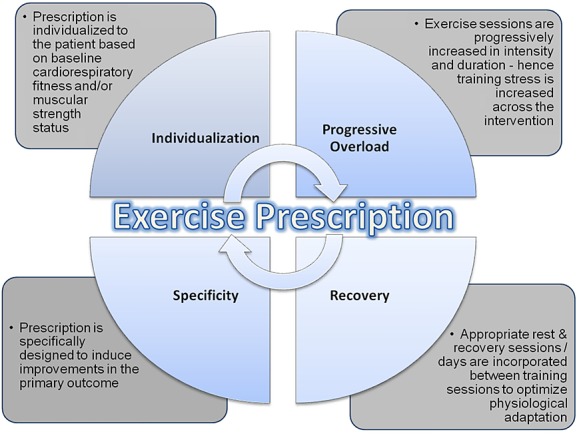
The field of exercise-oncology has increased dramatically over the past two decades, with close to 100 published studies investigating the efficacy of structured exercise training interventions in patients with cancer. Of interest, despite considerable differences in study population and primary study end point, the vast majority of studies have tested the efficacy of an exercise prescription that adhered to traditional guidelines consisting of either supervised or home-based endurance (aerobic) training or endurance training combined with resistance training, prescribed at a moderate intensity (50-75% of a predetermined physiological parameter, typically age-predicted heart rate maximum or reserve), for two to three sessions per week, for 10 to 60 min per exercise session, for 12 to 15 weeks. The use of generic exercise prescriptions may, however, be masking the full therapeutic potential of exercise treatment in the oncology setting. Against this background, this opinion paper provides an overview of the fundamental tenets of human exercise physiology known as the principles of training, with specific application of these principles in the design and conduct of clinical trials in exercise-oncology research. We contend that the application of these guidelines will ensure continued progress in the field while optimizing the safety and efficacy of exercise treatment following a cancer diagnosis.
在过去二十年中,运动肿瘤学领域发展迅速,已有近100项发表的研究探讨了结构化运动训练干预对癌症患者的疗效。有趣的是,尽管研究人群和主要研究终点存在相当大的差异,但绝大多数研究都测试了一种运动处方的疗效,该处方遵循传统指南,包括监督下或居家的耐力(有氧)训练,或耐力训练与阻力训练相结合,以中等强度(预定生理参数的50-75%,通常为年龄预测的最大心率或储备心率)进行,每周两到三次,每次运动10至60分钟,持续12至15周。然而,通用运动处方的使用可能掩盖了运动治疗在肿瘤学环境中的全部治疗潜力。在此背景下,本观点论文概述了被称为训练原则的人体运动生理学基本原理,并阐述了这些原则在运动肿瘤学研究临床试验设计和实施中的具体应用。我们认为,应用这些指南将确保该领域持续取得进展,同时优化癌症诊断后运动治疗的安全性和疗效。