Kim Young Soo, Balaraju Kotnala, Jeon Yongho
Department of Plant Medicals, Andong National University, Andong 36729, Korea.
Agricultural Science and Technology Research Institute, Andong National University, Andong 36729, Korea.
Plant Pathol J. 2016 Jun;32(3):251-9. doi: 10.5423/PPJ.OA.01.2016.0015. Epub 2016 Jun 1.
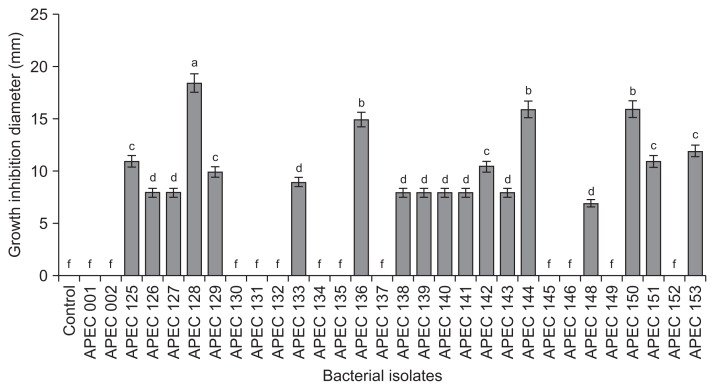
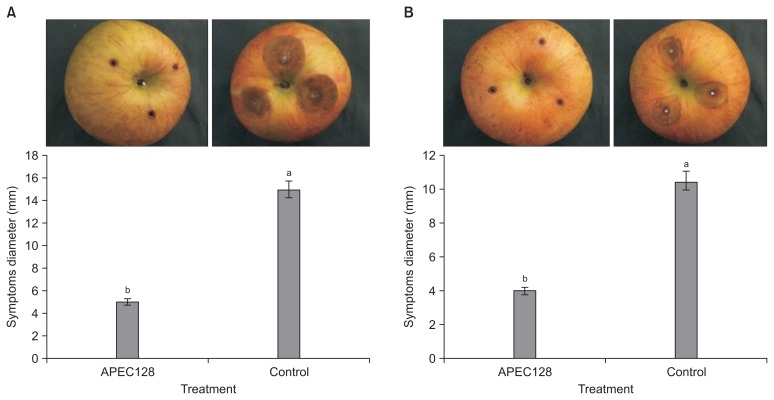
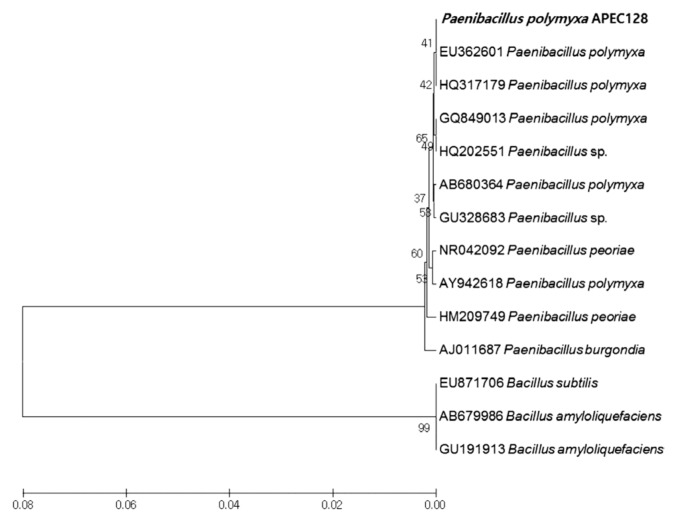
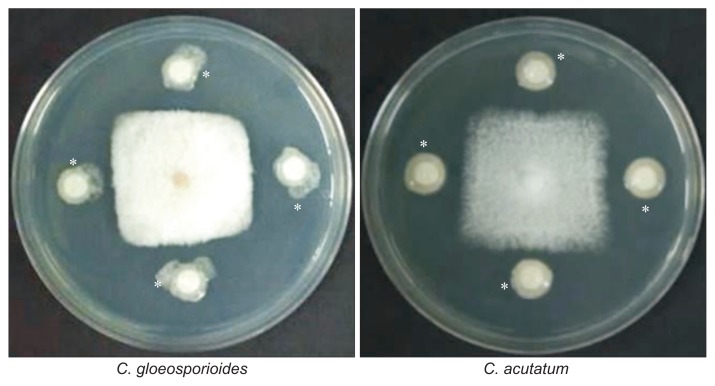
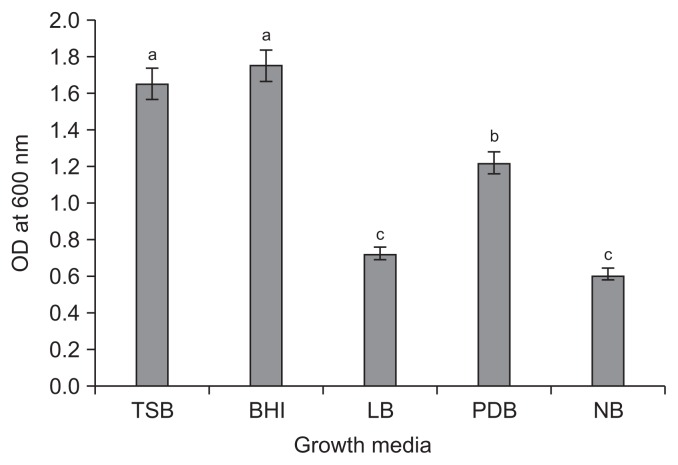
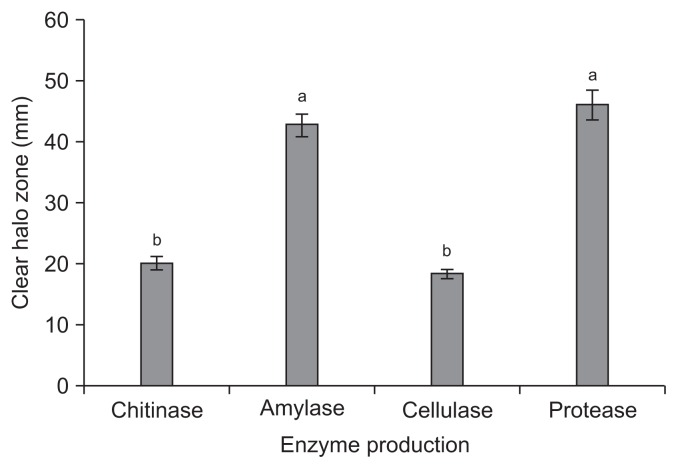
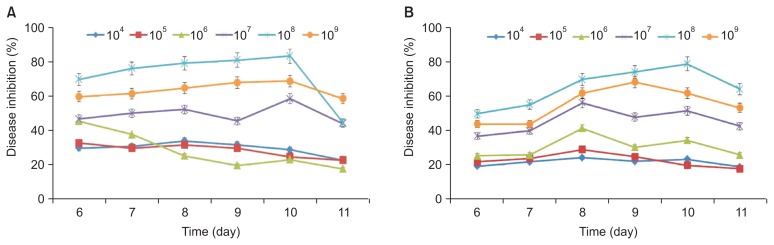
The present study investigated the suppression of the disease development of anthracnose caused by Colletotrichum gloeosporioides and C. acutatum in harvested apples using an antagonistic rhizobacterium Paenibacillus polymyxa APEC128 (APEC128). Out of 30 bacterial isolates from apple rhizosphere screened for antagonistic activity, the most effective strain was APEC128 as inferred from the size of the inhibition zone. This strain showed a greater growth in brain-heart infusion (BHI) broth compared to other growth media. There was a reduction in anthracnose symptoms caused by the two fungal pathogens in harvested apples after their treatment with APEC128 in comparison with non-treated control. This effect is explained by the increased production of protease and amylase by APEC128, which might have inhibited mycelial growth. In apples treated with different APEC128 suspensions, the disease caused by C. gloeosporioides and C. acutatum was greatly suppressed (by 83.6% and 79%, respectively) in treatments with the concentration of 1 × 10(8) colony forming units (cfu)/ml compared to other lower dosages, suggesting that the suppression of anthracnose development on harvested apples is dose-dependent. These results indicated that APEC128 is one of the promising agents in the biocontrol of apple anthracnose, which might help to increase the shelf-life of apple fruit during the post-harvest period.
本研究调查了使用拮抗根际细菌多粘类芽孢杆菌APEC128(APEC128)对采后苹果上由胶孢炭疽菌和尖孢炭疽菌引起的炭疽病病害发展的抑制作用。在从苹果根际筛选的30株具有拮抗活性的细菌分离物中,根据抑菌圈大小推断,最有效的菌株是APEC128。与其他生长培养基相比,该菌株在脑心浸液(BHI)肉汤中生长得更好。与未处理的对照相比,用APEC128处理采后苹果后,由这两种真菌病原体引起的炭疽病症状有所减轻。这种效果可以通过APEC128增加蛋白酶和淀粉酶的产生来解释,这可能抑制了菌丝体生长。在用不同浓度APEC128悬浮液处理的苹果中,与其他较低剂量相比,在浓度为1×10⁸菌落形成单位(cfu)/ml的处理中,由胶孢炭疽菌和尖孢炭疽菌引起的病害得到了极大抑制(分别为83.6%和79%),这表明采后苹果上炭疽病发展的抑制作用是剂量依赖性的。这些结果表明,APEC128是苹果炭疽病生物防治中有前景的制剂之一,这可能有助于延长苹果采后期的货架期。